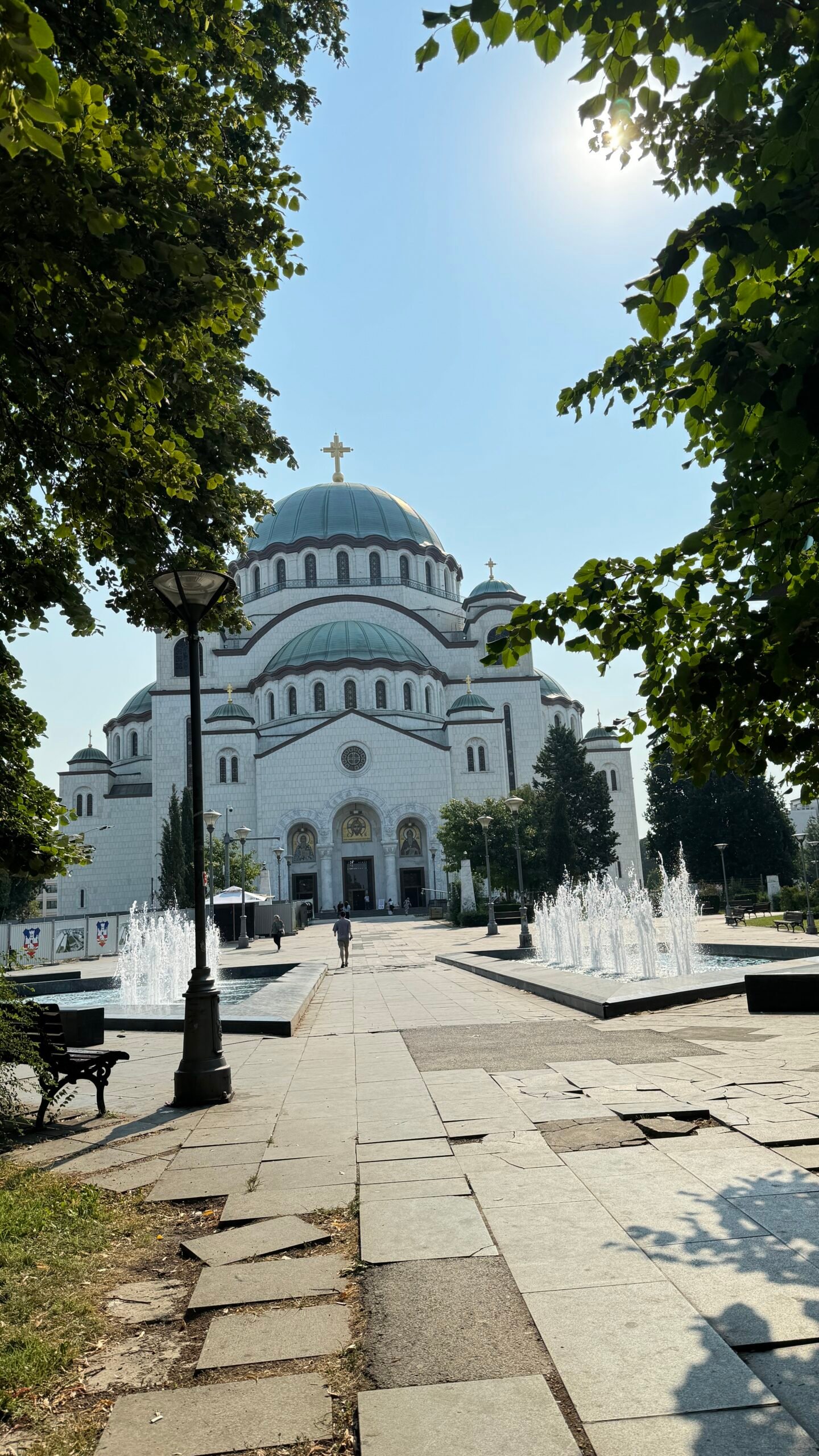
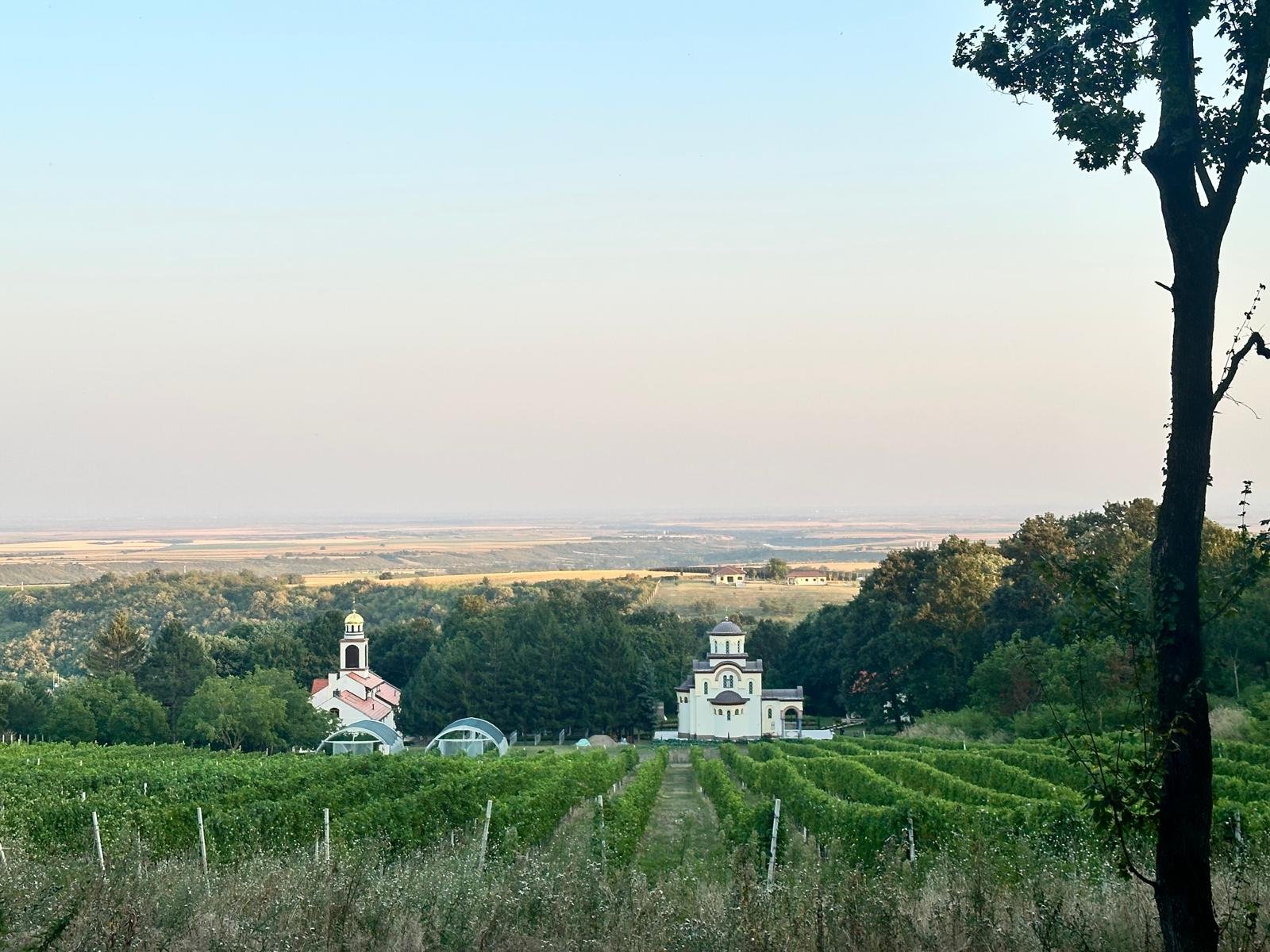
THE SERBIAN double.
In April 2027 the calendar does something it almost never does. The 40th Belgrade Marathon hosts the 2nd European Running Championships on 17–18 April. Six days later, on Saturday 24 April, the 50th Fruškogorski maraton opens 220km of marked trail an hour up the road. Two landmark editions, two entirely different sports, one flight, and a week of Vojvodina wine country in between to recover in. This page is the plan — the honest answer on whether your legs can do both, and the reason tour operators should be looking at this week now rather than in 2028.
start lines
race weekend
the two events
the UK
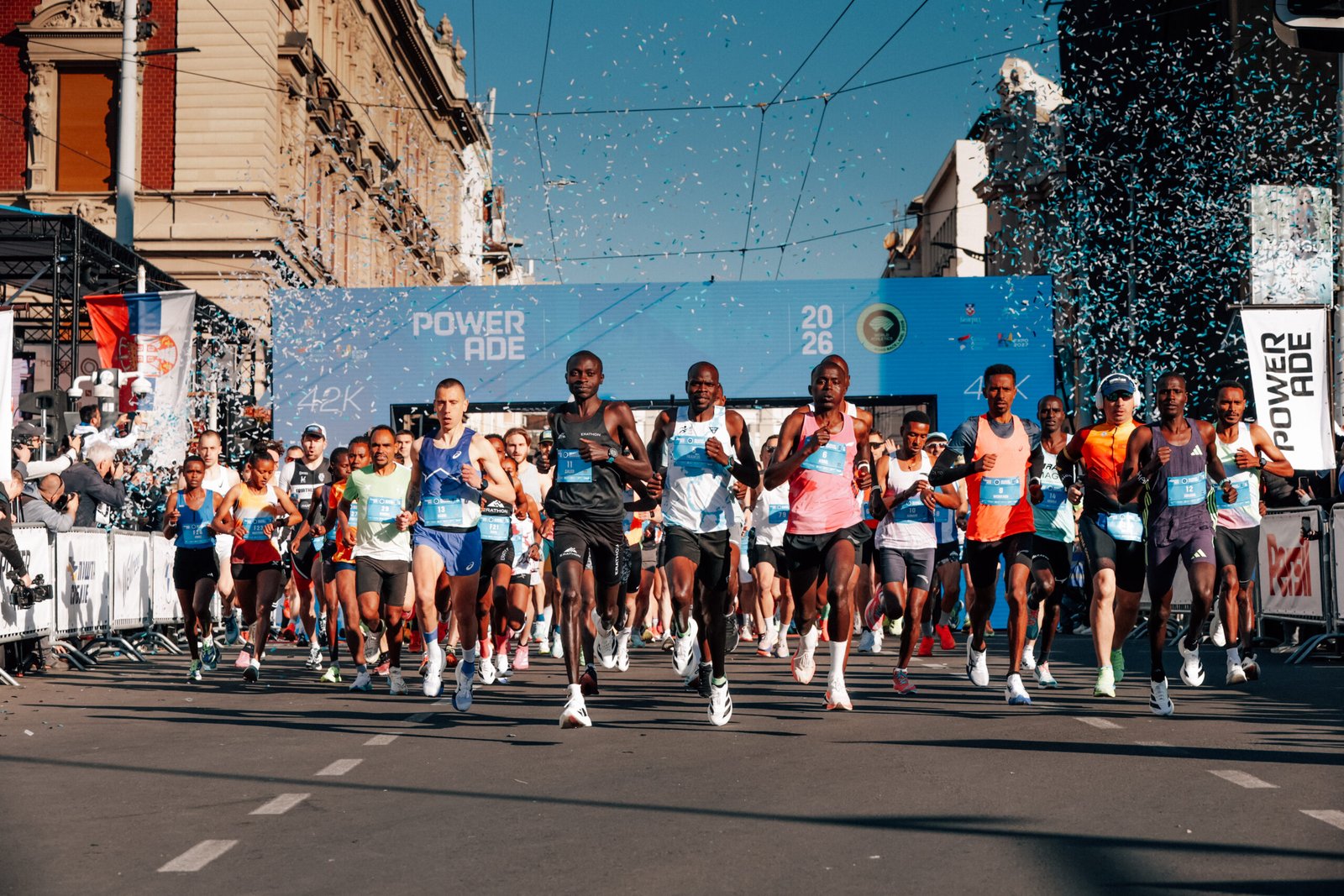
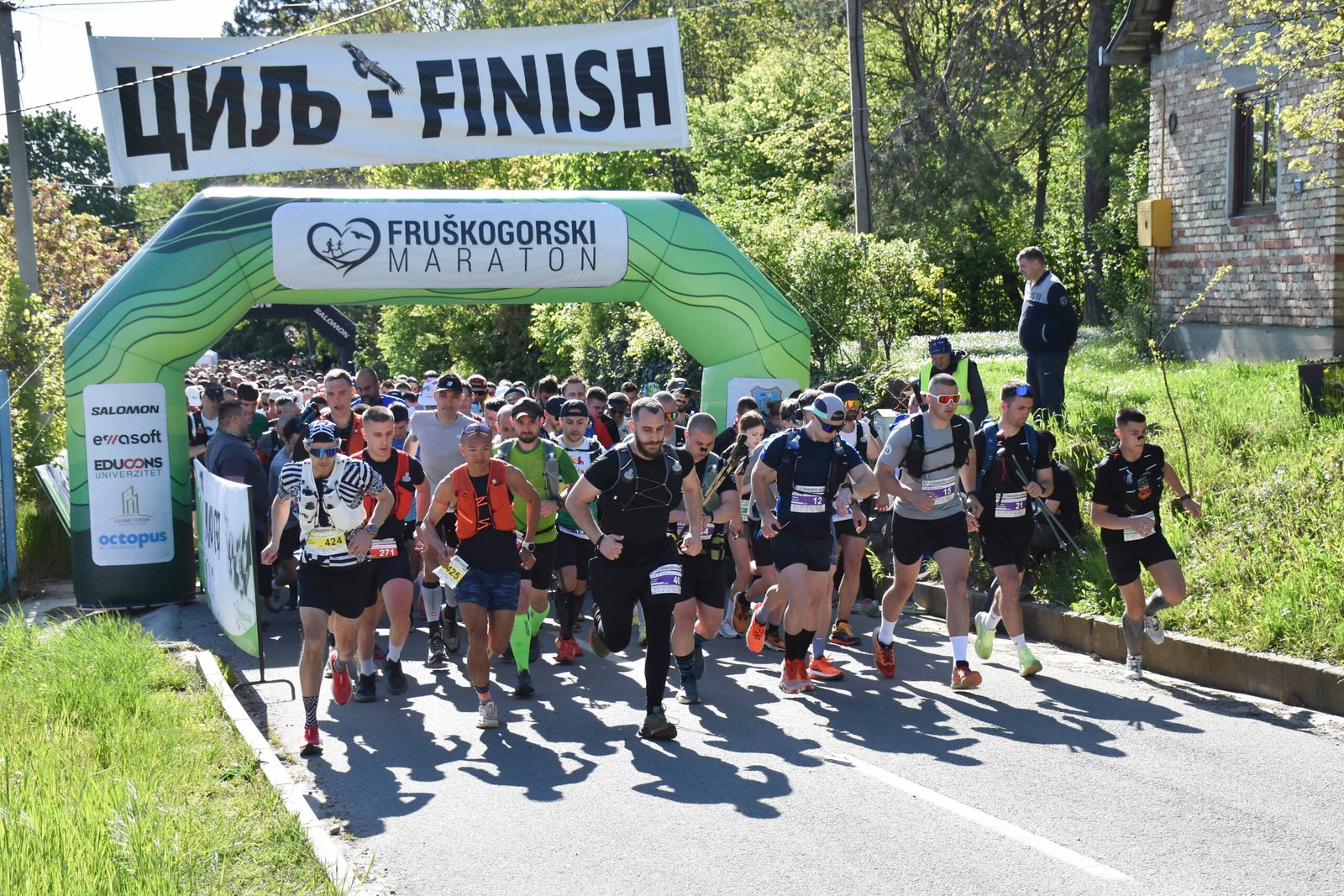
NOBODY PLANNED THIS. The calendar just did it.
Two organisations, two cities, no coordination between them. One is a major city marathon that spent years winning the right to host a European Championships and will run its fortieth edition doing it. The other is a volunteer-built mountain event that has taken place every spring since 1978 and turns fifty the same month. In 2027 they land six days apart, ninety minutes of train apart.
If you fly from Britain for one of them, you have already paid the most expensive part of the trip. The second race costs a train ticket, an entry fee and a week of annual leave — and that week falls in the wine country of Vojvodina in late April, which is roughly the nicest place in Europe to have tired legs.
That is the runner's case. There is a commercial one too, and a section further down written specifically for operators and tourist boards — because as far as I can find, nobody is packaging this yet.
HOW MANY DAYS YOU ACTUALLY GET depends which Belgrade race you enter.
Belgrade splits across two days: the half marathon and relay on Saturday morning, the 10K on Saturday evening, the marathon on Sunday morning. Fruška Gora starts at nine the following Saturday. Which Belgrade start line you choose is therefore also a recovery decision, and it is worth making on purpose rather than by default.
Belgrade half → Fruška Gora
Sat 17 April 09:00 → Sat 24 April 09:00. A clean week, to the hour. The most sensible version of the double for most runners, and the one I would build a trip around.
Belgrade 10K → Fruška Gora
Sat 17 April 18:00 → Sat 24 April 09:00. Fifteen hours short of a week — but a 10K is not what leaves you broken. The easiest double on the board.
Belgrade marathon → Fruška Gora
Sun 18 April 08:00 → Sat 24 April 09:00. The hard version. Possible for some people on some routes, and a bad idea on most of them. See the matrix below.
One more date, because it is the one that catches people out: Fruška Gora's five competitive routes close on 15 April, online only, with no race-day sign-up. You must enter both events before you fly. The nine hiking routes are far more forgiving — online in advance, or in person at Popovica on the morning for £13.
THE RECOVERY RESEARCH, without the folklore.
The old rule of thumb — one easy day per mile raced, so twenty-six days after a marathon — is folklore, not physiology. What the research describes is more interesting, because different systems recover at very different speeds, and the double sits precisely in the gap between them.
After a marathon, creatine kinase — the standard marker of muscle damage — peaks at around 24 hours, with roughly a fifteen-fold rise above baseline in recreational runners, returning to pre-race levels after about a week. Muscle damage more broadly peaks between 24 and 72 hours and can stay elevated for 7 to 14 days.
But perceived soreness, strength and jump performance typically recover much sooner — commonly within 48 to 72 hours — and muscle and cardiac damage markers return to baseline within roughly 96 to 144 hours.
— Marathon recovery literature, pooled
Read the last figure again: 144 hours is exactly six days. The marathon-to-Fruška-Gora gap lands on the outer edge of biochemical recovery, right where the markers are finally coming home. That is not a green light. It is a narrow window with nothing left over.
The surprise: moving in that week helps
The instinct after a marathon is total rest. The evidence suggests otherwise — returning to gentle running at 48 hours does not appear to worsen muscle damage recovery through the following week, and may speed the neuromuscular side compared with doing nothing. Which conveniently means the week between the races is not dead time. It is an active taper, and it works better than lying down.
And the thing that will actually hurt you
Not the distance. The descents. The 22km Pripravnički južni carries 898 metres of climb — which means 898 metres of descent, on forest paths that are rooty and, in April, muddy. Downhill running is eccentric loading: the exact mechanism that shredded your quadriceps in Belgrade six days earlier. Running it hard on marathon legs is the most reliable way to turn a good trip into a limp.
Which is why the honest recommendation below is mostly about walking the second one — and why it is lucky that Fruška Gora built nine routes for exactly that.
WHICH DOUBLES ACTUALLY WORK, and which are just a story you tell.
Fruška Gora offers fourteen routes on the same morning: five timed, ITRA-certified races from 22km to 134km, and nine non-competitive hiking routes, all under 41km. That range is the whole reason the double is possible for ordinary runners — because the second event does not have to be a race at all.
one
BELGRADE HALF OR 10K → FRUŠKA GORA 22KM
A full week between a moderate road effort and a proper first trail race. The best version of the double for a fit recreational runner — you race twice, you finish both, and the 898m of climb on the Pripravnički južni becomes an adventure rather than a punishment. One ITRA point, and you are done by lunch.
one
BELGRADE MARATHON → A FRUŠKA GORA HIKING ROUTE
Your championship marathon on Sunday, then a marked mountain route the following Saturday for £9, walked, with several thousand Serbs doing the same and a card stamped at each checkpoint like a passport. No clock, no descents at speed, no risk to the result you actually flew for. This is the one I would do.
only
BELGRADE MARATHON → FRUŠKA GORA 22KM
Six days, 898m of descent, on legs whose damage markers are only just normalising. Feasible for high-mileage runners with real trail experience who treat the second one as a slow day out. Race it for a time and you will spend the flight home with quadriceps that do not work.
BELGRADE MARATHON → THE 42KM, 59KM, 107KM OR 134KM
A trail marathon or ultra on six-day-old marathon legs is not a hard challenge, it is a badly designed one. These are semi-autonomous routes on a 220km network where not every checkpoint carries food and water, and the two longest run on through the night into Sunday. Pick one event to race properly and let the other be the holiday.
The honest general rule: race one, experience the other. The double is not two maximum efforts — and that is exactly what makes it achievable for normal people rather than a stunt. Decide which is your A-race before you enter, because that single decision is what keeps the second one enjoyable.
NOBODY IN THE GROUP has to spectate.
This is what makes the Serbian Double unusual as a product rather than just as a challenge. A normal race trip sells one start line and asks everybody else to stand behind a barrier holding a coat. Across these two events there are eighteen ways to take part, from a short waymarked walk to a 134km ultra, and every person in a group can be entered in something.
FOUR WAYS IN, ONE WEEKEND
Marathon, half, 10K and a four-person relay, spread across two days, so a couple can race separately and watch each other. Open entry, no ballot, no qualifying time, on the same course and weekend as a European Championships.
FOURTEEN ROUTES, ONE START
Five ITRA races and nine hiking routes, all setting off together at Popovica at nine. The routes share sections and checkpoints, so a family on the shorter walks genuinely crosses paths with the racers — not a common thing to be able to promise.
NINE NIGHTS, NOT THREE
A single race weekend is a three-night sale. This is nine or ten nights across two cities and two regions, with a built-in mid-week transfer, a wine region, sixteen working monasteries and a national park. Roughly triple the bed nights per booking.
A CITY MID-TRANSFORMATION
Belgrade is rebuilding ahead of EXPO 2027, which opens the month after the marathon, while the marathon itself turns forty and hosts the championships. Fruška Gora turns fifty the same week. All three anniversaries land once.
Recent Belgrade editions have drawn roughly 3,200–3,600 foreign participants, and a European Championships will not reduce that. What nobody appears to be selling yet is the week that follows it. That gap is the opportunity, and it exists for one edition.
THE BEST TAPER you will ever be forced to take.
Here is what turns this from a logistics problem into the reason to go. The week between the races demands exactly what recovery needs — gentle walking, good food, long afternoons sitting down, no hills at speed — and Vojvodina in late April is built for precisely that. Mid-April in Belgrade averages 8°C at dawn and 18–20°C by afternoon. The sightseeing is the recovery protocol.
DO ALMOST NOTHING, BEAUTIFULLY
Marathon day, then the classic recovery Monday: the riverside paths at Ušće, a slow coffee somewhere with a view of the water, an early kafana dinner in Skadarlija with the musicians working the tables. Flat, walkable, and horizontal by ten.
THE FORTRESS, AND YOUR FIRST SHAKEOUT
Walk up to Kalemegdan and watch the Sava hand itself to the Danube from beneath the Pobednik. If the legs allow, twenty easy minutes on Ada Ciganlija's flat 8km lake loop — where the city itself trains, and where the evidence says gentle movement at 48 hours helps rather than harms.
BELGRADE TO NOVI SAD
Half an hour on the fast train across the plain and you have changed regions entirely. Check in, walk Zmaj Jovina to the cathedral square, climb to Petrovaradin for the view back over the Danube. You are now an hour from the start line and three days out.
WINE, AND THE BEST SITTING DOWN IN SERBIA
Fifteen minutes from Novi Sad: a baroque square, the old seminary, and family cellars pouring bermet — the spiced dessert wine this town has made on these slopes for centuries. One glass, not four. There is a mountain on Saturday.
THE SERBIAN ATHOS, THEN YOUR START PACK
Sixteen working monasteries hide in the mountain's folds — Krušedol and Novo Hopovo if you see only two, with honey sold at the gate. Collect the start pack in person, lay the kit out, check the GPS track is on the watch. Race transport leaves Novi Sad from 06:00.
FOLLOW THE RED HEARTS
All fourteen routes start together. You navigate by a white circle with a red heart painted on the trees, along a ridge that runs some eighty kilometres and tops out at 539m, surrounded by thousands of people who have done this every April for fifty years. Then you find a čarda on the Danube and order fish.
TWO RACES FOR one flight.
Taken separately, a Belgrade race weekend runs roughly £354–606 and a Fruška Gora weekend £240–510, because each carries its own return flight from London. Combined into one nine- or ten-day trip you pay for the flight once, and the train between them costs less than a day's travel in London.
Realistically that is around £600–950 all in for two international races, nine nights, two cities, a wine region and a national park — less than many people spend on a single Major marathon weekend before they have eaten anything. Serbia runs on dinars, roughly 117 to the euro, and cards work almost everywhere outside the markets and the musicians.
The three dates that decide the price
30 November 2026 — Belgrade's Midway Pass wave closes; the marathon steps from €70 to €80, and keeps climbing to €100 at the expo. 1 March 2027 — Fruška Gora's second wave closes, and the final wave costs more and drops the shirt from the start pack. 15 April 2027 — Fruška Gora's competitive entries shut entirely, online only, no race-day option.
Book in and out of Belgrade, not Novi Sad — there is no airport there and the train back takes thirty minutes. Full breakdowns on both guides: Belgrade costs and travel and Fruška Gora costs and travel.
WHAT COULD GO WRONG WITH THIS.
It is nine or ten days of annual leave. That is the real cost, and it is more than most people can spend on running. If you only have a long weekend, take Belgrade — the championships will not be there again.
Neither race can be joined on arrival. Both entries have to be done from home, and both start packs are collected in person — Belgrade's at the race expo from 14 April, Fruška Gora's in Novi Sad. This is not a trip you can improvise halfway through.
The second race is a genuine trail event, not a fun run with hills. Read the Fruška Gora tips page before anyone packs road shoes, and take the kit list seriously rather than as a suggestion.
Belgrade will be the busiest edition in its history — fortieth anniversary, European Championships, and a city already filling up ahead of the world exposition it hosts a month later. Book beds early, in both cities, and arrive on the Friday.
And if the marathon goes badly, let the second one go. A hard day in Belgrade changes what your legs can safely do on the 24th. The hiking routes exist precisely so that an honest downgrade still means you were on the mountain.
IF YOU PACKAGE THIS, here is the groundwork — free.
I am a runner and a writer, not a tour operator, and I do not sell trips. But the research behind this page took months, it came from the organisers themselves, and it is more useful to me in somebody's itinerary than sitting on a website. If you are building a 2027 Serbia product, take it.
Race facts confirmed at source, not scraped
Dates, start times, route lists, elevation, ITRA points, entry waves and deadlines for both events were confirmed directly with the Belgrade Marathon organisation and with the race director of the Fruškogorski maraton, and are kept current on the two guides as the price waves move.
Official photography, used with permission
Both organisations granted permission for their race images on this site. That permission is mine and is not transferable — but it tells you the organisers are reachable and willing, and I am happy to say who to ask.
The operational constraints, written down
The things that break a group booking: Fruška Gora's 15 April online-only cut-off, in-person start-pack collection, race transport from Novi Sad at 06:00, semi-autonomous checkpoints without guaranteed food and water, Belgrade's expo opening 14 April. All of it is on the guide pages rather than discovered in April.
An itinerary that already balances effort and rest
The mid-week plan above is not filler — it is built so the sightseeing doubles as the recovery a second start line requires. Belgrade three nights, transfer Wednesday, Novi Sad four nights, with Sremski Karlovci and the monasteries as the two excursions.
First-hand reporting from both events
I will be on the ground in April 2027 and both guides get updated from the race weekends themselves. If you want a reference that reflects what a client will actually meet — the queues, the transport, the state of the trail in the rain — that update is coming either way.
One thing I will not do: sell or bundle any of it. Flights and accommodation on this site are always linked separately and never as a package, because combining them would make me a package organiser under the UK Package Travel Regulations 2018 — which is your business, properly licensed and bonded, and not mine. I have never accepted a sponsorship and I am not looking for one. What I want is for the Balkans to be taken seriously as a running destination.
SO CAN YOU ACTUALLY do both?
Almost certainly yes — just not the version in your head. Two maximum efforts six days apart is a bad plan for nearly everyone, and the recovery data says so plainly. But two races, where one is raced and one is travelled through, is comfortably within reach of an ordinary fit runner — and the range of distances on that mountain is what makes the honest version possible instead of heroic.
What you get for that compromise is unusual. A European Championships start line in a capital city, a fifty-year-old mountain tradition, two Serbian regions that feel like different countries, and the week in between spent doing exactly what your legs needed anyway: walking slowly through wine villages and monasteries with a medal already in the bag.
The calendar will not arrange this again. Both editions are anniversaries, neither organisation planned it around the other, and in 2028 the dates drift apart.
FAQS: THE SERBIAN DOUBLE
Can you run a marathon and a trail race a week apart?
Yes, if only one of them is raced. Strength and soreness typically recover in 48–72 hours, but muscle damage markers can stay elevated for 7–14 days. Six days is enough to walk a mountain route; it is not enough for a second maximum effort.
How many days are between the Belgrade Marathon and Fruška Gora?
Six, from the Belgrade marathon on Sunday 18 April to Fruška Gora on Saturday 24 April 2027. Seven if you run the Belgrade half or 10K on the Saturday instead — which is why the shorter Belgrade race is often the smarter entry.
What's the easiest version of the double?
Belgrade 10K on the Saturday evening, then a Fruška Gora hiking route the following Saturday. Two events, minimal damage, and both entries together come to roughly £57 at today's prices (€55 for the 10K plus £9 for the hike) — the 10K rises to €65 on 1 December.
Do I have to race both?
No, and you shouldn't. Fruška Gora runs nine non-competitive hiking routes alongside its five ITRA races — £9 online, £13 on the day, and one of them, the trail of joy and pleasure, is free so that nobody is priced off the mountain. Walking it is a legitimate way to do the double, not a consolation.
When do I need to enter?
Belgrade's price rises on 1 December 2026 and climbs through seven waves to €100 at the expo. Fruška Gora's competitive entries close 15 April 2027, online only, with no race-day option — enter both before you book anything else.
How do I get between Belgrade and Novi Sad?
Fast train, roughly thirty minutes, and the organisers run transport to the start on race morning. Fly in and out of Belgrade — Novi Sad has no airport.
Should I run in the week between?
Gently, yes. Research suggests returning to easy running around 48 hours post-marathon doesn't worsen recovery and may speed the neuromuscular side. Walking cities and wine villages counts. Hill sprints do not.
Is it worth it for a partner who doesn't run?
Unusually, yes. Belgrade has a 10K and a four-person relay, Fruška Gora has nine hiking routes and shared checkpoints, and the week between is a wine-and-monastery holiday. Nobody has to spectate.
Can a tour operator build a package around this?
Yes, and nobody appears to have yet. It is a nine- or ten-night product across two cities, with eighteen ways to take part between the two events. The research on this site is free to use — see the section below.
Sources & Research
- Marathon recovery literature — creatine kinase, neuromuscular function and damage markers. CK peaks around 24h post-marathon at roughly 15× baseline in recreational runners, returning to baseline in about a week; muscle damage peaks 24–72h and can remain elevated 7–14 days. Soreness, strength and jump performance typically recover within 48–72h; muscle and cardiac damage markers within roughly 96–144h.
- The week after running a marathon: effects of running versus elliptical training versus resting on neuromuscular performance and muscle damage recovery. Returning to running at 48 hours post-marathon did not negatively affect muscle damage recovery through eight days post-race, and may support faster neuromuscular recovery than rest.
- European Running Championships 2027 / 40th Powerade Belgrade Marathon — dates, start times, entry waves and prices for all four races; official course maps. Half marathon and relay Sat 17 April 09:00; 10K Sat 17 April 18:00; marathon Sun 18 April 08:00. Expo and bib collection from 14 April. Roughly 3,200–3,600 foreign participants across the last three editions.
- 50th Fruškogorski maraton — official route list, elevation, ITRA points, prices and deadlines. Saturday 24 April 2027, 09:00, all fourteen routes starting together at Popovica. Five ITRA-certified races (22km with 898m D+, through to 134km) and nine non-competitive hiking routes under 41km, one of them free. 220km of marked network, 24 checkpoints, refreshments at some but not all.
- Belgrade April climate — published 30-year averages. Roughly 8°C at dawn, 18–20°C by mid-afternoon, about 62mm of rain across around 12 rain days in the month.
Recovery figures are population averages and vary enormously with training history, age and how hard the first race was run. Nothing here is a training plan or medical advice — if you are carrying an injury, this is not the week to find out. Race dates, prices and deadlines were checked against both organisers in 2026; confirm on the official sites before booking. Cost ranges are my own estimates carried over from the two guides, not quotations. Flights and accommodation are always linked separately, never as a bundled package (UK Package Travel Regulations 2018).