START WITH THE GENTLE ONES.
The main reason people give up on gels is not taste — it is that they picked a thick, concentrated one and needed half a bottle of water to get it down. Start with an isotonic gel, which is already diluted and can be taken without water. Learn the habit first, optimise later.
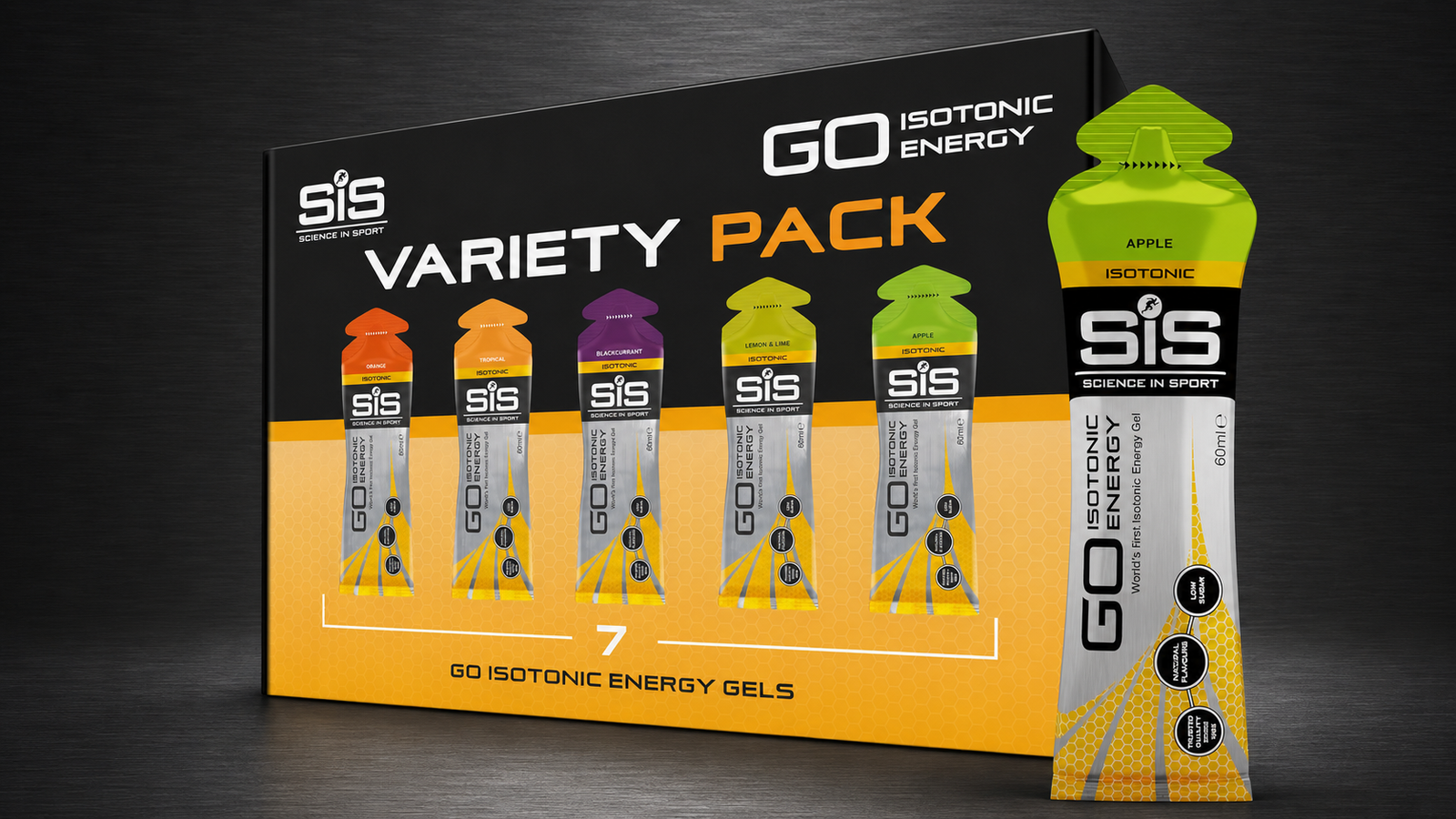
ISOTONIC ENERGY GEL
The one I put in a belt pocket and forget about. Isotonic means it goes down without water, which sounds minor until you are trying to open a sachet, drink from a bottle and keep running at the same time. Widely available, cheap, and forgiving on a stomach that is new to this.
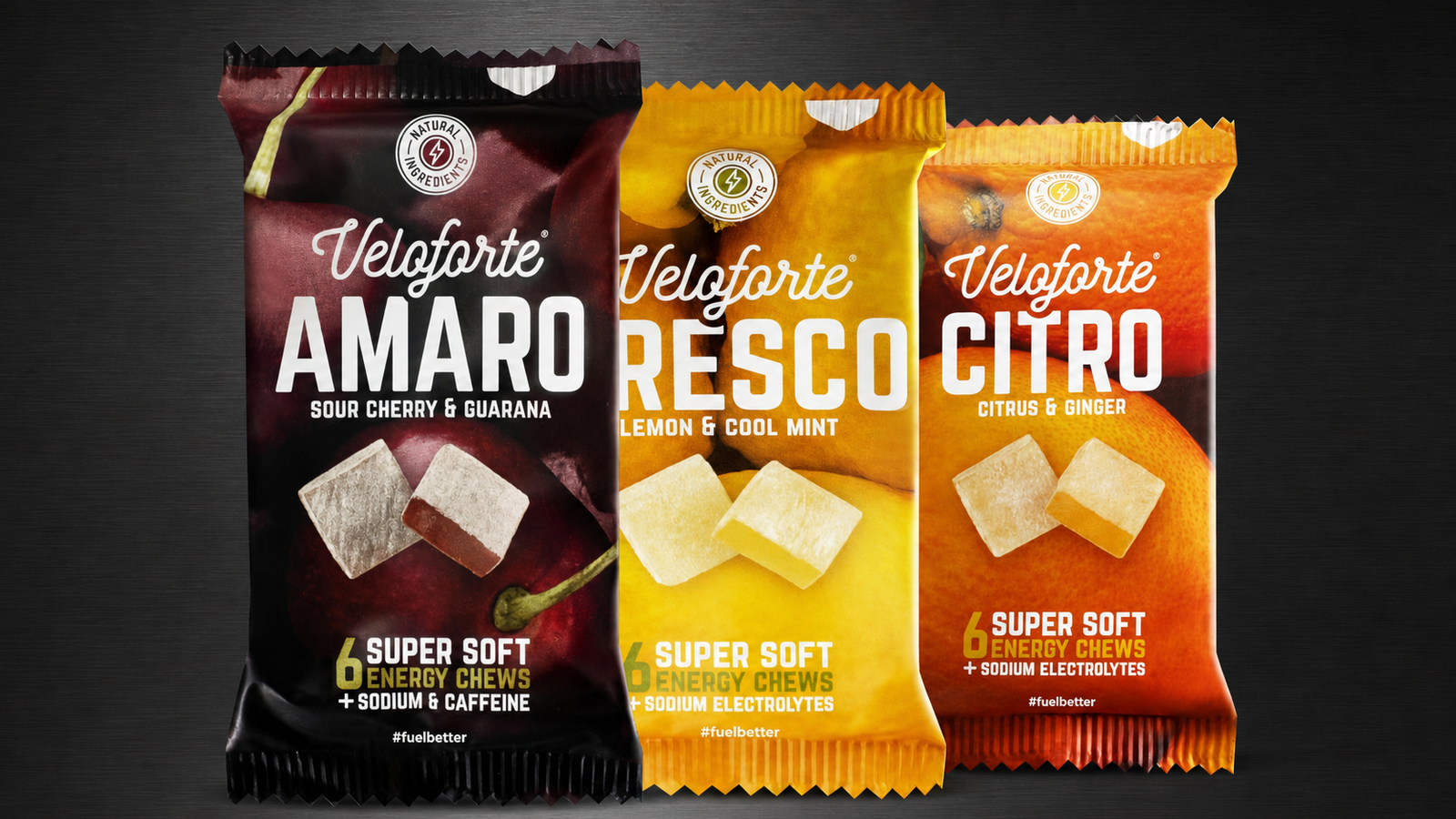
ENERGY CHEWS
For everyone who tried a gel once and never again. Chews let you take fuel in small pieces rather than a single sweet hit, which suits people whose stomachs rebel at the texture or the concentration. Same carbohydrate, spread over several minutes.
60 GRAMS, 90 GRAMS, AND A TRAINABLE GUT.
This is where the science gets genuinely interesting, and where the numbers on the sachet start to mean something. There is a hard ceiling on how much carbohydrate you can absorb per hour — but you can raise it, and the mechanism is not what most people assume.
Why 60 Grams Was The Old Limit
Glucose crosses your intestinal wall through a transporter called SGLT1, and that transporter saturates at roughly 60g of glucose per hour. Take more and it simply sits in your gut, which is where the classic marathon stomach disaster comes from — not weak willpower, a queue at a biological door.
The breakthrough was that fructose uses a completely different transporter. Combine the two in roughly a 2:1 glucose-to-fructose ratio and you open a second lane — taking usable intake up to about 90g per hour. Early research found this raised carbohydrate oxidation by around 50% compared with glucose alone.
And your gut adapts. Repeated exposure to higher intakes during training increases the number of those transporters, speeds up stomach emptying and quietens the symptoms. Someone who can only handle 60g an hour can typically build to 90g, sometimes more, across 6 to 12 weeks of deliberate practice. This is called gut training and it is a real, boring, effective thing you do on your long runs.
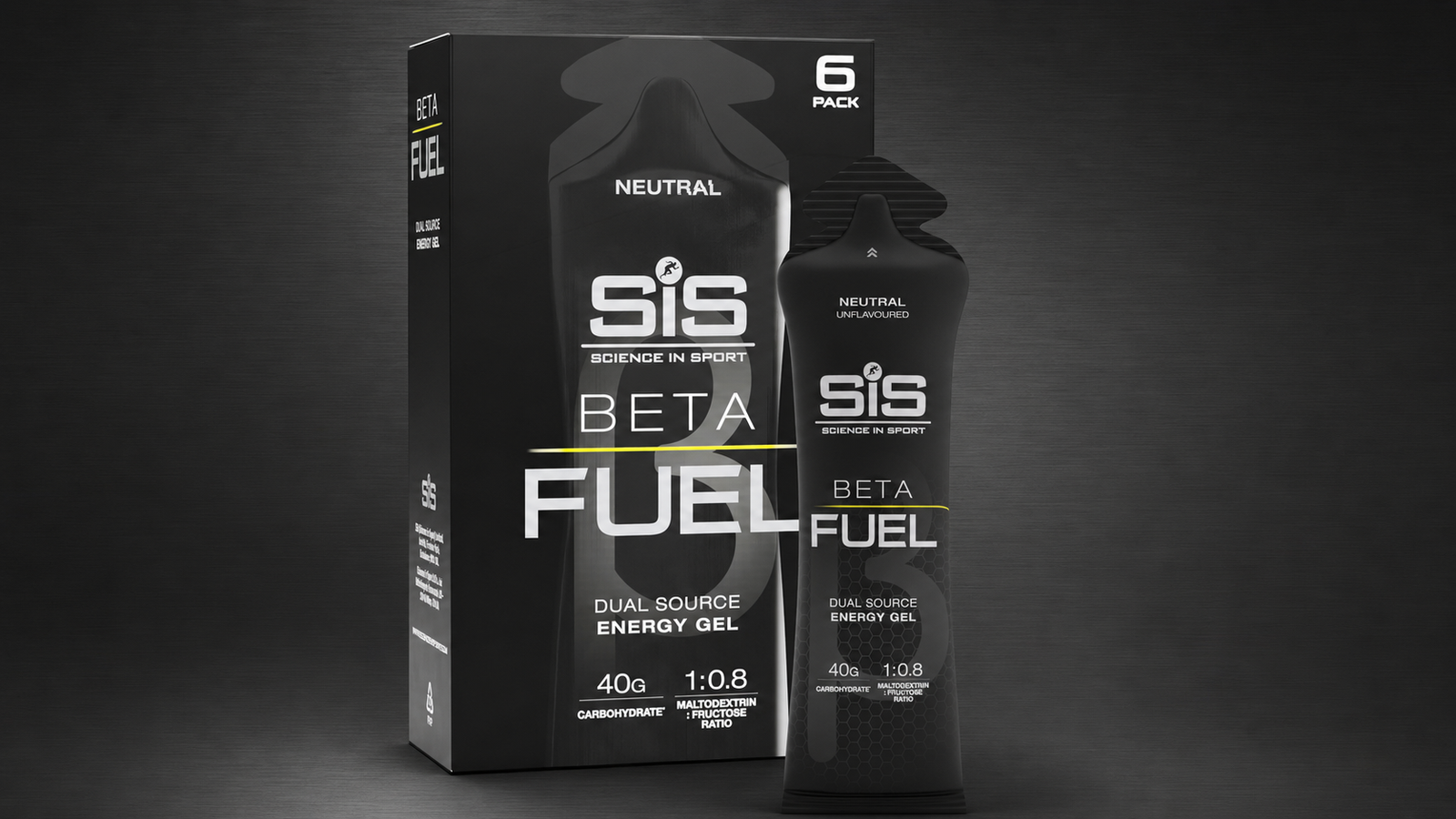
HIGH-CARB DUAL-SOURCE GEL
What you graduate to when the long runs pass two hours. Around 30g of carbohydrate per sachet in the glucose-fructose blend the research points at — meaning three an hour gets you to 90g without carrying a pocketful. Reviewers consistently rate Torq, Precision Fuel and similar dual-source gels at the top for exactly this.
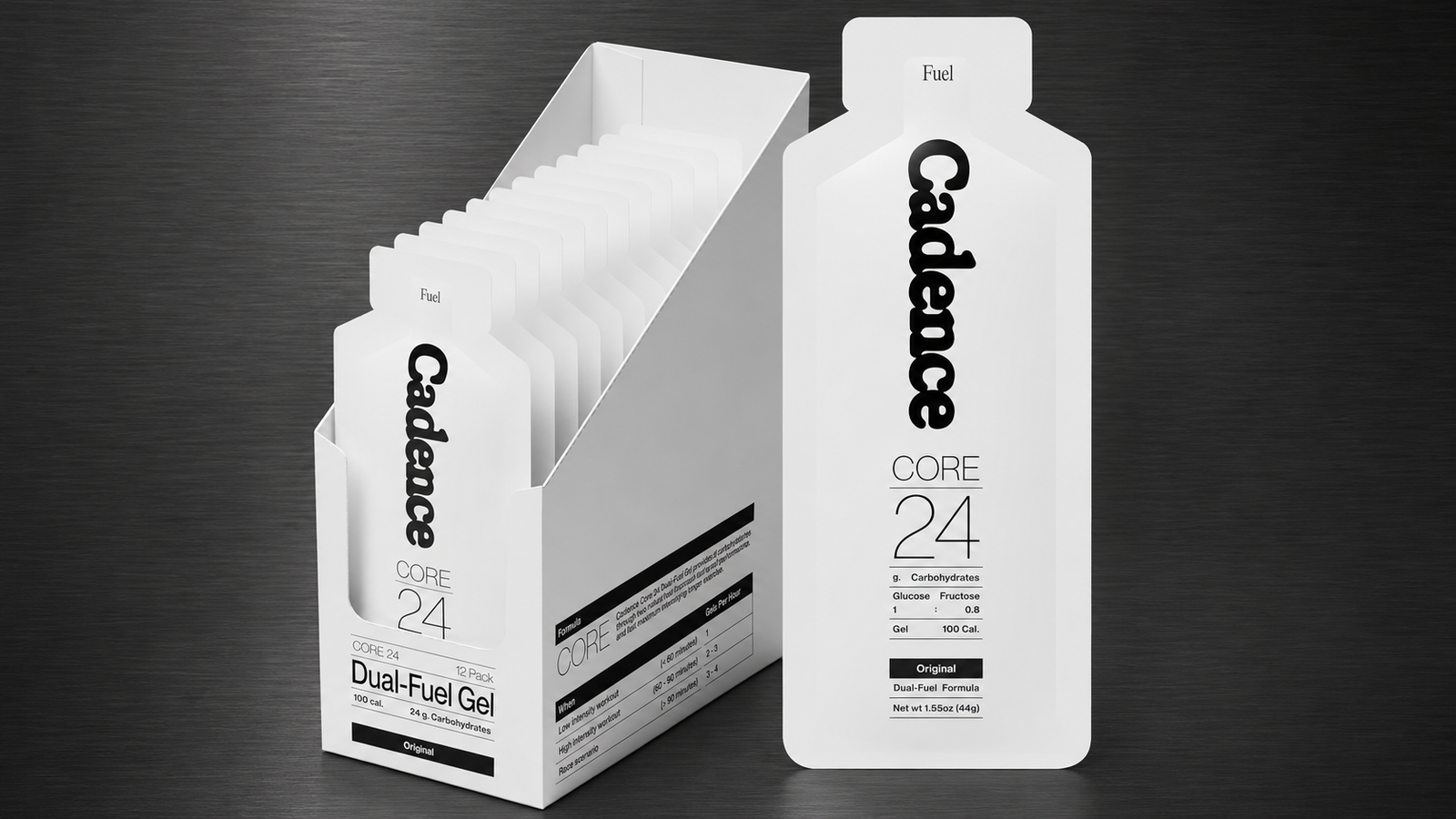
HYDROGEL — FOR BAD STOMACHS
If gels have historically ended your long runs early, this is the category worth trying. Hydrogel technology encapsulates the carbohydrate so it passes through the stomach more comfortably, and runners with a history of gut trouble consistently report fewer problems with it than anything else.
WATER ALONE CAN ACTUALLY BE DANGEROUS.
This is the most serious thing on this page and it deserves your attention for two minutes. The instinct to drink as much as possible during a long race is not merely unnecessary — it has killed people.
Exercise-Associated Hyponatraemia
When you sweat you lose salt as well as water. Replace only the water and your blood sodium concentration falls — a condition called hyponatraemia, which causes the brain to swell and can lead to seizures, coma and death.
A study of runners in the Boston Marathon published in the New England Journal of Medicine found it occurred in a substantial fraction of the field. The single strongest predictor was not heat or pace — it was weight gain during the race, which is to say drinking more fluid than was lost. By 2000 there had been clusters of cases among marathon runners, with confirmed deaths.
The practical version is unglamorous: drink to thirst rather than to a schedule, and on anything long or hot, put sodium in what you drink. If you finish a race heavier than you started, you drank too much.
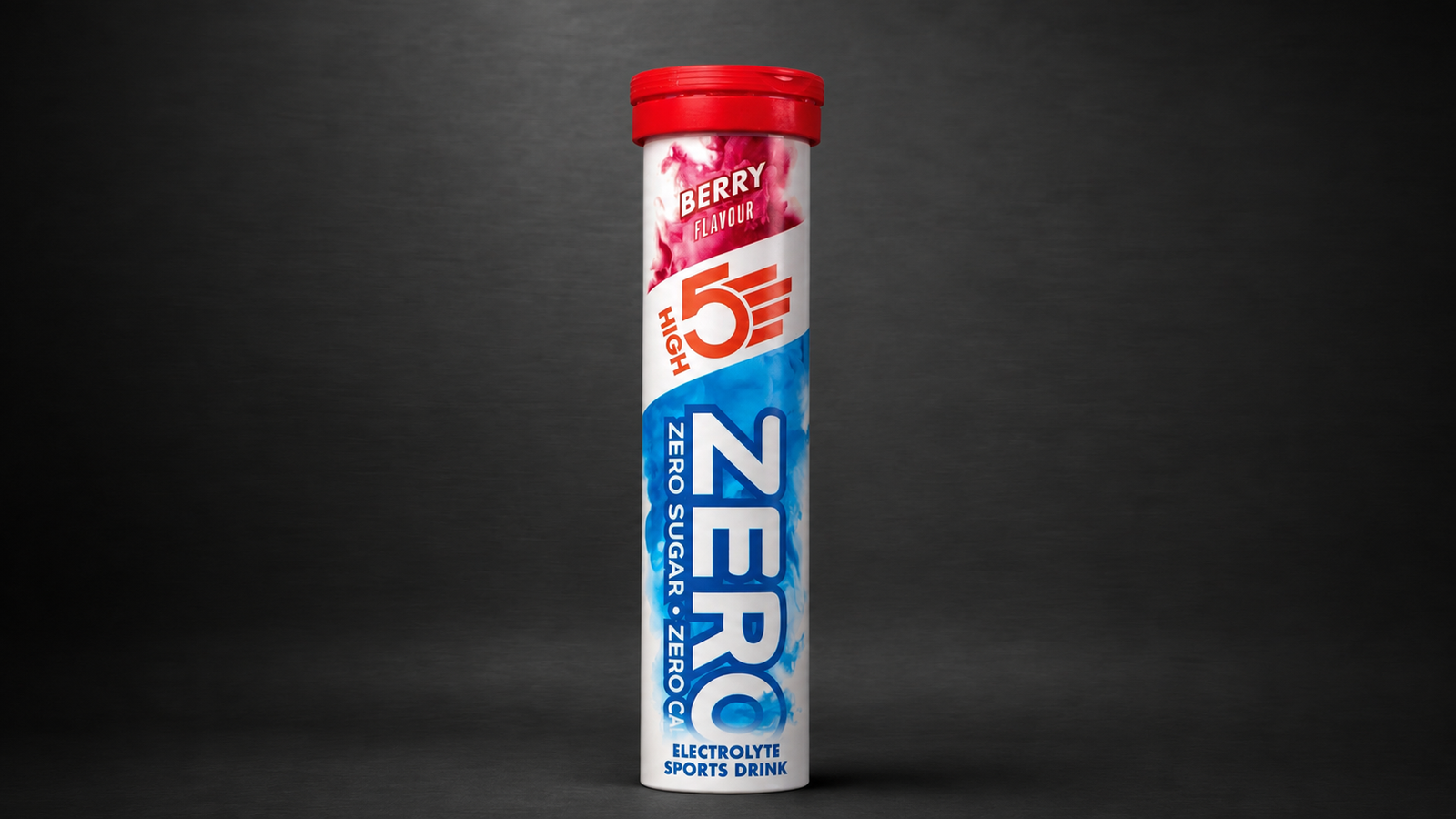
ELECTROLYTE TABLETS
A tablet in a water bottle, which is genuinely the whole product. Look at the sodium figure rather than the packaging — there is a real difference between brands, from around 100mg per serving at the light end to around 300mg for sport-focused ones. For summer long runs and hot races, the higher figure is the one you want.
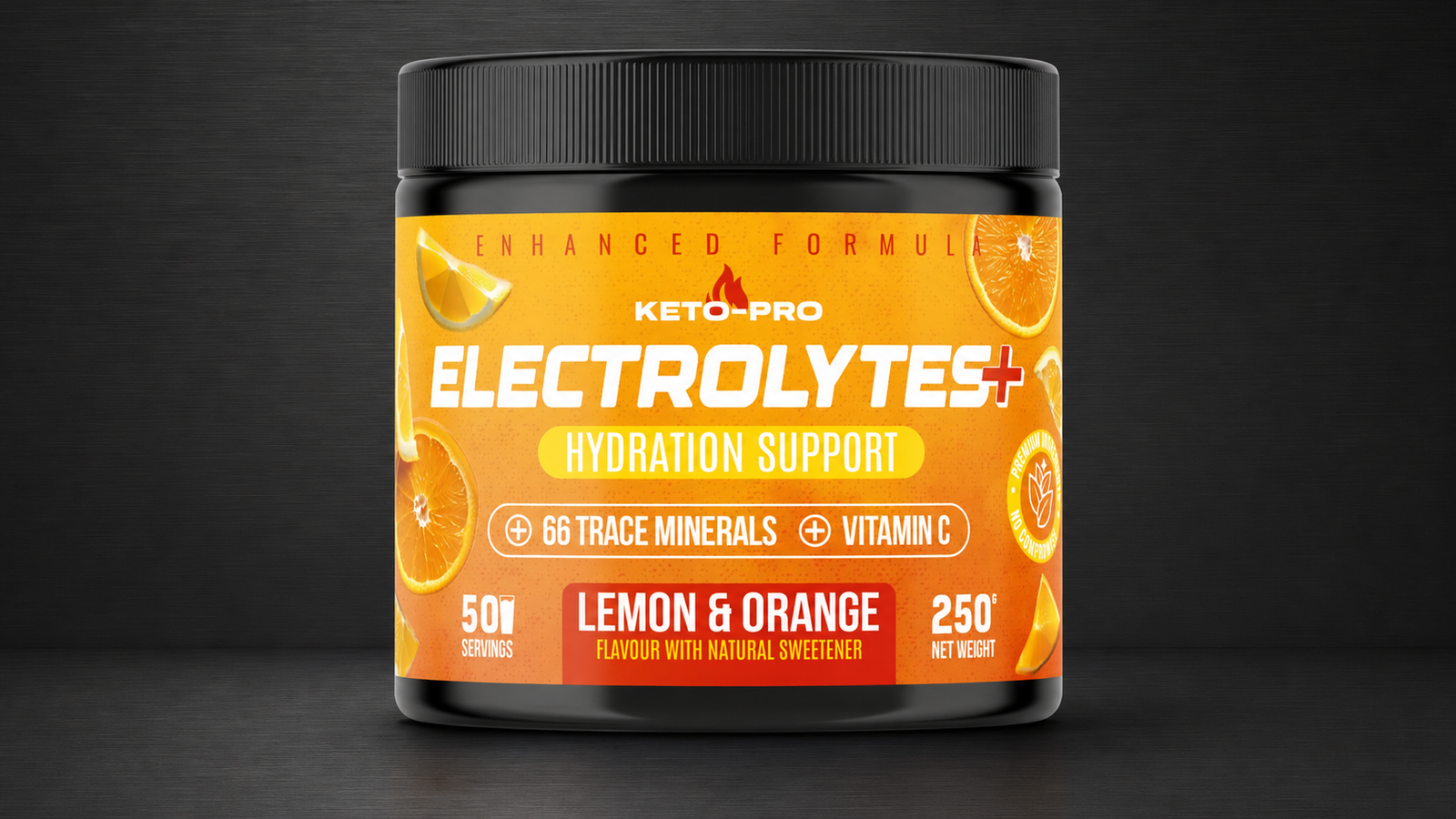
HIGH-STRENGTH ELECTROLYTE MIX
For people who finish runs with salt crusted on their face — and if that is you, you know it. Sold in different sodium strengths so you can match the dose to how much you actually lose, which is a genuinely useful idea rather than marketing. Worth it for hot races and long efforts.
THE ONE THING THAT RELIABLY WORKS.
Of everything in a running nutrition aisle, caffeine has by some distance the strongest evidence behind it — and it is also the cheapest. You almost certainly already own the best delivery system, and it is a kettle.
What The Research Actually Says
The consistent finding across systematic reviews: 3 to 6mg of caffeine per kilogram of bodyweight, taken around 45 to 60 minutes before exercise, improves endurance performance by roughly 2 to 7% and lowers how hard the effort feels.
For a 65kg woman that is about 195–390mg — somewhere between a strong coffee and two. Notably, the lower end of that range delivers most of the mental benefit with fewer side effects, so more is genuinely not better. And it works whether it arrives as a gel, a tablet or a flat white.
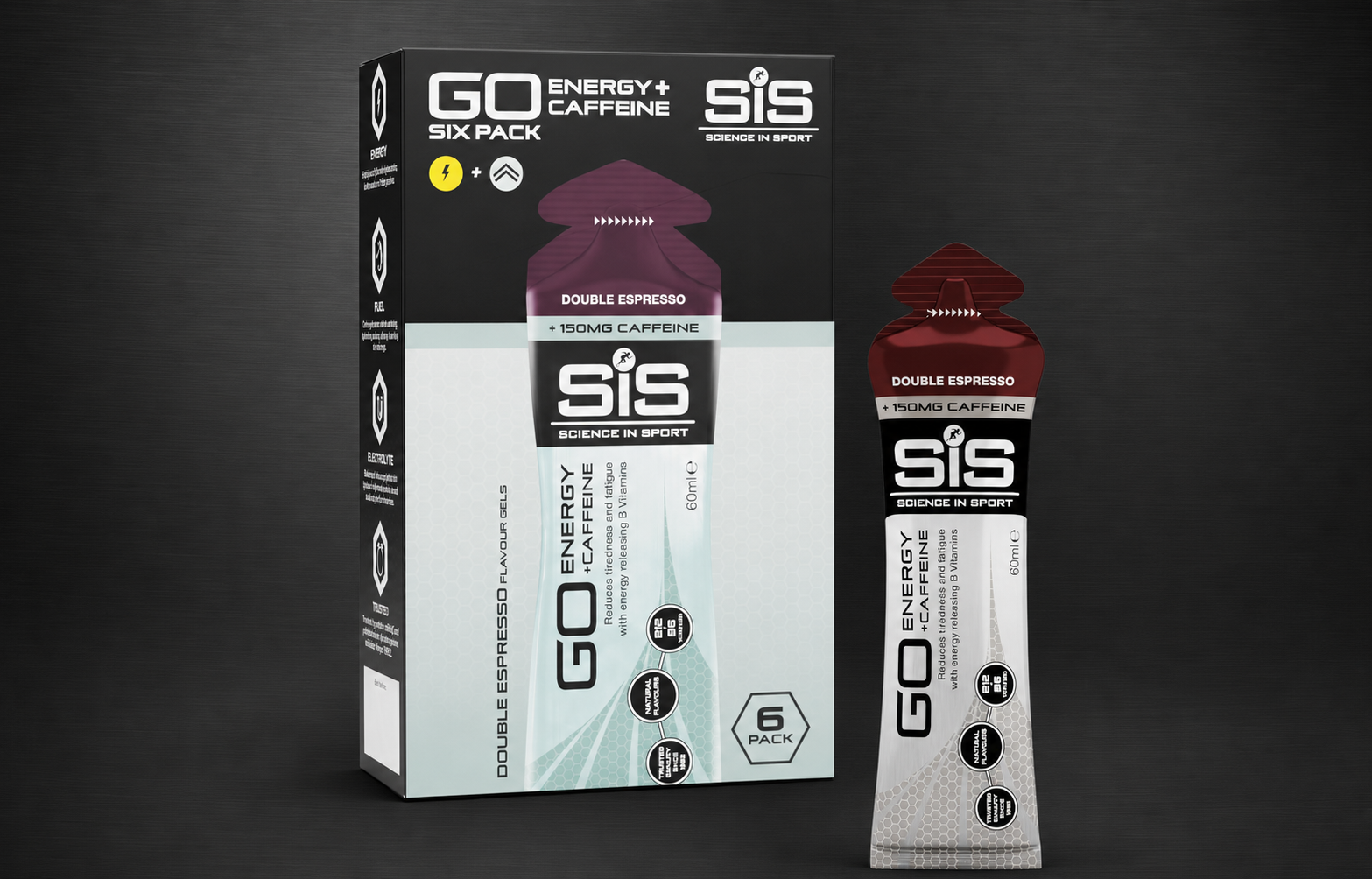
CAFFEINE ENERGY GEL
The sensible use of these is not at the start — it is saving one for the point in a long race where everything gets mentally difficult, usually somewhere past two thirds. Carbohydrate and caffeine in one sachet, at the moment you need both.
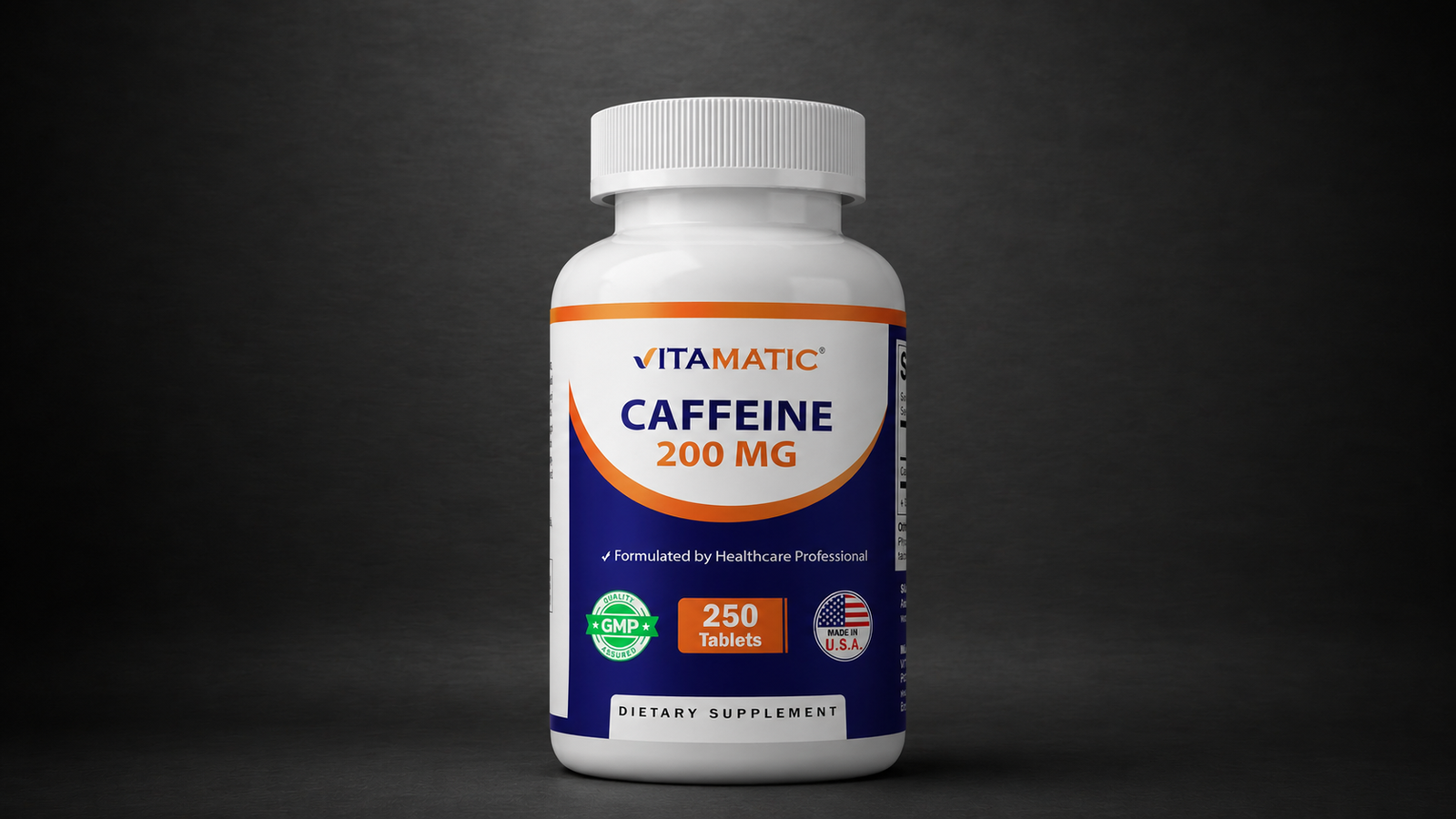
CAFFEINE TABLETS
The unglamorous option that lets you actually control the dose. A 100 or 200mg tablet 45 minutes before a race is measurable in a way that “a coffee” never is — useful if you are trying to hit the researched range deliberately rather than approximately.
JELLY BABIES BEAT MOST OF THIS PAGE.
I want to be honest about something that costs me money to say. For a very large number of runs, a bag of jelly babies from a corner shop does the same job as an engineered gel for about a tenth of the price. They are sugar, they are easy to eat, and generations of runners got round marathons on them before the sports nutrition industry existed.
The genuine case for gels is not that they work better — it is portability, precision and the dual-carb ratio at high intake. If you are chasing 90g an hour in a marathon, engineered products make that possible. If you are doing a two-hour trail run for the pleasure of it, sweets are fine and always were.
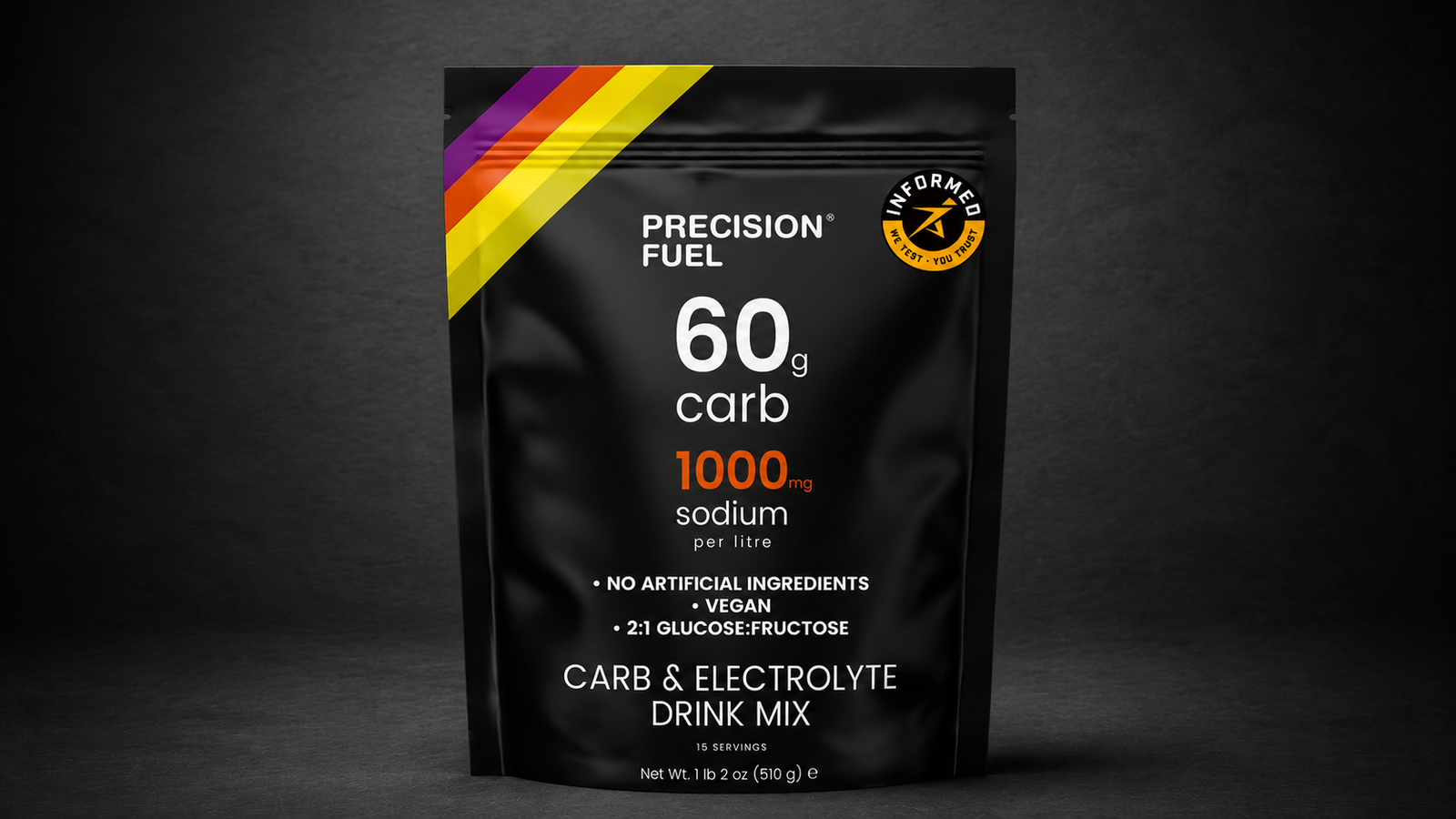
CARB DRINK MIX
The option people forget. Carbohydrate and fluid in the same bottle means fewer sachets, less faff and a steadier intake than gulping a gel every forty minutes. Particularly good on trail, where you are carrying a vest anyway.
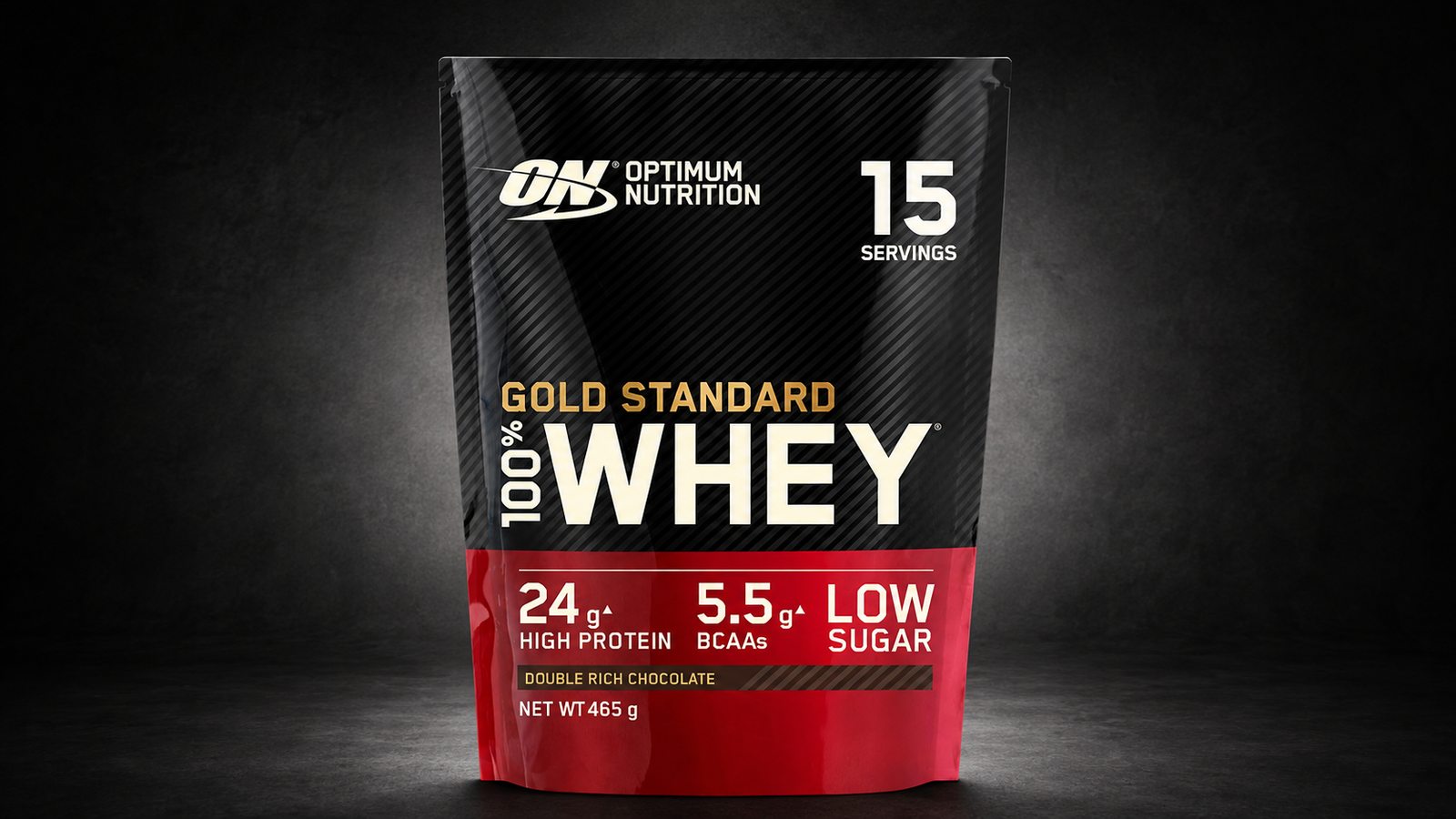
RECOVERY PROTEIN
What actually matters afterwards is getting protein and carbohydrate in within a couple of hours, and a shake is simply the most convenient version when you have a shift to get to. Not magic — a proper meal does the same job — but a proper meal is not always available at 7am.