Running · Trail Guide
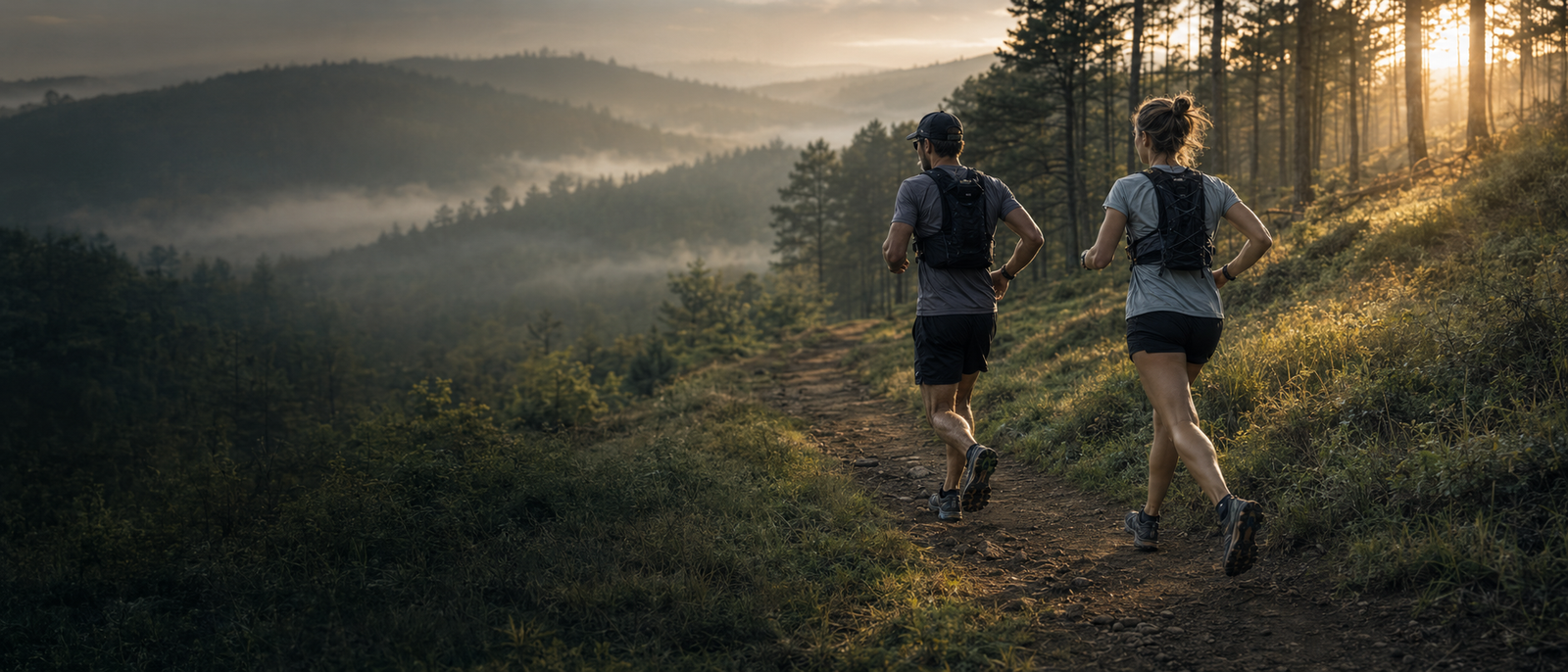
Road running has rules. Trail running has terrain. It is a completely different sport — and once you make the switch, the road will never feel quite the same again.
Section 01
Trail running is running on unpaved surfaces — footpaths, bridleways, forest tracks, hillsides, coastal paths, moorland. That is the technical definition. The actual definition is harder to put into words but immediately recognisable once you have experienced it.
On a road, the ground does the same thing every time. You develop a rhythm and you maintain it. On a trail, the ground is constantly changing. You are never on autopilot. Every step requires a small decision — where to place your foot, how to weight your landing, when to shorten your stride. It is physically harder and mentally quieter than road running.
It is also considerably kinder on the body. The varied terrain distributes impact load across different muscle groups. Experienced trail runners frequently report fewer overuse injuries than their road counterparts — a finding supported by several studies comparing injury rates between the two disciplines.
"On a road you run to a destination. On a trail you run through a landscape. The difference sounds small. It is not."
SECTION 02
The single biggest mistake new trail runners make is trying to maintain their road pace on technical terrain. Forget your pace entirely for the first few months. Run by effort, not by speed.
Start on gentle, well-marked trails, walk every uphill without guilt, and keep your first few runs shorter than you think you need — the terrain does the rest of the work for you.
Read The Full Beginner Guide →Section 03
Trail running gear exists on a spectrum from genuinely essential to completely optional. The fitness industry's incentive is to make everything sound essential. Here is an honest breakdown of what matters and what does not.
Essential · Footwear
The one non-negotiable. Trail shoes have lugged outsoles that grip mud, rock and wet roots. Road shoes on a slippery trail are a liability. You do not need to spend £150 — but you do need proper trail grip.
Hoka Speedgoat · Salomon Speedcross · Inov-8 Mudclaw
Essential · Hydration
For runs over an hour on trail, a hydration vest is necessary — not optional. You will be away from road access, water sources are unreliable and the effort level means you sweat more than your pace suggests.
Salomon Active Skin · Nathan VaporAiress · Ultimate Direction
Recommended · Navigation
A GPS watch with mapping capability is worth its weight in trail running. Getting lost on an unfamiliar route is not character-building — it is a cold, wet inconvenience that a £200 piece of technology eliminates entirely.
Garmin Forerunner · Suunto Race · COROS Pace 3
Recommended · Clothing
On exposed terrain conditions change quickly. A packable wind jacket weighs almost nothing, fits in a vest pocket and has saved more trail runs from misery than any other single item. Non-negotiable October to April in the UK.
Inov-8 Raceshell · Salomon Bonatti · Montane Minimus
Optional · Traction
Short trail gaiters stop debris entering your shoes on technical terrain. Deeply optional for most UK trail running, but on long days in the hills they prevent enough irritation to justify the £25.
Inov-8 Trail Gaiter · Salomon Trail Gaiter · OR Flex-Tex
Safety · Navigation
If you run before sunrise or after sunset — which in the UK means October through March — a headtorch is not optional. A decent one costs £30 and lasts years.
Petzl Actik · Black Diamond Spot · Ledlenser NEO6R
Section 04
The most important adjustment when moving from road to trail is abandoning pace as your primary training metric. Trail running is trained by effort, elevation gain and time on feet — not kilometres per hour.
A flat 5K trail run at conversational effort might take 30 minutes. The same effort on a hilly route with 200m of elevation might take 50 minutes. Both are equivalent training sessions. The GPS number is not the point.
| Week | Session 1 | Session 2 | Session 3 | Focus |
|---|---|---|---|---|
| 1–2 | Easy 30 min flat trail, walk all uphills freely |
Easy 20 min road + 15 min easy trail |
Easy 35 min flat canal path or forest road |
Foot placement, looking ahead, surface changes |
| 3–4 | Easy 40 min trail with gentle elevation |
Build 30 min including 3 × short hill reps |
Easy 45 min flat to rolling trail |
Introducing elevation. Walk steep uphills. Controlled descents. |
| 5–6 | Build 50 min trail, moderate elevation |
Hard 40 min including sustained hill efforts |
Easy 60 min long slow trail with vest |
First long run with hydration vest. Fuelling practice. |
| 7–8 | Build 60 min technical trail |
Hard 45 min hilly route at effort |
Easy 75 min long trail — any terrain |
Technical confidence. Navigation awareness. Longer runs. |
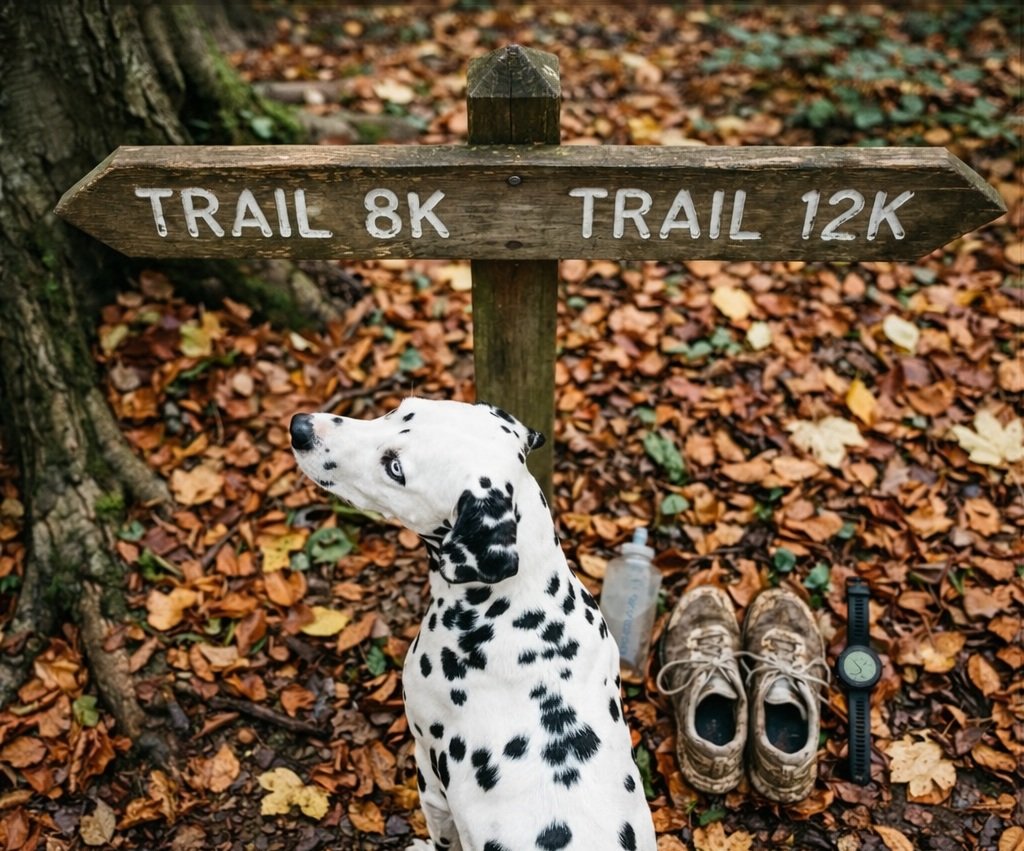
Running with a dog changes everything about how you experience trail running — you stop obsessing about pace and start actually looking at where you are. But it takes preparation and some adjustment to how you run.
Build distance gradually. A dog that runs 5K off-lead cannot immediately do a 15K trail. Their fitness builds progressively, exactly like yours.
Hydration is critical. Dogs regulate temperature poorly. Carry water and a collapsible bowl, non-negotiable in warm weather.
Check paws after every run. Trail terrain causes damage the dog won't show you. Regular checks catch it early.
Lead etiquette on shared trails. Near livestock, narrow paths and other runners — lead your dog. The trail belongs to everyone.
Section 06
The UK is one of the best trail running destinations in the world. Access legislation, a dense network of rights of way and remarkable geographic variety make this country exceptional for off-road running at every level.
North England · Cumbria
The spiritual home of British fell running. Hundreds of routes from accessible valley paths to serious mountain terrain. Helvellyn, Blencathra and Skiddaw offer classic ridge lines. Start from Keswick or Ambleside.
South England · East Sussex
160km of chalk downland ridge from Winchester to Eastbourne. Wide tracks, coastal views and manageable elevation — perfect for building trail distance without technical difficulty.
Scotland · Highlands
The Ben Nevis Race route: 14.4km with 1,344m of elevation gain. One of the oldest hill races in the world. Requires navigation skills and proper mountain kit.
Wales · Brecon Beacons
Pen y Fan is the obvious start but the real running is on the ridgelines either side. Exposed, remote moorland running with long views and very few other people.
North England · Yorkshire
An almost unlimited network of limestone paths, valley trails and moorland routes. Malham, Wharfedale and Swaledale all reward regular exploration.
South West · Cornwall
630 miles of coastal trail from Minehead to Poole. The Penwith Peninsula and sections around Fowey are particularly rewarding for trail running.
Trail running has accumulated its own mythology. Here are the main beliefs that circulate in running communities — and what the evidence actually says.
Myth Busted
Your pace slows on trail because the terrain demands it, not because your fitness is declining. Compare effort and heart rate instead of minutes per mile — by that measure, trail running builds real fitness road pace can't touch.
Read More →Myth Busted
Most trail injuries come from going too fast on unfamiliar terrain, not from the terrain itself. Start on well-marked, gentle trails, walk the technical sections, and the risk drops close to that of road running.
Read More →Myth Busted
A pair of road trainers with decent grip will get you through your first few trail runs. Trail shoes, poles and a hydration vest matter once you're covering distance or technical ground — not before you've decided you enjoy it.
Read More →