START WHERE YOUR body actually is.
This is for the beginner, the busy woman, and anyone who wants to build real strength at home without turning the living room into a gym. No gym membership, no barbell, no prior experience required.
I also came back to training after two caesareans, so there's a dedicated section further down for returning after pregnancy — but the main programme below works as a general beginner plan whether or not that applies to you. Everything here is affordable and forgiving to start with: a resistance band or a light pair of dumbbells and two short sessions a week is a genuinely practical way to begin building strength.
Please Read This First
This is not medical advice. If you're generally healthy with no recent pregnancy, surgery or injury that changes how you should exercise, the plan below is a reasonable place to start.
Returning after pregnancy? Recovery varies a lot. After a straightforward birth, gentle activity can often begin when you feel ready. After a caesarean or a more complicated delivery, recovery is usually longer — speak with your midwife, health visitor, GP or a pelvic-health physiotherapist before returning to strenuous or loaded training. See the dedicated section below.
Returning after an injury or surgery unrelated to pregnancy? Please use individual guidance from an appropriate clinician rather than this general programme.
Struggling with low mood or anxiety? Please talk to your GP or health visitor. As an Amazon Associate I earn from qualifying purchases. Same price for you. Full disclosure.
Start Here
WHICH PATH IS YOURS?
A · General Beginner
NO RECENT PREGNANCY, SURGERY OR INJURY
Nothing currently changes how you should exercise. The 2-day programme below is a straightforward place to start, no matter your age or training history.
Start The Beginner Plan →B · Returning After Pregnancy
SAME PRINCIPLES, DIFFERENT PACE
The same strength principles apply, but how quickly you progress depends on your recovery, your symptoms, and professional advice where needed.
Read The Postnatal Notes →Your First Two Weeks
A SMALL PLAN, REPEATED.
A short session can be enough to start. Two consistent sessions a week is a practical beginner target — session length depends on the exercises, rest and your setup, not a fixed number of minutes.
Then move into the full 2-day programme below — same idea, more structure.
FOUR FACTS NOBODY TELLS BEGINNERS.
Before the kit, the case — because knowing why tends to outlast motivation.
Strength
Frequency
Postpartum
Mental Health
The Programme
THE 2-DAY HOME STRENGTH PLAN.
Two sessions a week, covering every major movement pattern. Each exercise has three options — bodyweight, band, dumbbell — so it works whatever you have.
Workout A
SQUAT, PUSH, ROW, HINGE, CORE
Squat / Sit-To-Stand
No kit: Chair Sit-To-Stand · Bodyweight: Squat · Dumbbell: Goblet Squat
Horizontal Push
No kit: Wall Push-Up · Bodyweight: Counter/Incline Push-Up · Dumbbell: Floor Press
Row
Band: Long-Band Row · Dumbbell: One-Arm Row
Hip Bridge / Hinge
No kit: Glute Bridge · Band: Banded Bridge · Dumbbell: Romanian Deadlift, when appropriate
Core / Carry
General: Dead Bug Variation · Alt: Suitcase Carry
Workout B
LUNGE, PRESS, PULL, HINGE, CARRY
Split Squat / Lunge
No kit: Supported Split Squat · Bodyweight: Reverse Lunge · Dumbbell: Loaded Split Squat
Vertical / Angled Press
Band: Band Press · Dumbbell: Shoulder Press · Alt: Incline/floor press if overhead is uncomfortable
Vertical Pull / Upper Back
Band: Band Pulldown · Accessory: Band Pull-Apart (add-on, not a full replacement)
Hinge
No kit: Bodyweight Hip Hinge · Band: Band RDL · Dumbbell: Dumbbell RDL
Carry / Core
General: Farmer Carry · Alt: Side-Plank Regression or another suitable core option
Sets
1–2 working sets weeks 1–2, then 2–3 where appropriate
Reps
Roughly 6–15, depending on the exercise and resistance
Effort
Finish most sets with 2–3 good reps still possible
Rest
About 60–180 seconds, depending on the movement
Progression
- Make the movement controlled first.
- Build toward the top of the rep range.
- Increase resistance — a stronger band or a heavier dumbbell.
- If the next jump feels too big, use more reps or a slightly stronger band instead, then drop back to the lower end of the rep range at the new resistance.
Change one variable at a time — don't add reps, sets and resistance all in the same week.
Optional Third Session
A short mobility session, a walk, or a light repeat of Workout A or B — useful if your schedule and recovery allow it, but not required to make the plan work.
No Kit Yet? Start Anyway.
Every pattern in the programme above has a no-kit option built in — you can start today with what's already in the room. Bodyweight can start the habit; resistance becomes useful once the bodyweight versions stop being challenging.
How To Progress
START LIGHT, THEN EARN THE LOAD.
Make it controlled first. A clean rep is one you can do without losing form — that matters more than the number on the band or dumbbell.
Build toward the top of your rep range before adding any resistance.
Then increase resistance — a stronger band or the next dumbbell up.
If the next jump feels too big, use more reps or a slightly stronger band instead of forcing it.
Some muscle soreness after a new exercise is normal and isn't a sign the plan is wrong — but it's not something to chase, either. Progress by adding one thing at a time, not everything at once.
WHAT HELPS — AND WHAT CAN WAIT.
You don't need all of it at once, and you never need a rack of chrome. Start with a band or two, add the rest as the programme asks for it.
Essential / First Buy
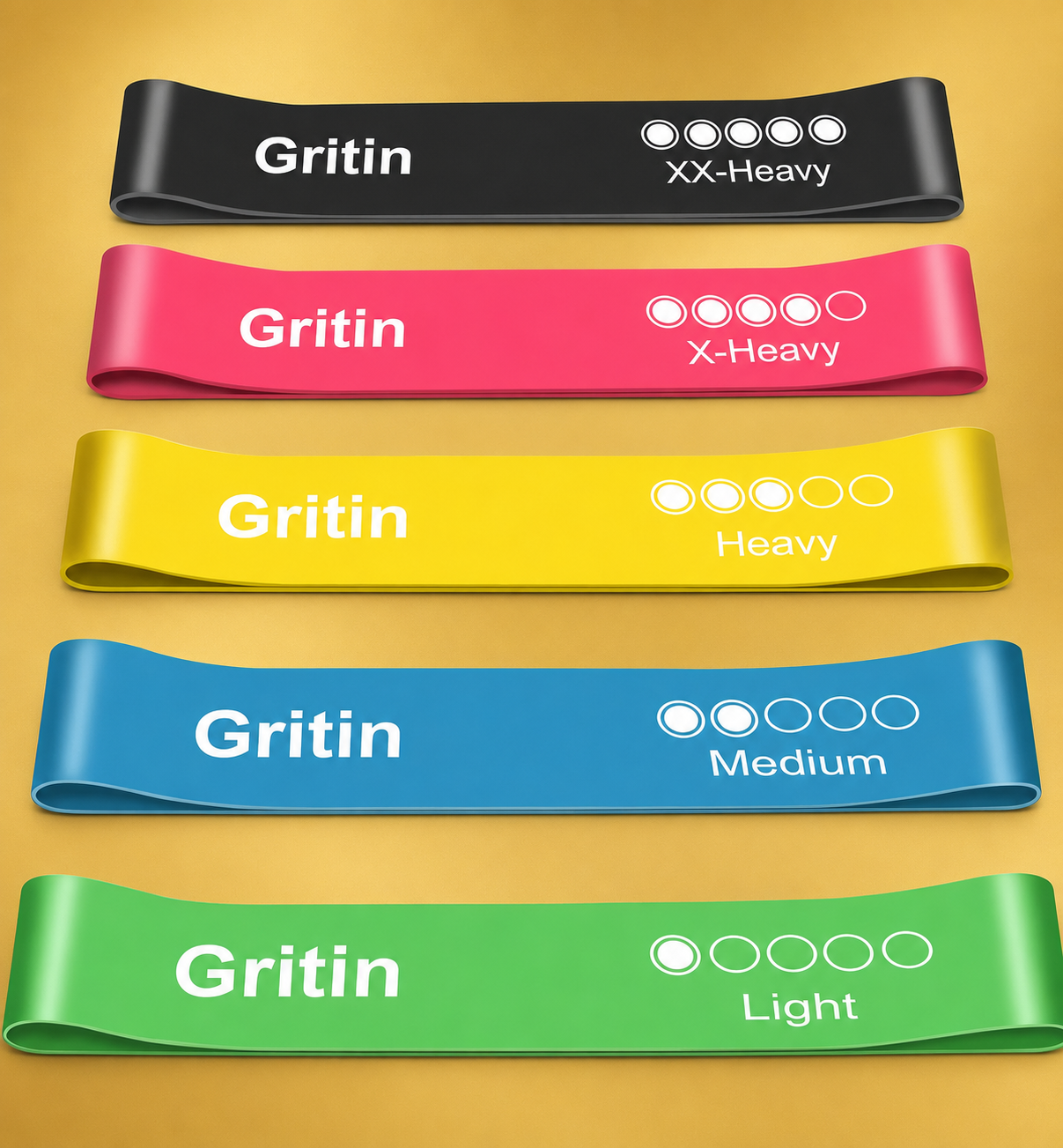
RESISTANCE LOOP BANDS
My favourite inexpensive first tool for glute and lower-body accessory work. Graded strengths take you from week one to genuinely hard months later — though they don't cover every movement pattern on their own, which is why long bands come next.
VIEW ON AMAZON UK →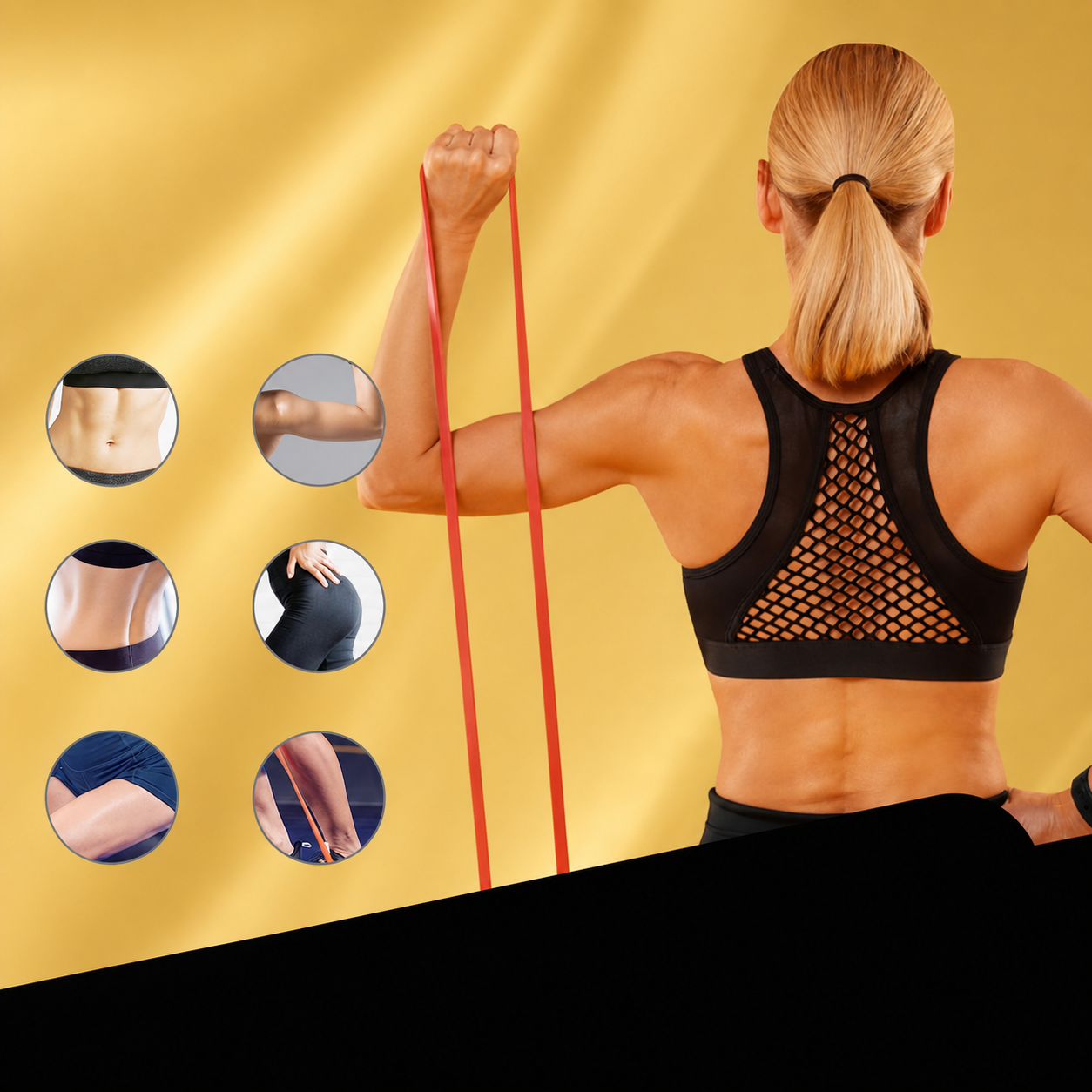
LONG RESISTANCE BANDS
Buy alongside the loop bands. Useful for rows, pulldowns and upper-back work when you don't have cable equipment — the pulling side of the programme that loop bands can't really do.
VIEW ON AMAZON UK →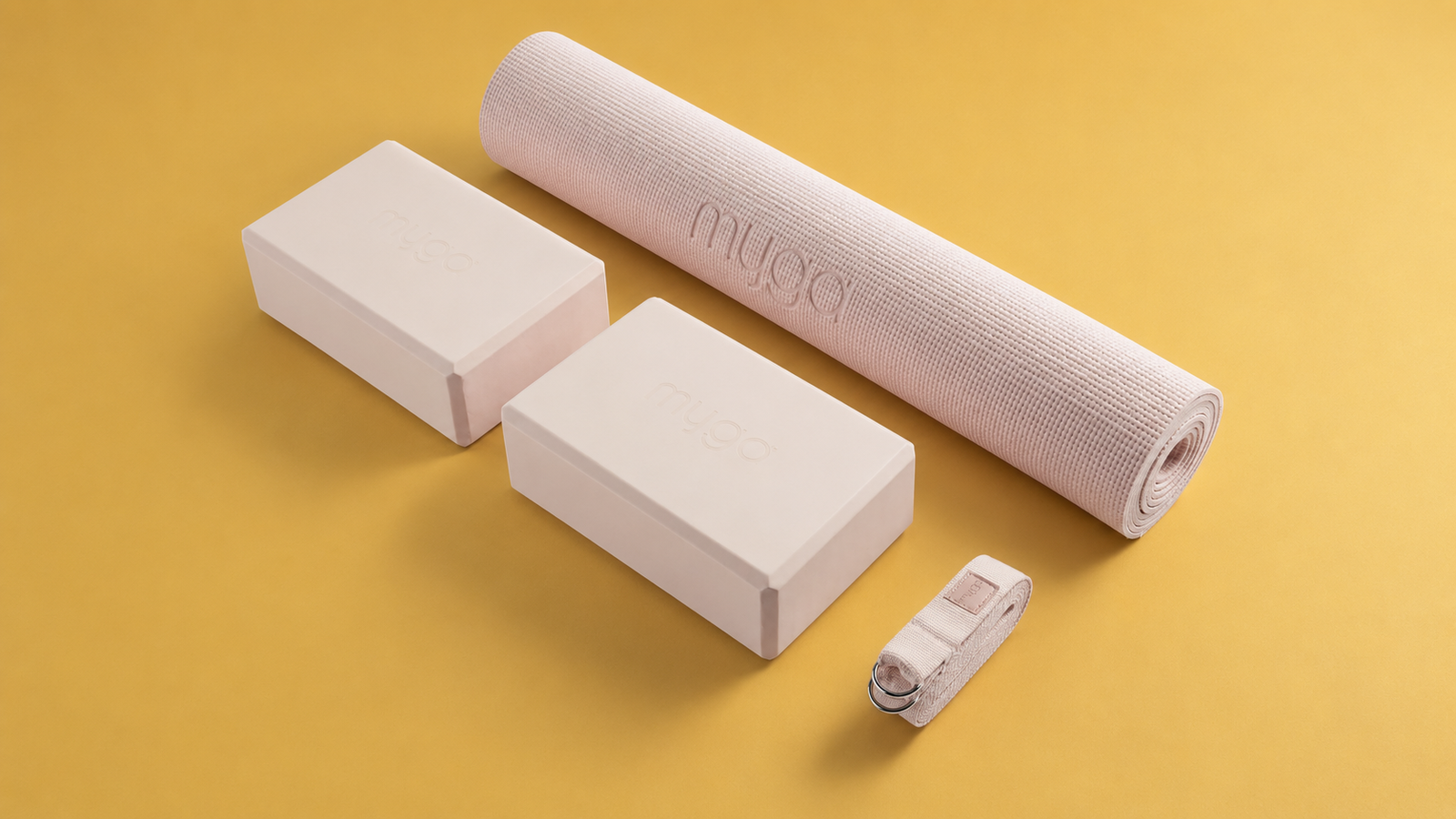
MAT & BLOCK
Optional if your floor is already comfortable to work on. A mat makes the floor more inviting and a block makes some positions easier to reach while you build strength and confidence.
VIEW ON AMAZON UK →Useful Next
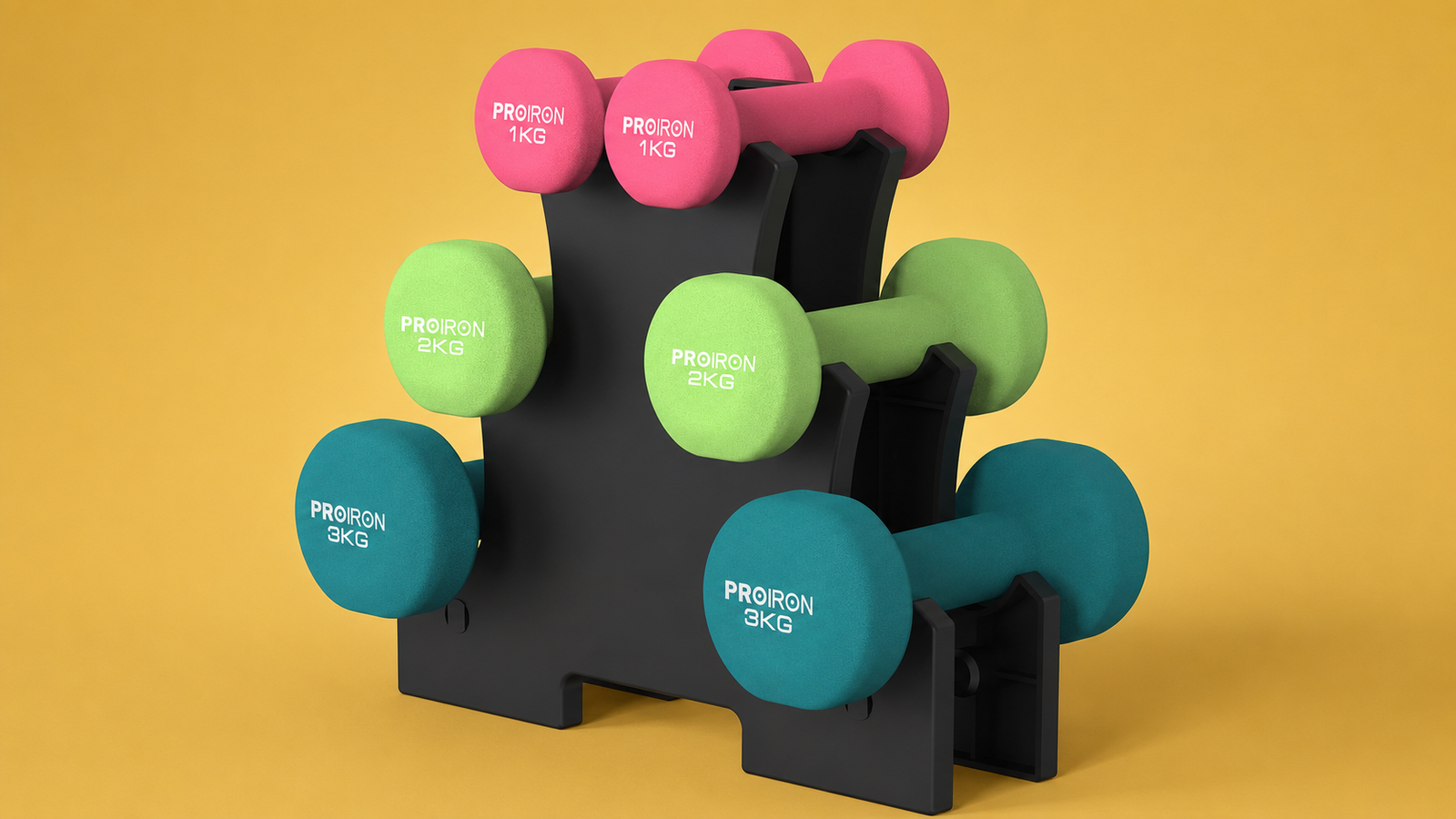
DUMBBELLS
Once bands feel easy for a movement, dumbbells add load you can feel and progress you can count. Choose a load that's challenging while leaving controlled reps in reserve — lower-body moves like squats can outgrow very light dumbbells fast, so an adjustable pair is worth considering as you progress. See the Dumbbells Guide for options.
VIEW ON AMAZON UK →Optional
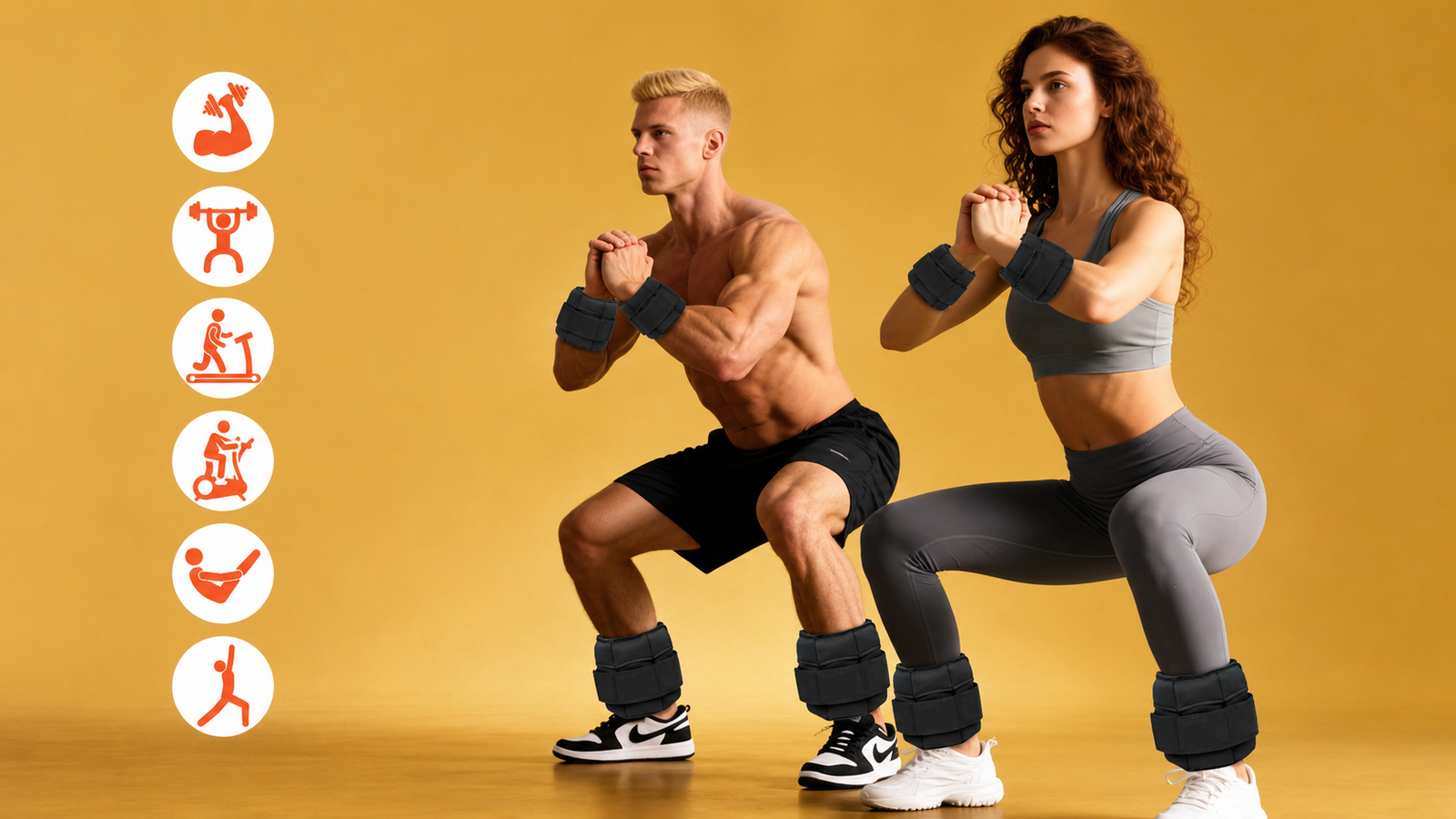
ANKLE & WRIST WEIGHTS
Not needed for this programme. They add joint loading and are easy to overuse — if you use them, keep them light and stick to one specific controlled exercise where they make sense, rather than wearing them generally.
VIEW ON AMAZON UK →SAME PLAN, DIFFERENT PACE.
After my own two caesareans, the strangest part wasn't the recovery itself — it was living in a body that had just done something enormous and no longer answered the way it used to. The internet calls it 'bouncing back', as if the goal is to erase what happened. I don't think that framing is right. You're not going back to an old body. You're building a new one that's strong enough for the life you have now — which is a better goal anyway.
The goal isn't the body you had. It's a body that can carry the life you have.
What helped me was making the first step small enough to actually repeat — ten minutes on a mat some days, when that was genuinely all there was time or energy for. That wasn't a compromise. It was the whole thing, started. If low mood is part of your experience too, please treat it as seriously as any physical recovery and talk to your GP or health visitor — movement can help, but it isn't a substitute for support.
When Can I Start?
After a straightforward birth, gentle activity — walking, stretching, pelvic-floor work — can often begin as soon as you feel up to it. It's still worth getting advice at your 6-week postnatal check before anything high-impact, like running or aerobics.
After a caesarean or a more complicated delivery, recovery is usually longer. Talk to your midwife, health visitor or GP before starting anything strenuous — your core and lower back may be weaker than before, and your joints stay more supple for a few months, which raises injury risk if you stretch or twist too hard, too soon.
The postnatal check is useful, but it isn't one universal "cleared for everything" date. When you're ready for loaded training specifically, the 2-day plan above works the same way — start with bodyweight and light resistance, and build from there at your own pace.
Diastasis (Abdominal Separation)
Some separation of the abdominal muscles is a common, normal part of pregnancy and early postpartum — one study found around 60% of women had some separation at six weeks, dropping to roughly 45% at six months and around a third at a year. For most women it's not a fixed, permanent thing. How it functions and whether it causes symptoms matters more than a single finger-width measurement.
Early on, especially if you notice doming or bulging along your midline, it makes sense to regress any exercise that causes it — easing back the range or the load rather than avoiding the movement family forever. Ab work, including things like crunches and planks, can generally be progressed over time as control and recovery improve; there's no fixed date when they become universally "allowed".
Pelvic Floor
Pelvic-floor muscle training is commonly recommended during and after pregnancy, and there's good evidence supporting it for preventing and treating urinary and faecal incontinence in this group specifically. It's a genuinely useful, well-supported habit — but it's one part of postnatal recovery, not a universal fix for every symptom.
Reasonable Reasons To Ask For A Pelvic-Health Physio
- Doming or bulging that persists or doesn't improve over time
- Pain that persists or worsens
- Any leaking — urinary or bowel
- A feeling of pelvic heaviness or pressure
- Difficulty with everyday function — lifting, standing, exercise
- General concern about your abdominal separation
This isn't a diagnosis — it's a list of reasons it's worth asking for an assessment. If anything here applies to you, ask your GP for a referral to pelvic-health physiotherapy, where available.
WHAT NOT TO WASTE MONEY ON.
This is where a shopping page usually sells you a gadget — and this one won't. The site is called Fit & Myth for a reason.
WAIST TRAINERS & SWEAT BELTS
They feel like they work — you come off wetter and a size smaller.
Sweating more around your waist changes fluid loss temporarily; it doesn't selectively remove abdominal fat. Targeted exercise doesn't spot-reduce fat from one area either — if fat loss is a goal, it comes from overall energy balance over time, not compression around one body part.
POSTURE BRACES
The brace holds you up the moment it's on, so it feels like an instant fix.
A brace can offer temporary positioning or symptom support in some situations, but it doesn't replace progressive strength, mobility work, or clinical treatment when needed. Band pull-aparts and rows build a back that stands tall on its own.
THE STARTER RULES THAT ACTUALLY MATTER
START WITH THE TOOL YOU'LL ACTUALLY USE
Bodyweight, bands and dumbbells can all build real strength. The right first tool is the one you'll actually pick up again — not whichever this page ranks highest.
TWO CONSISTENT SESSIONS BEAT A PERFECT PLAN YOU SKIP
Two full-body sessions a week is a practical, sustainable target for most beginners. Consistency is what changes your body — not finding the theoretically perfect session length.
PROGRESS ONE VARIABLE AT A TIME
Reps, then resistance — not both at once. Slow, steady changes are what you can actually sustain for months, not just for one good week.
IF YOU'RE RETURNING AFTER PREGNANCY, SYMPTOMS SET THE PACE
Doming, pain, leaking or pelvic pressure change what happens next, not a date on a calendar. See the notes above for what to watch for and when to ask for help.
QUICK ANSWERS
Can I get stronger at home without a gym?
Yes. Bodyweight, resistance bands and a modest set of dumbbells cover every major movement pattern in the programme above — a gym gives you more equipment variety, but it isn't required for the strength-building stimulus itself.
How often should a beginner strength train?
Two full-body sessions a week are a practical starting point for many beginners; a third short session is optional if recovery and schedule allow. Consistency matters more than hitting an exact number of minutes.
Do I need resistance bands or dumbbells?
Neither is required to start — every exercise in the programme has a no-kit option. Bands are a cheap, forgiving way to add resistance early on; dumbbells become useful once bodyweight and bands stop feeling challenging.
How do I know when to make an exercise harder?
When you can complete the top of your rep range with good form and reps to spare. Add resistance then — not before, and not all at once alongside more reps and more sets.
What if I'm returning after pregnancy?
The same programme works, but your pace depends on your birth and recovery. After a straightforward birth, gentle activity can often start when you feel ready; after a caesarean or complicated delivery, recovery is usually longer — see the dedicated section above for NHS-aligned guidance and what to watch for.
What if I have diastasis or pelvic-floor symptoms?
Some abdominal separation is common and often improves over time on its own. Regress any exercise that causes doming, and ask for pelvic-health physiotherapy if you notice persistent doming, pain, leaking, pelvic pressure, or ongoing concern — not based on a gap measurement alone.
The whole page is one quiet idea: you don't need a gym, a barbell, or an hour you don't have. You need a plan small enough to repeat, and the willingness to start exactly where you are.
Pick your tool, do the two sessions this week, and do them again next week. That's the entire method.
Sources & Research
- Lopes JSS et al. (2019). Effects of training with elastic resistance versus conventional resistance on muscular strength: a systematic review and meta-analysis. SAGE Open Medicine. Similar upper- and lower-body strength gains when training effort is matched.
- NHS Physical Activity Guidelines for Adults. Strengthening exercises for all major muscle groups on at least two days a week.
- Deprato A et al. (2025). Impact of postpartum physical activity on maternal depression and anxiety: a systematic review and meta-analysis. British Journal of Sports Medicine, 59(8). 35 studies, 4,072 participants — postpartum exercise reduced the severity of depressive and anxiety symptoms.
- NHS. Keeping fit and healthy with a baby. Return-to-exercise timing after straightforward vs complicated/caesarean birth.
- Sperstad JB, Tennfjord MK, Hilde G, Ellström-Engh M & Bø K (2016). Diastasis recti abdominis during pregnancy and 12 months after childbirth. British Journal of Sports Medicine, 50(17). ~60% prevalence at 6 weeks postpartum, declining to ~45% at 6 months and ~33% at 12 months.
- Woodley SJ et al. (2020). Pelvic floor muscle training for preventing and treating urinary and faecal incontinence in antenatal and postnatal women. Cochrane Database of Systematic Reviews. Evidence supports pelvic-floor muscle training for prevention/treatment of incontinence in this population.
Evidence and clinical guidance evolve over time. This is educational content, not individual medical advice — if you are pregnant, postpartum, recovering from surgery, or struggling with your mood, please speak to your GP, health visitor or a pelvic-health physiotherapist.