HOME GYM · THE SPACE PROBLEM

DUMBBELLS ARE THE FIRST THING
MOST PEOPLE GET WRONG.

I bought a pair of 5kg vinyl dumbbells before I owned anything else, because they were cheap and I did not yet believe I would need heavier ones. Within about seven weeks they were too light for everything except lateral raises, and they sat in a cupboard for two years looking like a small monument to not thinking ahead.

That's the real problem, and it isn't that fixed dumbbells are a bad choice. It's buying a setup with no path for progression. Fixed dumbbells solve that with more pairs; adjustables solve it inside one footprint. Neither is wrong — they just cost you differently, in either money or floor space.

So the real question is never "which dumbbells are best". It's: how much floor do you have, how much do you mind fiddling, how heavy do you expect to train, and how small do you need the jumps to be? Everything below flows from those four answers.

How To Read This Page

LIFT WITH ITRESEARCHED

Lift with it — bought with my own money, used at home. Researched — not something I own, assessed from current manufacturer specifications, safety notices and independent long-term reviews where available.

As an Amazon Associate I earn from qualifying purchases. Same price for you. Full disclosure.

Start Here

WHICH SYSTEM FITS YOUR ROOM?

Four genuinely different answers to the same problem. There's no single best one here — only trade-offs, and anyone who tells you otherwise is selling one of them.

A · Fixed Hex

ONE WEIGHT, ONE PAIR

  • The most traditional dumbbell feel
  • Instant weight changes — just pick up the next pair
  • Needs enough storage for a full range
  • Tolerant of being set down hard
Trade-Off

Most space of any option, and a broad range costs more since every weight needs its own pair.

B · Quick-Select / Dial

ONE PAIR, WHOLE RANGE

  • Best for small rooms
  • Fast changes for one or two users
  • Wide weight range in one footprint
Trade-Off

A mechanical selection system, usually bulkier than fixed, with model-specific drop restrictions and often a tray or base to fit.

C · Selector / Block-Style

COMPACT, MODULAR

  • Smaller footprint than most quick-select designs
  • Some systems are expandable later
  • Strong weight range for the size
Trade-Off

Unusual shape and handle geometry on some models; change process and expansion support vary by brand.

D · Spinlock / Plate-Loaded

BUDGET, FLEXIBLE LOAD

  • Simple mechanical construction
  • Very flexible total loading
  • Often one of the lowest-cost ways to get a broad range
Trade-Off

Slower to change, plate ends can be awkward on your thighs, and collars need checking between sets.

Before You Buy

SIX THINGS TO CHECK ON ANY LISTING.

These matter more than the brand name on the box, and most listings bury them halfway down the description.

01
Max Weight Per Dumbbell

Will it still cover rows, squats and RDLs once you get stronger, or will you outgrow it quickly?

02
Minimum Weight

Matters for lateral raises, rehab work, and beginner pressing — the low end gets used more than people expect.

03
Increments

Smaller jumps help upper-body progression. Don't assume a 2.5kg jump per dumbbell suits every lift.

04
Dumbbell Length

Some adjustables stay long at every setting; others shorten as you go lighter. A long dumbbell can get in the way on curls and presses.

05
Handle & Grip

Diameter, texture and length vary by model and even by weight within the same range — there's no single "ideal" number.

06
Warranty, Recall & Parts

Current recall notices, warranty length, whether drops are covered, and whether replacement parts or expansion kits exist.

Also check: sold as one dumbbell or a pair? A surprising number of adjustable and even fixed listings are priced and photographed ambiguously — read the listing carefully before you order.

Why I Check Recalls On Adjustable Dumbbells

In June 2025, the US Consumer Product Safety Commission recalled BowFlex 552 and 1090 adjustable dumbbells — about 3.84 million units — because the weight plates could dislodge from the handle during use. There had been over 350 reports of this happening, including injuries such as concussions and broken toes. CPSC recall notice · BowFlex recall page.

I'm not raising this to put anyone off the category — I still think adjustables are the right answer for a lot of homes. But adjustable dumbbells are mechanical devices holding heavy plates above your body, so before buying any set: check the exact model and serial number against current recall listings, check the manufacturer's warranty and support page, and note the model revision — a newer, similarly named model isn't automatically part of an older recall.

Once you own one: follow the manufacturer's locking or selection check before every set, whatever that check is for your specific model.

THE OPTIONS

WHAT I WOULD ACTUALLY PUT IN A HOUSE.

Three systems, in the order most people should consider them.
LIFT WITH IT
Rubber hex dumbbells

RUBBER HEX DUMBBELLS

Fixed · Best Feel · Buy In Pairs

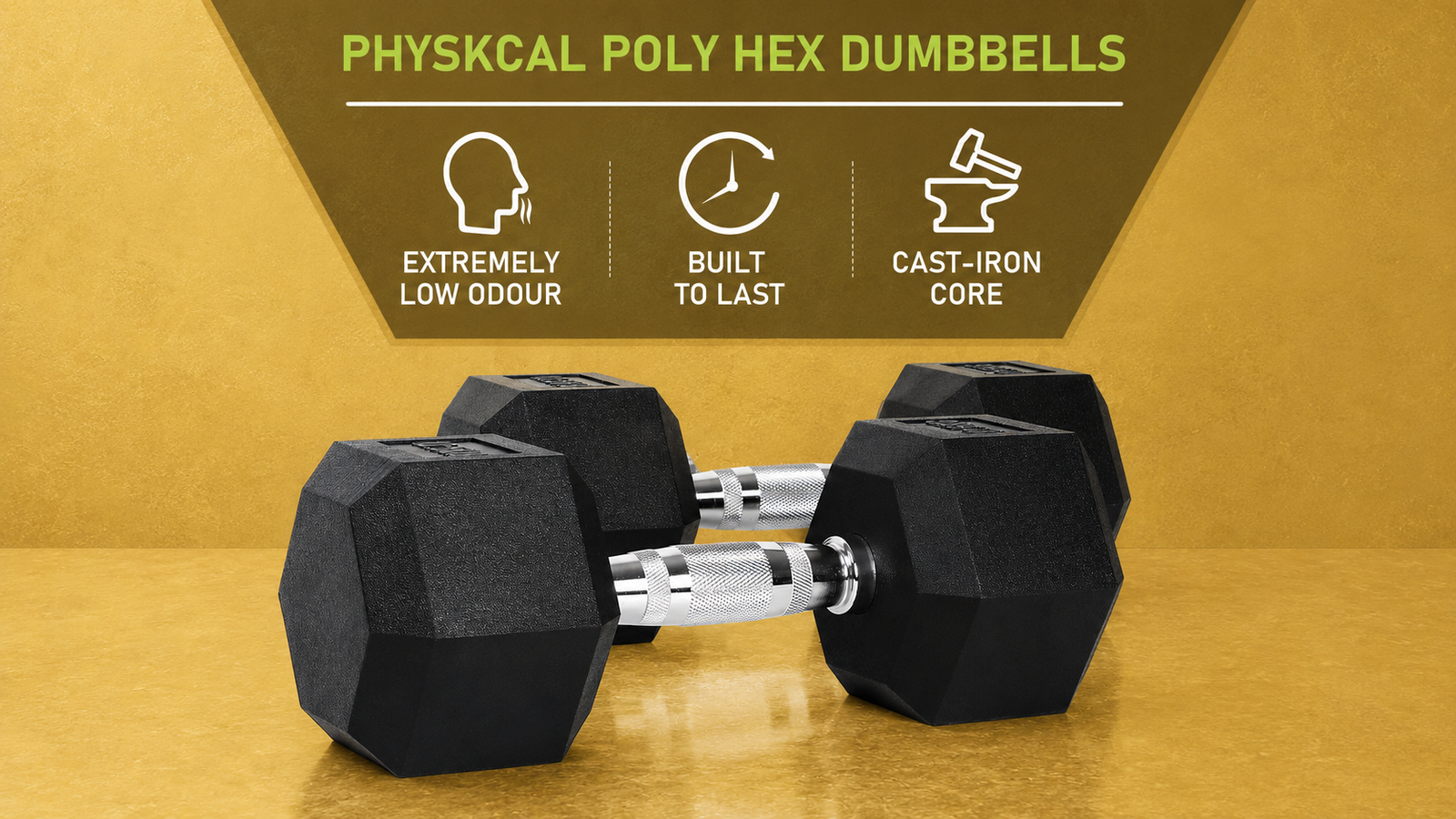
The ones I actually own and would buy again. Hex shape means they don't roll away, and the rubber coating protects your floor and keeps the noise down — the flat sides are genuinely useful for renegade rows and push-up variations. No selector mechanism to fail, and generally tolerant of normal home-gym use, though coating quality varies and can mark or wear over time.
Best forFeel, durability, noise
Start withOne or two useful pairs
NextPlan your next 2–3 jumps
VIEW ON AMAZON UK →
RESEARCHED
Dial adjustable dumbbells

QUICK-SELECT (DIAL) ADJUSTABLE

One Pair · Whole Range · Space Saver

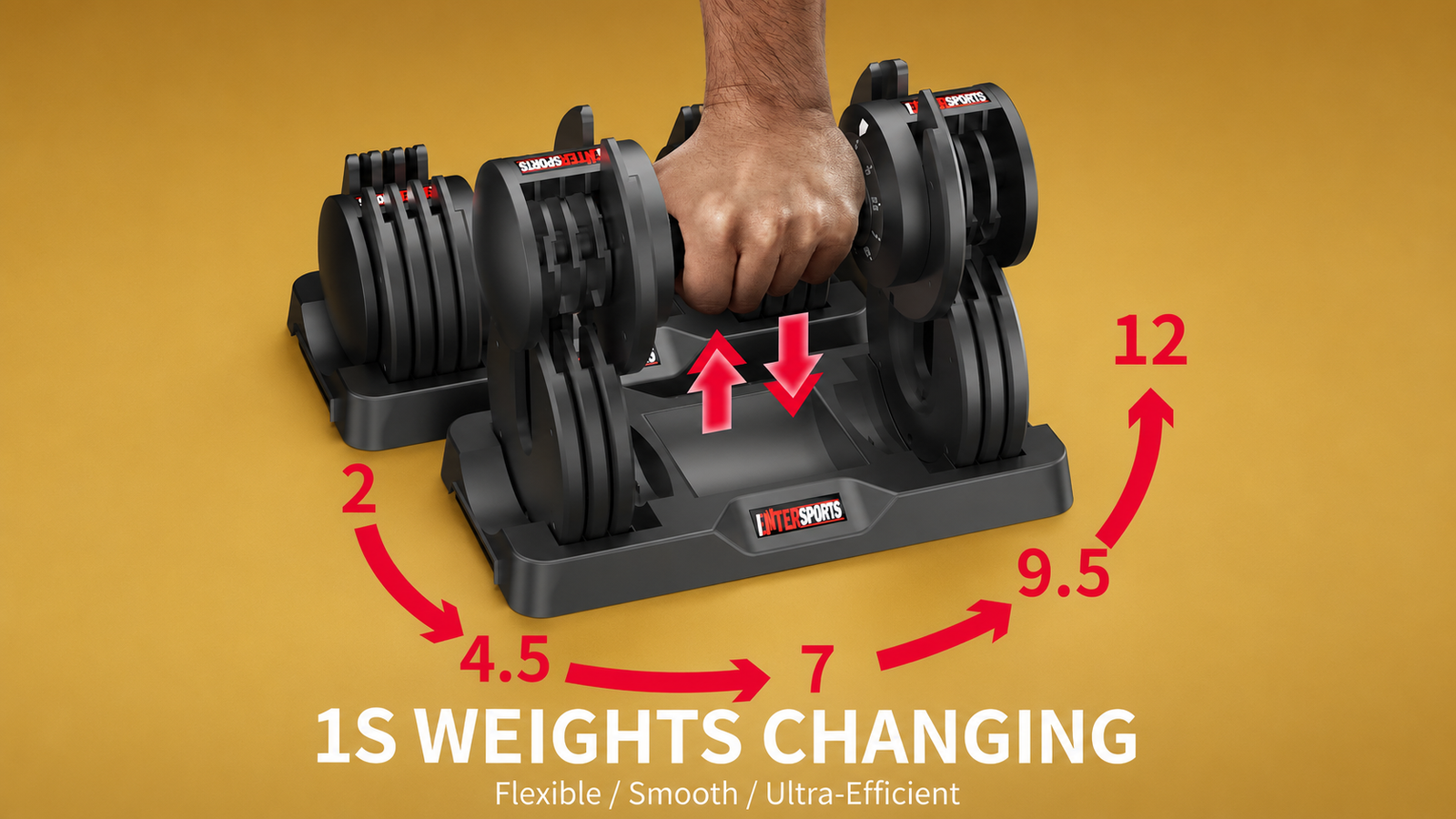
The answer if you have a corner rather than a room. A dial or lever changes the weight in seconds instead of swapping plates by hand — useful weight range and increment vary by model, so check the exact listing before assuming it covers what you need.
Best forSmall spaces, fast changes
CheckMin/max weight, increment, length
Drop policyModel-specific — check first
VIEW ON AMAZON UK →
RESEARCHED
Spinlock adjustable dumbbells

SPINLOCK DUMBBELL SET

Budget · Flexible Loading

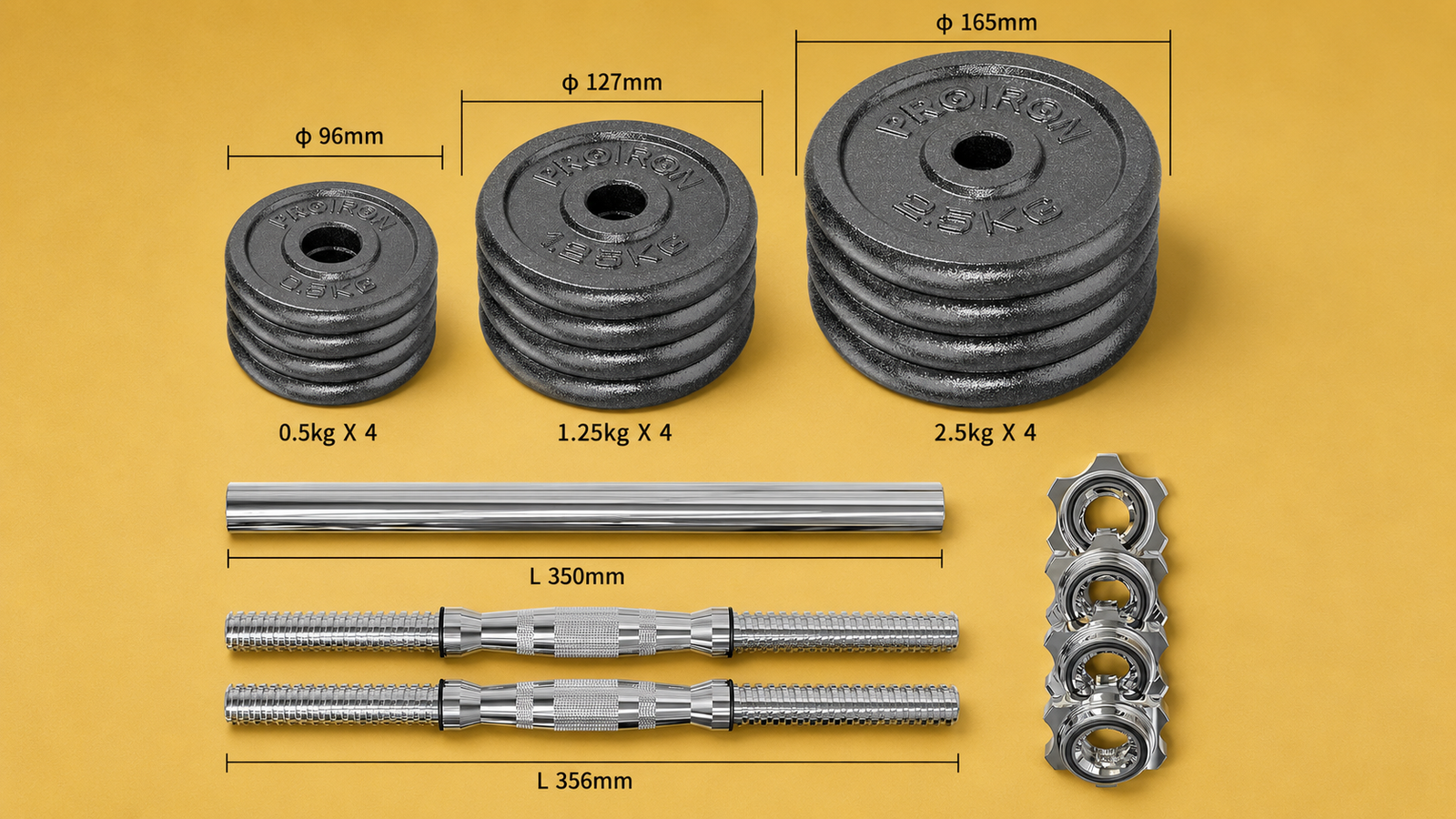
Unglamorous, and often one of the lowest-cost ways to get a broad weight range. Two handles, a pile of plates and threaded collars — simple construction that's easy to understand and service, though changes are slower than a selector system, especially moving through several plates.

Best forBudget, total weight
Change speedSlower than selector systems
CheckCollars tightened, every set
VIEW ON AMAZON UK →

Buying carefully: vinyl/plastic dumbbells. A sand or cement fill in a plastic shell can make sense for very light starter weights, rehab-level movement, or a very tight budget — but they're a poor long-term choice for progressive strength training, since they get bulky fast as weight increases and offer no real upgrade path beyond buying more pairs. My own early pair became too light within weeks and never really got used again.
Adjustable weight bench

The First Useful Add-On

A BENCH — NOT REQUIRED, GENUINELY USEFUL

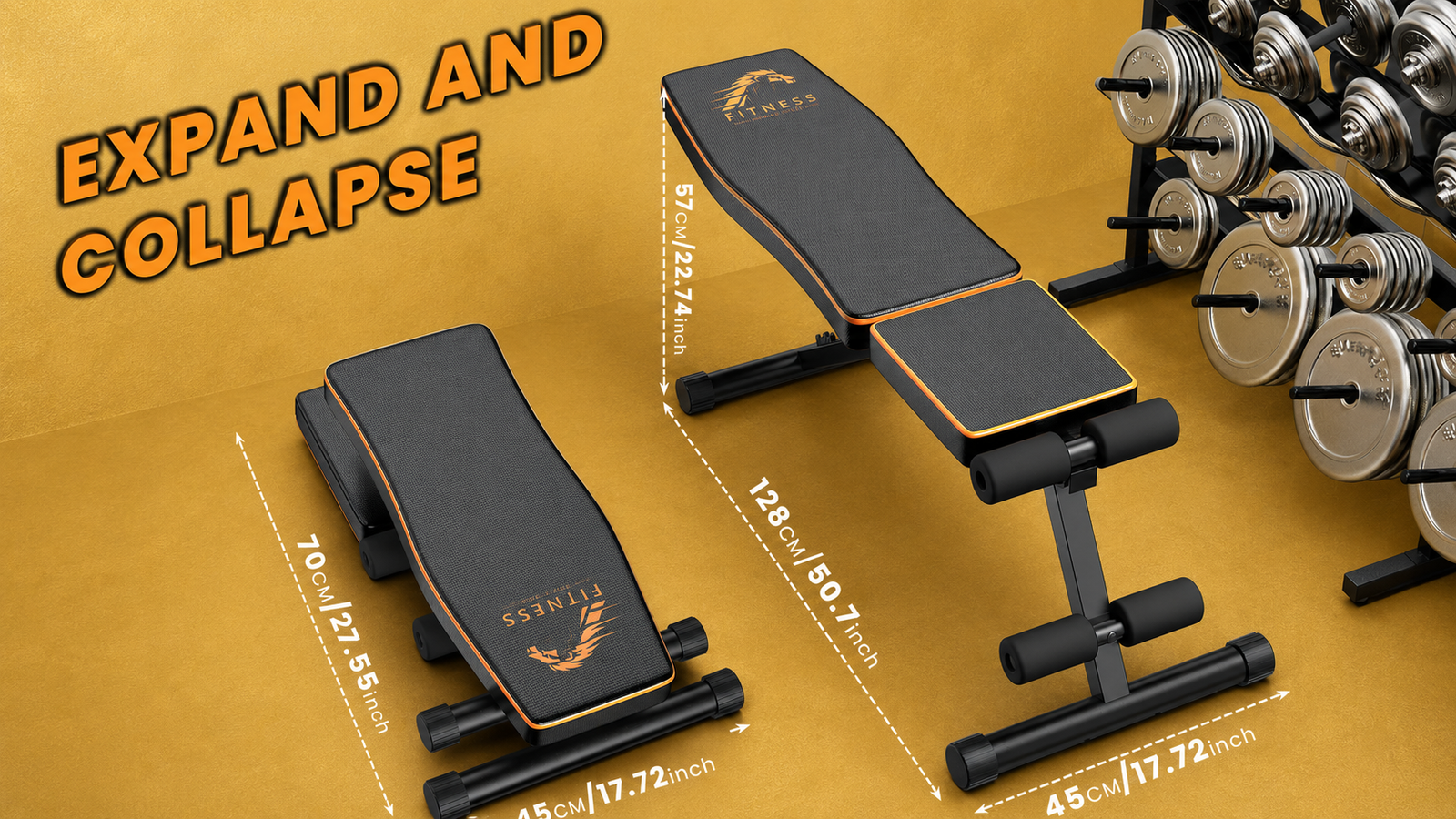
An incline-capable bench expands your dumbbell exercise options; it's not required to start. It opens up flat and incline presses, supported rows and step-ups that are simply more comfortable with somewhere to sit or lie.

No Bench Yet? These Still WorkFloor press instead of bench press. Unsupported bent-over row. Split squats and step-ups don't need a bench specifically.

View On Amazon UK →

Made Simple

WHAT I WOULD BUY FOR THREE DIFFERENT HOMES.

A · Small Flat

ONE VERIFIED ADJUSTABLE PAIR

  • A quick-select or selector pair with a range that covers most of your lifts
  • A mat for the floor
  • A compact bench later, once you know you'll use it

B · Garage / Spare Room

SELECTED FIXED HEX PAIRS

  • Two or three pairs covering your current working weights
  • A simple storage rack
  • A bench once the dumbbell range feels settled

C · Lowest Budget

SPINLOCK HANDLES + PLATES

  • Two handles and enough plates for your current range
  • Collars checked before every session
  • No bench at first — floor and standing work covers plenty

HOW TO BUY THESE WITHOUT WASTING MONEY

01

BUY A RANGE YOU CAN GROW INTO

The mistake isn't starting light — it's buying a system with nowhere to go. Choose a weight you can control today, and make sure the system has enough headroom and small enough jumps for the next stage. For fixed dumbbells, plan the next few pairs; for adjustables, check the max weight and increments.

02

MEASURE THE FLOOR, THEN LET BUDGET AND MAX WEIGHT OVERRIDE IT

Lots of space and you want the traditional feel: fixed. Little space and you value fast changes: quick-select. Little space and you want modular expansion: selector/block. Budget first and you don't mind plate changes: spinlock. But budget and desired max weight can override the space answer — there's no fixed rule.

03

BUY CAREFULLY ON VINYL

A plastic shell filled with sand or cement can work for very light starter weights or a tight budget. It's a poor long-term choice once progressive strength training is the goal — it gets bulky fast as weight increases, with no real upgrade path beyond buying more pairs.

04

A BENCH IS USEFUL, NOT REQUIRED

It expands your exercise options — incline presses, supported rows, more comfortable step-ups. Floor press, unsupported rows, and split squats all work without one, so budget for a bench when it makes sense for you, not because the page told you to.

QUICK ANSWERS

Fixed or adjustable dumbbells for a home gym?

It's a space and budget question more than a quality one. Fixed hex give the most traditional feel with no mechanism to fail, but each pair is one weight and a useful range needs storage. Adjustables fit a smaller footprint and cover a wide range, at higher cost and with moving parts to check.

What weight range should I buy?

Choose a weight you can control for the exercise today, but buy a system with enough headroom to progress. Different exercises need very different loads, so a range is more useful than one "perfect beginner weight" — there's no single number that fits everyone.

How small should the weight increments be?

Smaller than most people assume, especially for upper-body work. Big jumps of 2kg or more per dumbbell can be impractical for lifts like lateral raises or curls — look for a system with finer increments if those movements matter to your training.

Can adjustable dumbbells be dropped?

Model specific. Check the manufacturer's instructions and warranty before assuming. Don't intentionally drop a selector or quick-select dumbbell unless that exact model is explicitly rated for it.

Are spinlock dumbbells worth it?

Often very good value per kilogram, and simple enough to service yourself. They're slower to change than a selector system and less convenient for fast supersets, so weigh that against the savings.

Do I need a bench?

Useful but optional. Start with floor and standing movements if budget or room is limited, and add a bench once you know you'll use it regularly.

Those first 5kg vinyl dumbbells are still in a cupboard somewhere, and I keep them deliberately. They're a useful reminder that the cheapest purchase is rarely the one that costs least.

Buy for a system with somewhere to go, not just the weight that feels right today. Check the specs, check the recalls, and buy once.

Sources & Research

Independent long-term reviews are referenced only for real-world ergonomics, change speed, noise and feel — not as a source for safety or technical thresholds. Items marked LIFT WITH IT are ones I own and use. Those marked RESEARCHED are based on current manufacturer specifications and independent long-term reviews, not personal use. Educational content, not medical advice.

Scroll to Top