THE TUB THAT DOES THE EVERYDAY JOB.
Whey is the workhorse: fast-digesting, a complete amino profile, and more studied than anything else in the tub. The concentrate-versus-isolate decision is smaller than the label makes it look — concentrate is about 80% protein with a little more carb, fat and lactose; isolate is filtered further, so slightly more protein per calorie and gentler if dairy bloats you. For most people, concentrate is fine and cheaper.
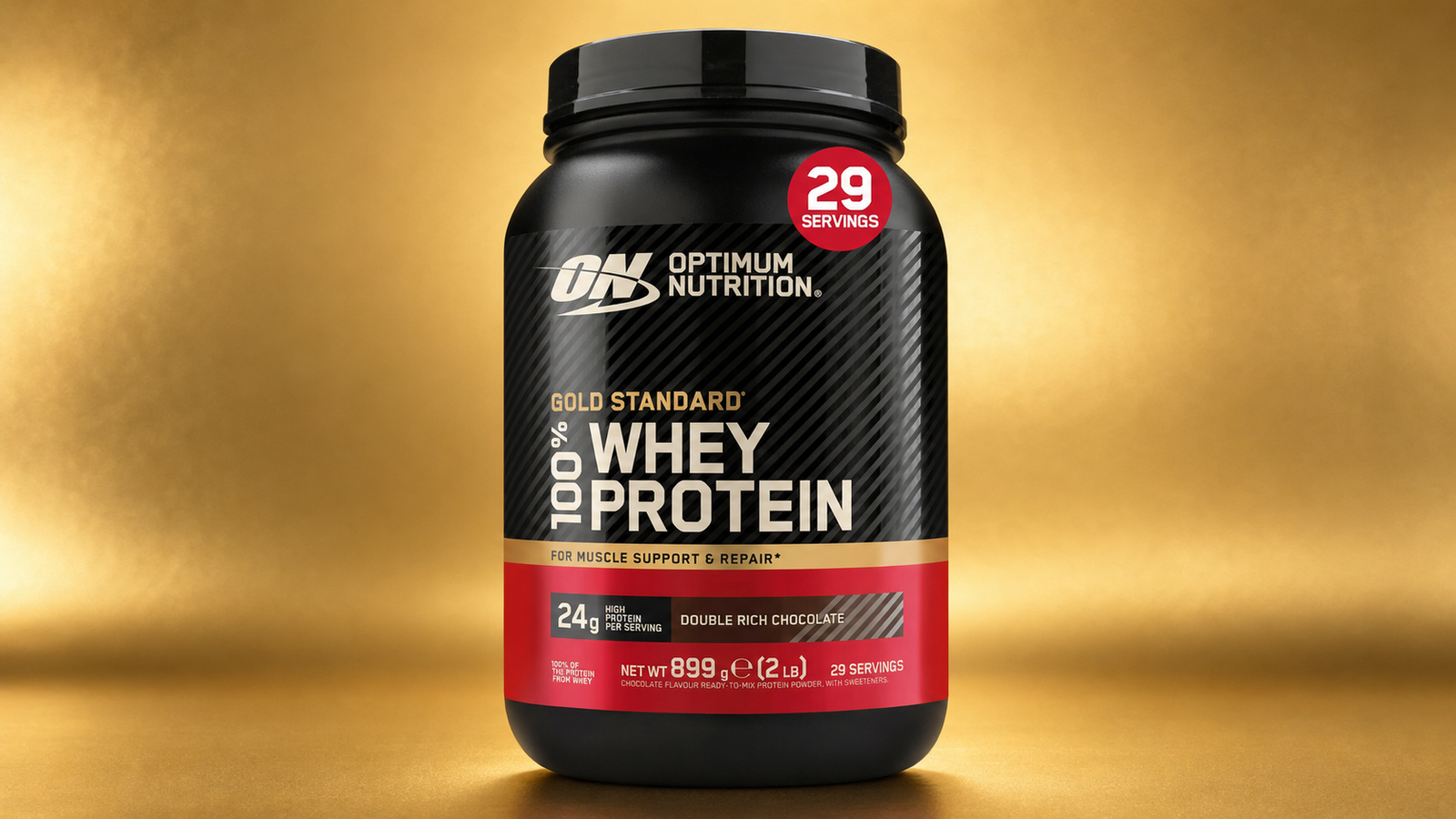
OPTIMUM NUTRITION GOLD STANDARD
This is the tub that actually lives in my cupboard. It is an isolate-led whey blend, mixes cleanly without a blender, and gives around twenty-four grams a scoop — but the reason I keep buying it is that it has been independently tested for years, which on a page about what is really in the powder matters more than anything printed on the front. It is not the cheapest whey you can buy. It is the one I trust.
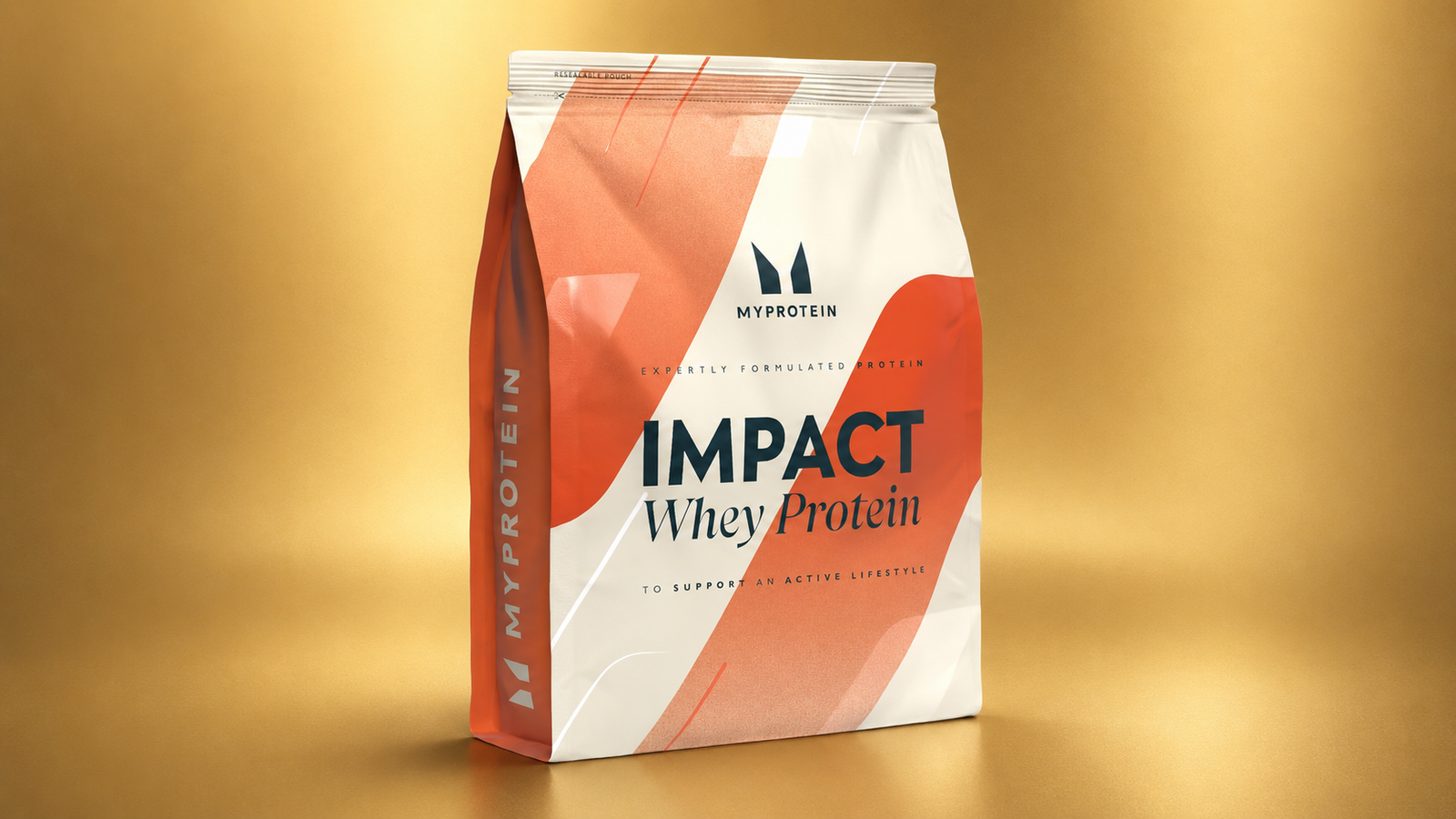
MYPROTEIN IMPACT WHEY
The UK's default first tub, and for good reason — a concentrate at around twenty grams a scoop, an enormous flavour range, and a price per serving that is hard to beat. I have not settled on it myself, but if budget is the deciding factor it is the sensible place to start. Buy one flavour before you commit to a big tub.
How Much Do You Actually Need?
Most active people land between 1.6 and 2.2g of protein per kilogram of bodyweight a day. Powder is not a shortcut to that number — it is convenience for the days food alone won't get you there. Hit the total from meals and a shake is optional; miss it, and one scoop is the easiest twenty-odd grams you'll add all day. The tub is a tool for a number, nothing more.
LIGHT, FRUITY, AND THE SUMMER FAVOURITE.
There are afternoons where the last thing your stomach wants after a hot session is a thick milky shake. Clear whey solves exactly that. It is whey isolate processed to mix into something closer to a squash than a milkshake — light, fruity, gone in a few gulps. I drink far more of my protein in summer because of it.
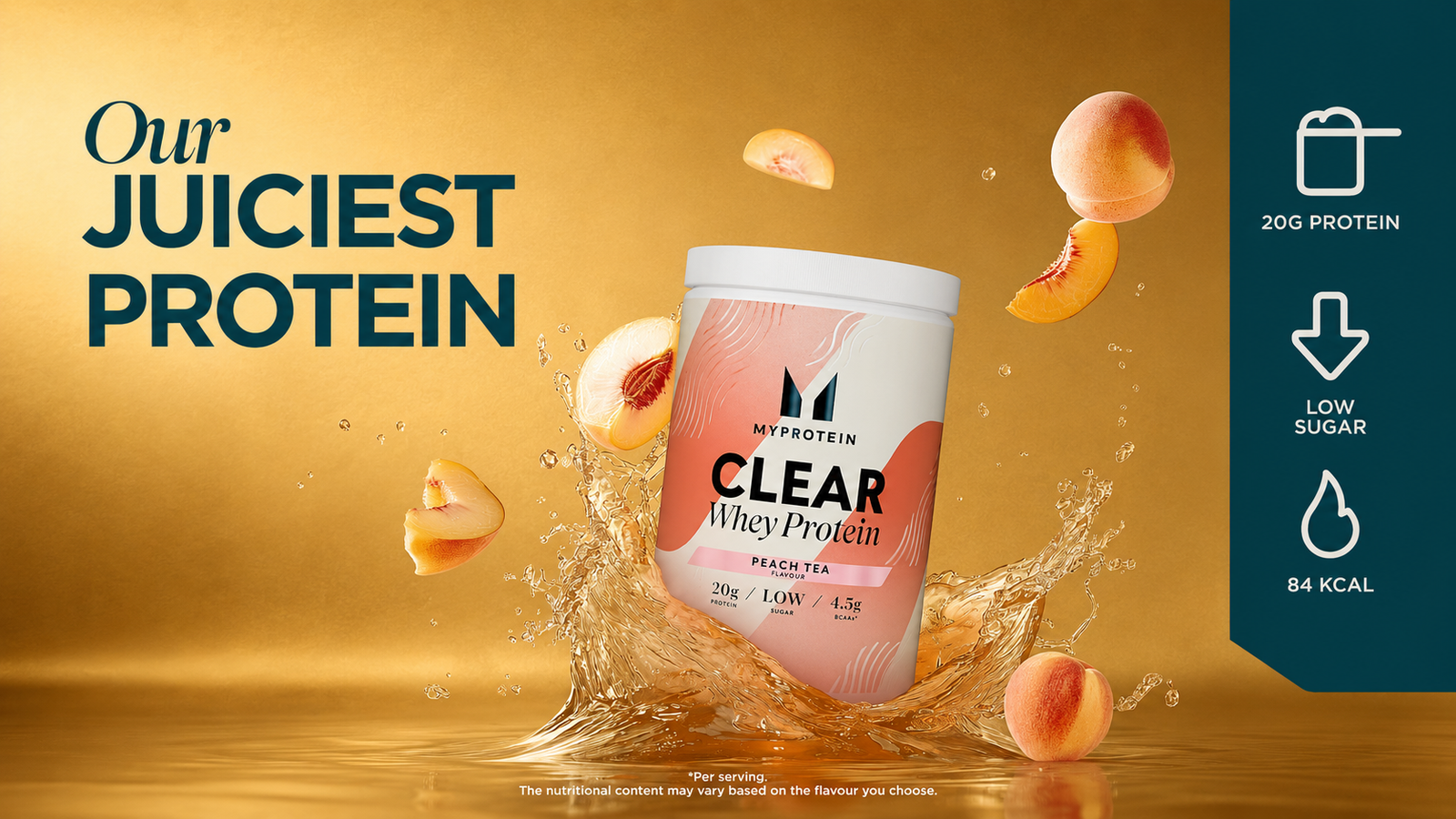
MYPROTEIN CLEAR WHEY ISOLATE
The one I reach for when a milky shake feels like a chore — and, taste aside, the best-tasting protein I have had. Around twenty grams of protein for under ninety calories, no fat or sugar, and it mixes into something you genuinely want to drink after a warm run. Made from hydrolysed isolate and tested by Informed Choice, so what is on the label is what is in the tub.
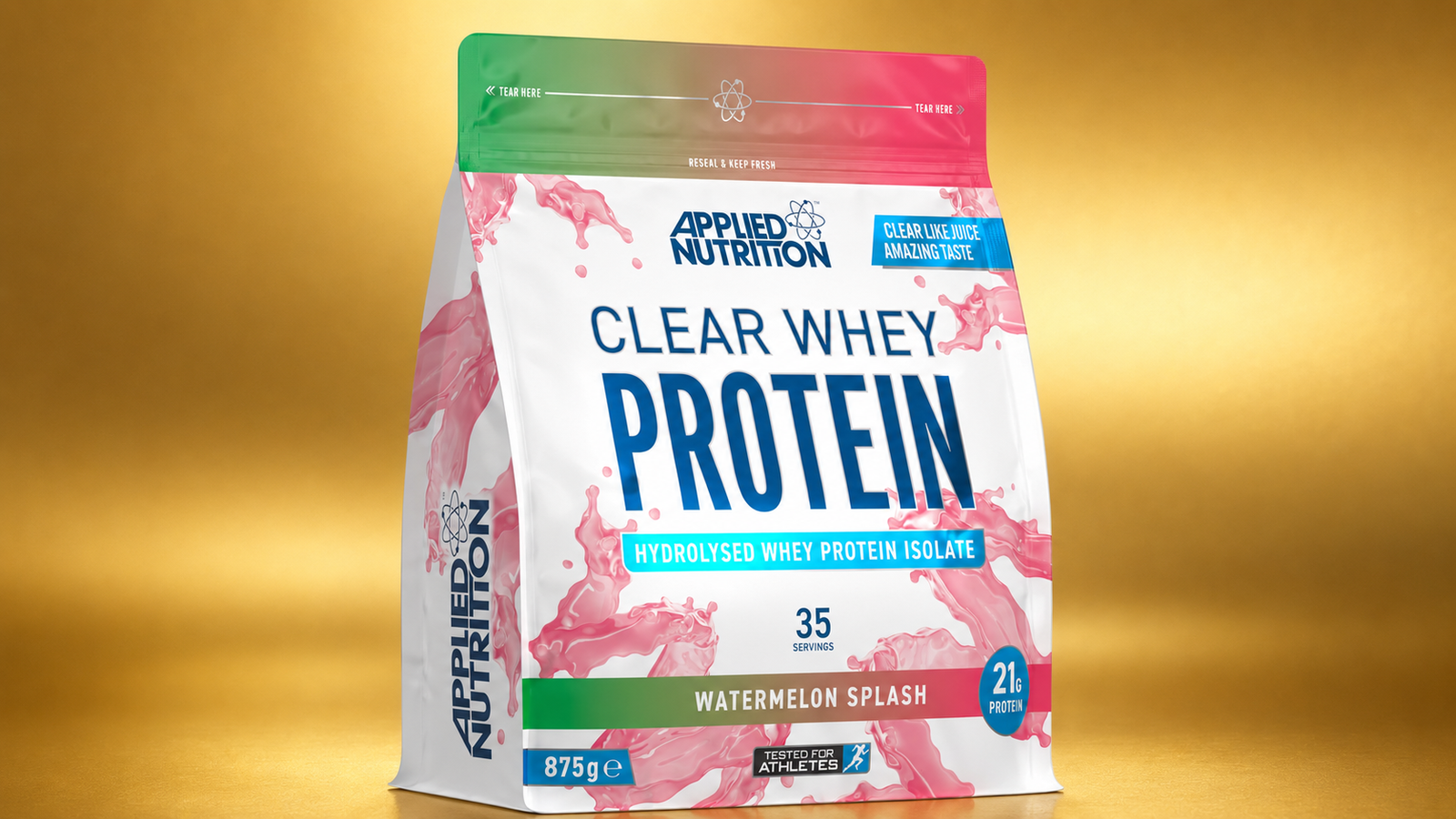
APPLIED NUTRITION CLEAR WHEY
The clear whey people reach for when they want an alternative to MyProtein, and the one most likely to be on a gym's shelf. Ultra-hydrolysed whey isolate, around twenty-one grams of protein for ninety calories, and — the part that earns it a place here — Informed Sport certified, so it is batch-tested for what is in it. I have not made it my everyday tub, but on taste and testing it is a fair rival.
What 'Clear' Actually Is
Clear whey is not a different protein — it is whey isolate filtered and treated so it dissolves clear instead of creamy. That means fewer calories, almost no fat or lactose, and a fruit-squash texture. The trade is a slightly smaller protein hit per serving and a higher price per gram. Worth it if it gets protein into you on days a milkshake wouldn't; not worth it as your only tub.
SLOW PROTEIN — AND THE TUB YOU CAN SKIP.
Casein is the slow one. It gels in your stomach and releases amino acids over seven or eight hours, which is why it gets sold as a bedtime protein. The research is real but narrower than the marketing: around forty grams before sleep raises overnight muscle repair by roughly a fifth, while twenty grams does much less. The part they leave off the tub is that this only matters once your daily protein is already handled.
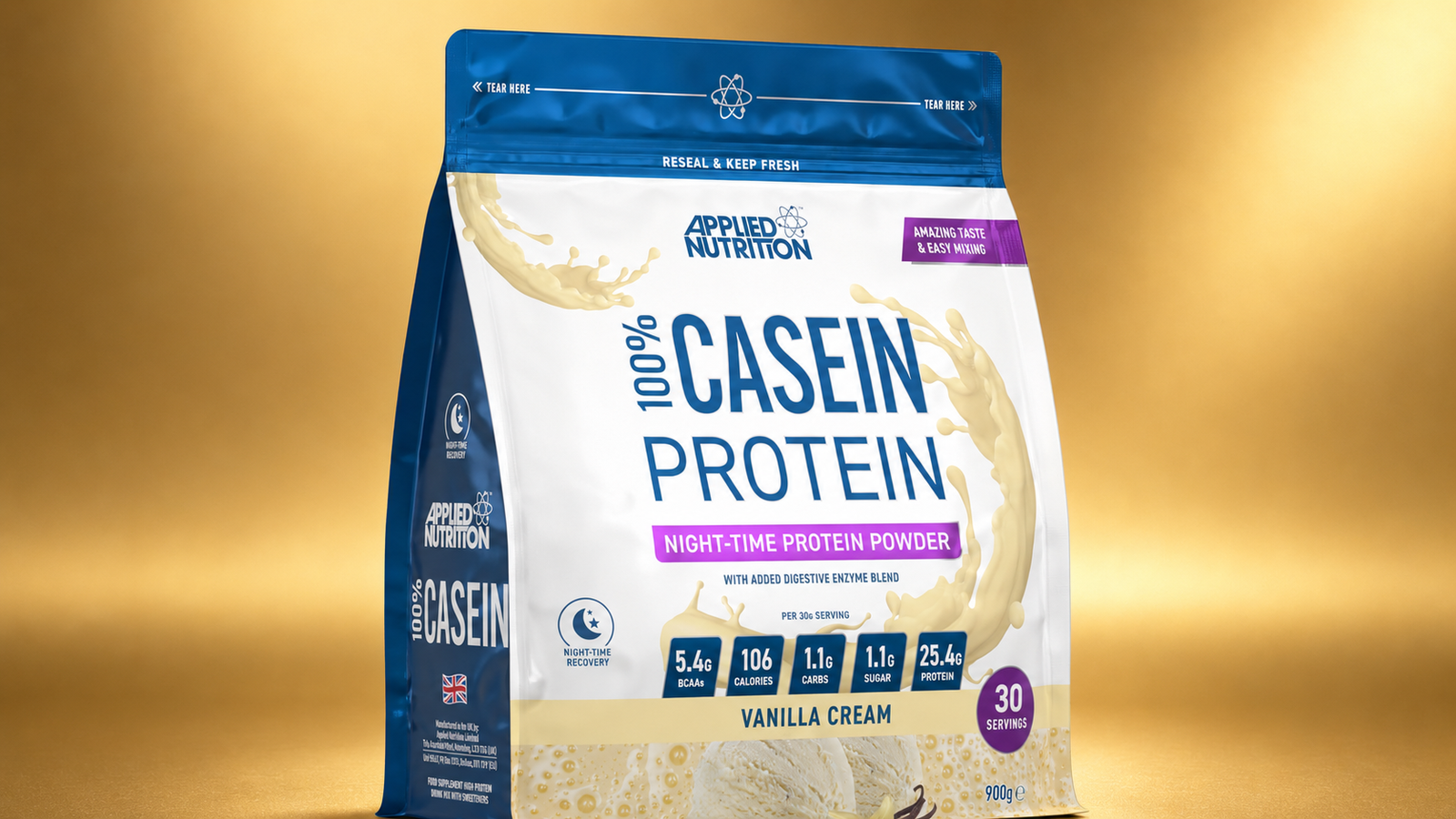
SLOW-RELEASE CASEIN
A genuine use case rather than a scam — if you train hard and struggle to reach your protein by the evening, forty grams of casein before bed does something measurable overnight. I do not keep it in the cupboard, but I will not tell you it does nothing, because the studies say otherwise.
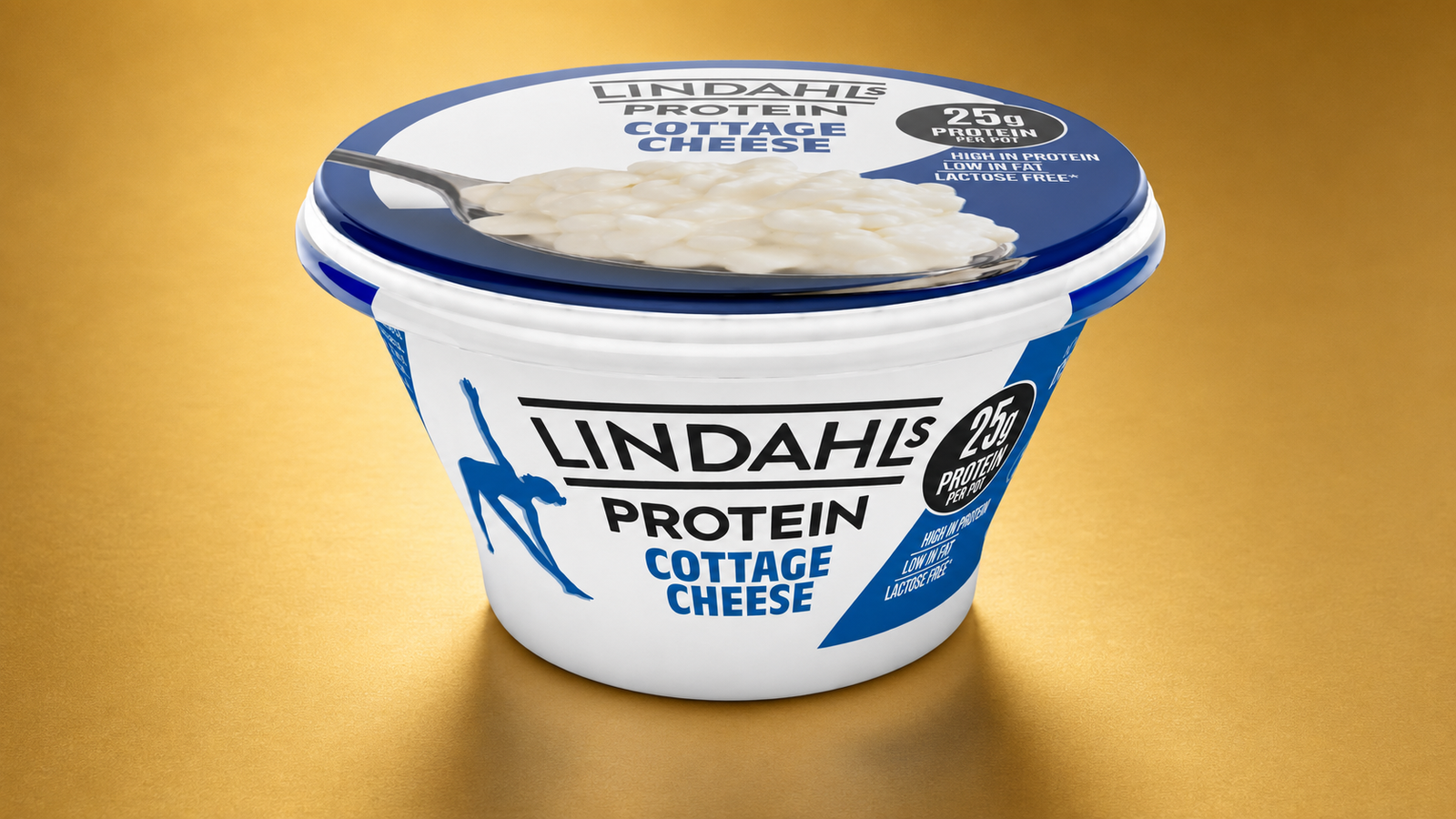
QUARK & COTTAGE CHEESE
The unglamorous truth is that a tub of cottage cheese or quark is roughly eighty percent casein — the same slow protein, in food, for a fraction of the price. This is my late dinner more nights than any powder: quark with something on it, eaten on the sofa, doing quietly what a bedtime shake is sold to do. No shaker to wash, either.
What The Research Actually Says
The pre-sleep work comes mostly from van Loon's group at Maastricht: around forty grams of casein before bed increased overnight muscle protein synthesis by roughly 22% versus placebo, with twenty grams giving a weaker response. Cottage cheese is about eighty percent casein and does the same job as a whole food. But every one of those studies assumes daily protein is already met — before-bed protein is a top-up, not a rescue.
VEGAN PROTEIN WITHOUT THE GUESSWORK.
A single plant protein is usually missing something; the fix is a blend. Pea and rice together cover each other's gaps and get you a complete amino profile close enough to whey to stop worrying about it. It works. Where the tubs differ is price and purity — so below is one cheap best-seller and one premium blend that has been properly tested. The catch with plant protein isn't the protein; it's what comes with it, which is the purity section below.
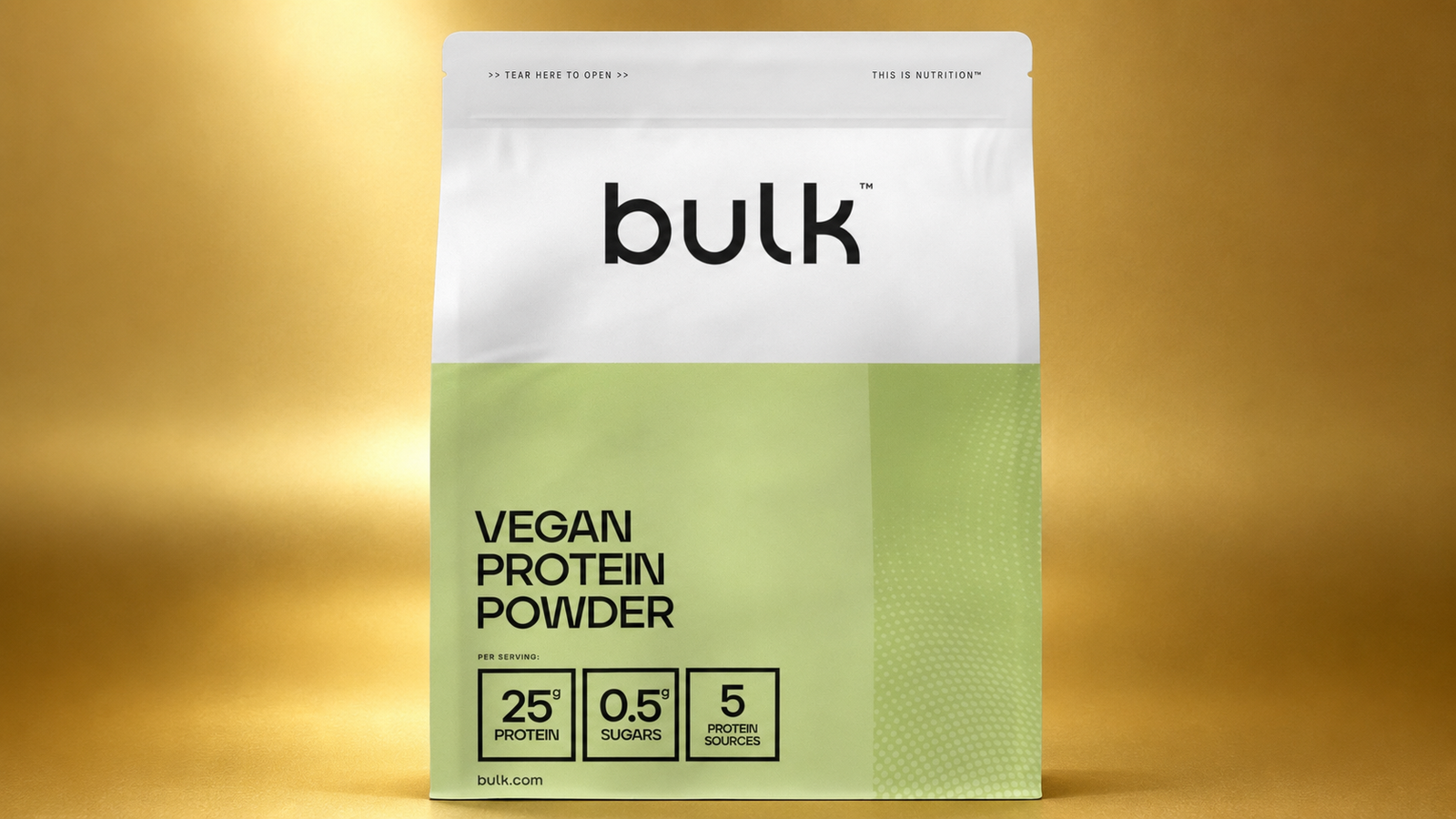
BULK VEGAN PROTEIN
The one most British lifters actually buy when they go dairy-free — a pea and rice blend, complete enough to stand next to whey, at a price that doesn't punish you for skipping dairy. It is not the smoothest or the most tested, but for everyday cost-per-gram it is the sensible default.
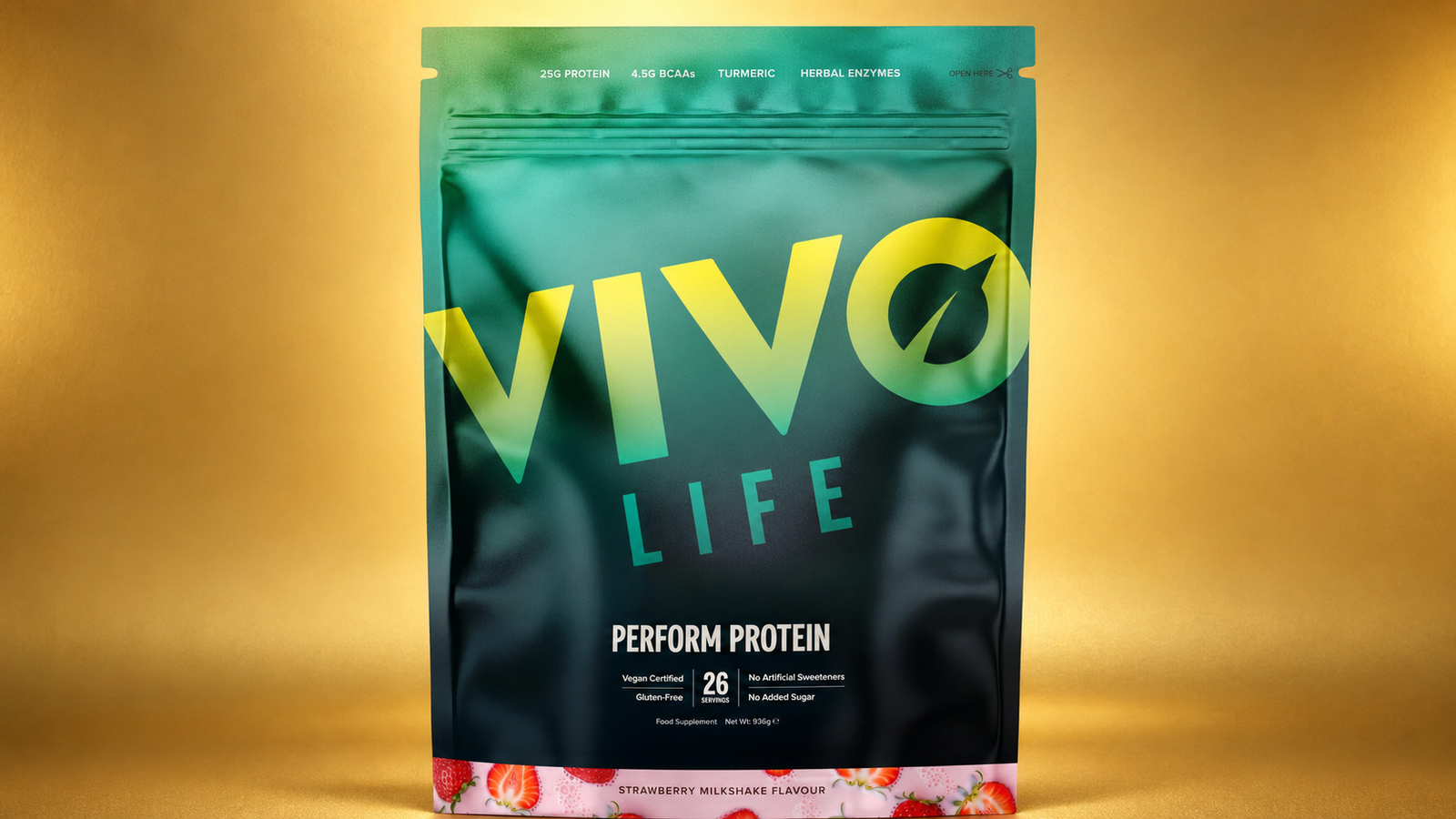
VIVO LIFE PERFORM
The one to buy if quality, not price, is the deciding factor. Fermented pea and cold-pressed hemp for around twenty-five grams a serving, made without artificial sweeteners and third-party tested for purity — which, given plant powders carry roughly five times the cadmium of whey, is exactly why the extra is worth it. You pay more; you get a cleaner, gentler tub.
BARS, GUMMIES, AND THE HONEST COST OF CONVENIENCE.
Sometimes the point is not optimisation, it is getting protein into a day that got away from you. Bars and ready-to-drink shakes do that — and charge you handsomely for the convenience. I keep some around anyway, because a snack I will actually eat beats a perfect powder I skip.
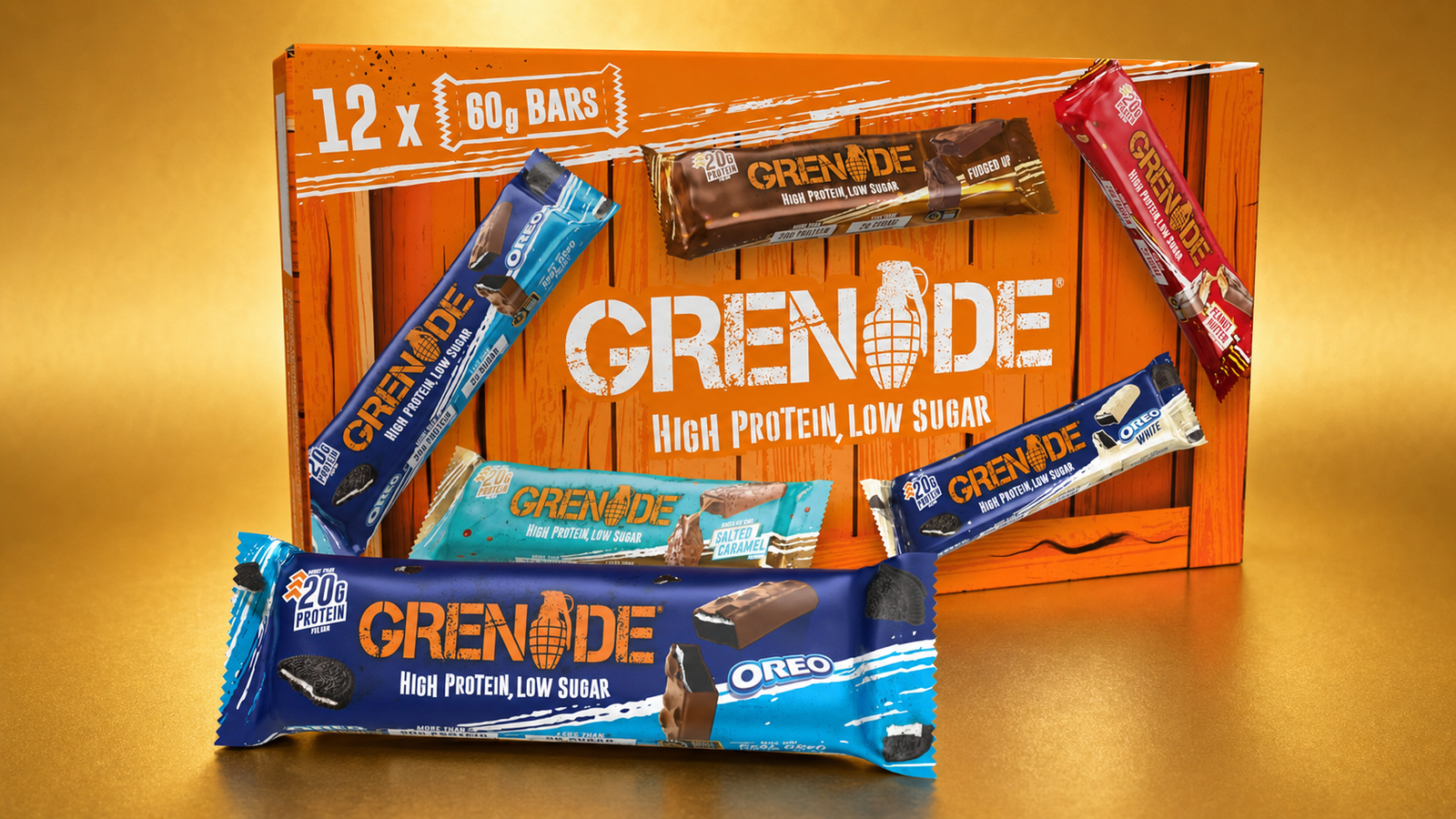
PROTEIN BARS
The most useful convenience format when a bar genuinely replaces a skipped meal — fifteen to twenty grams of protein in a pocket. The quality is wildly variable, so it is worth reading the actual numbers rather than the front of the wrapper.