HOME GYM · THE MOST USED THING I OWN

ONE 12KG KETTLEBELL
REPLACED HALF MY GYM.

It was the first piece of equipment I ever bought, chosen for entirely the wrong reason — it was the only thing in the shop I could carry to the car by myself. Three years later it's still the item I use most, and by a distance.

Here's what I didn't understand at the time. The offset centre of mass makes a kettlebell feel genuinely different from a dumbbell, especially in ballistic lifts like swings, cleans and snatches — in those movements, your hips and trunk manage a large part of the acceleration and deceleration. It still works as a straightforward resistance tool too, for squats, presses, rows and carries. For my own home training, one bell ended up replacing several exercises I'd previously associated with gym machines.

It's also the piece of equipment I recommend most often to people who tell me they have no space, no time and no confidence — a single bell and a bit of floor covers a genuinely wide range of training.

How To Read This Page

LIFT WITH ITRESEARCHED

Lift with it — bought with my own money, used weekly. Researched — not something I own, assessed from current manufacturer specifications, federation standards and independent testing/reviews where available.

As an Amazon Associate I earn from qualifying purchases. Same price for you. Full disclosure.

Start Here

ONE STARTING WEIGHT DOESN'T FIT EVERY MOVEMENT.

A load you can swing comfortably may be too heavy to press overhead. A bell light enough for a first get-up may be too light to challenge your hinge. Choose by movement and current ability, not by sex.

A · Deadlift / Two-Hand Swing

USUALLY YOUR HEAVIEST BELL

This pattern generally allows the most load of anything on this page — but the swing should only be added once the hinge itself is controlled.

You're ready if
  • You can deadlift it with a controlled hip hinge
  • Your trunk stays stable through the lift
  • You've practiced the hinge pattern before adding the swing

B · Goblet Squat / Carry

MODERATE-HEAVY, RELATIVE TO YOU

Usually sits below your swing weight, but still substantial — the load you can hold securely while maintaining posture through reps or distance.

You're ready if
  • You can hold it securely at your chest or side
  • Reps stay controlled, not rushed
  • Posture holds through the set

C · Press / Get-Up / Overhead

USUALLY YOUR LIGHTEST BELL

Overhead control is a different skill from swinging or carrying, and most people need meaningfully less load here than for hip-dominant work.

You're ready if
  • No pain through the movement
  • The bell travels a controlled path
  • No leaning or compensating to lock it out

D · Clean / Snatch

TECHNICAL BALLISTIC LIFTS

These reward technique before load. A bell that feels easy to swing can still be genuinely difficult to clean or snatch well.

Before adding load
  • Learn the technique with a manageable bell first
  • Consider coaching if you're new to these lifts
  • Increase load only once the pattern is consistent

Buying Strategy

ONE BELL CAN START YOU. TWO LOADS MAKE THE SYSTEM BETTER.

Not because one is wrong — but because a swing and a press rarely want the same weight, as the section above just showed.

One Bell

SIMPLEST, CHEAPEST

  • Enough to learn the deadlift, squat, carry and some swing work
  • One purchase, no decision paralysis
  • A sensible way to start if budget is tight

Two Different Loads

A HEAVIER AND A LIGHTER BELL

  • Heavier bell for hinge, squat and carry work
  • Lighter bell for press, get-up and technical lifts
  • Far more useful than one bell trying to do both jobs

Your ideal pair depends on your current strength and the exercises you actually plan to use — not a fixed formula. If budget is tight, start with one bell and test a second weight (borrow, or try one at a gym) before committing to a purchase.

CAST IRON, COMPETITION, ADJUSTABLE

THE DIFFERENCE NOBODY EXPLAINS PROPERLY.

Genuinely different objects sold under overlapping names, and the distinction matters most once you own more than one.

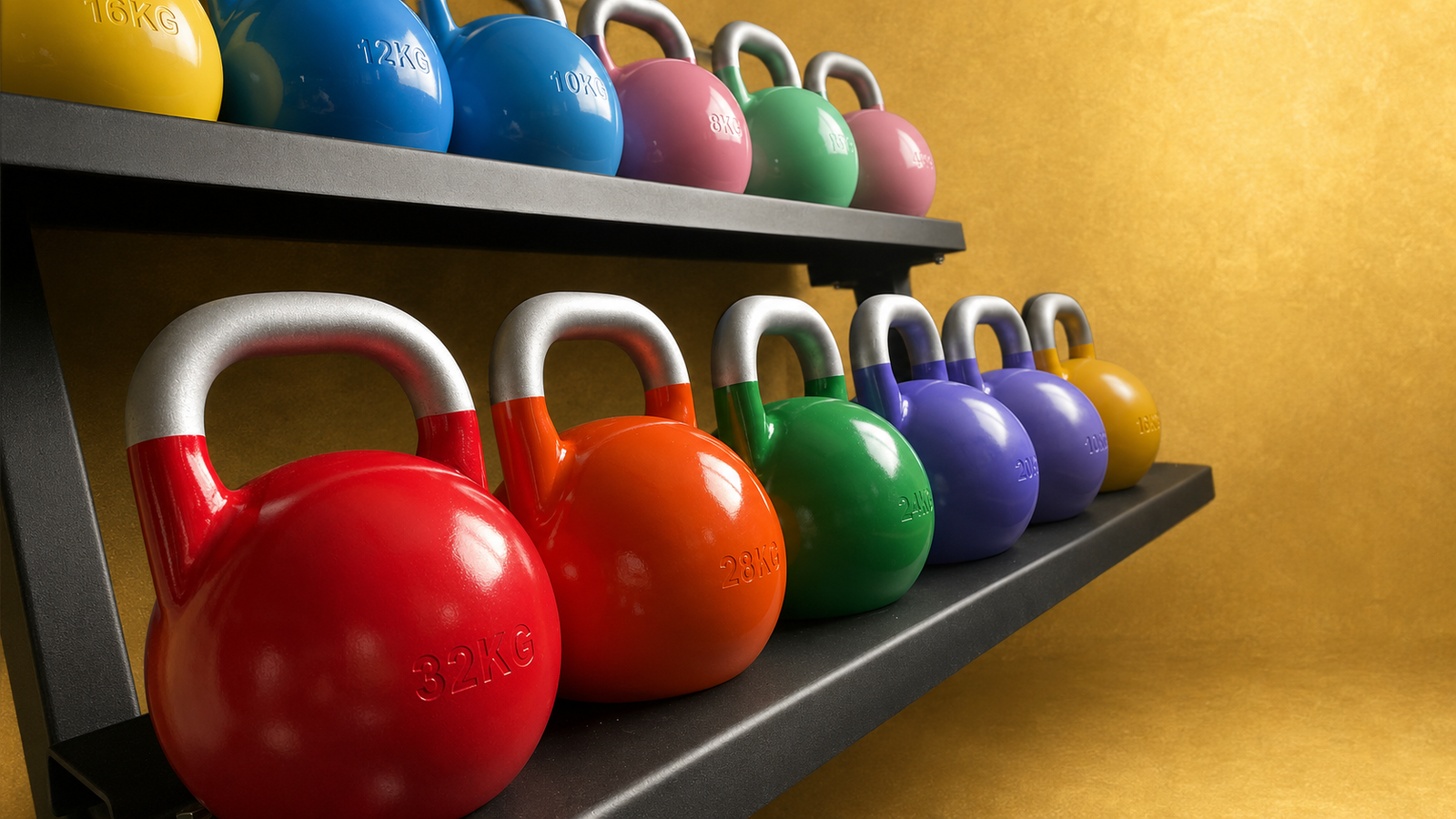
 Cast ironCompetition (steel)
SizeGenerally grows with the weightDesigned to stay consistent at every weight
HandleDiameter varies by model and weightRoughly 33–35mm across weights, per most federation standards
FeelCan change in the hand as weight increasesMore consistent rack and grip feel across the range
CostUsually cheaperUsually more expensive per bell

For most home training, cast iron is a sensible, affordable choice. Competition-style bells earn their place if you're building a range and want the size and handle to feel similar across weights — which genuinely helps with the more technical lifts like cleans and snatches. A commercial "competition" label doesn't guarantee it matches an actual federation spec, so check the manufacturer's own numbers rather than the name on the box.
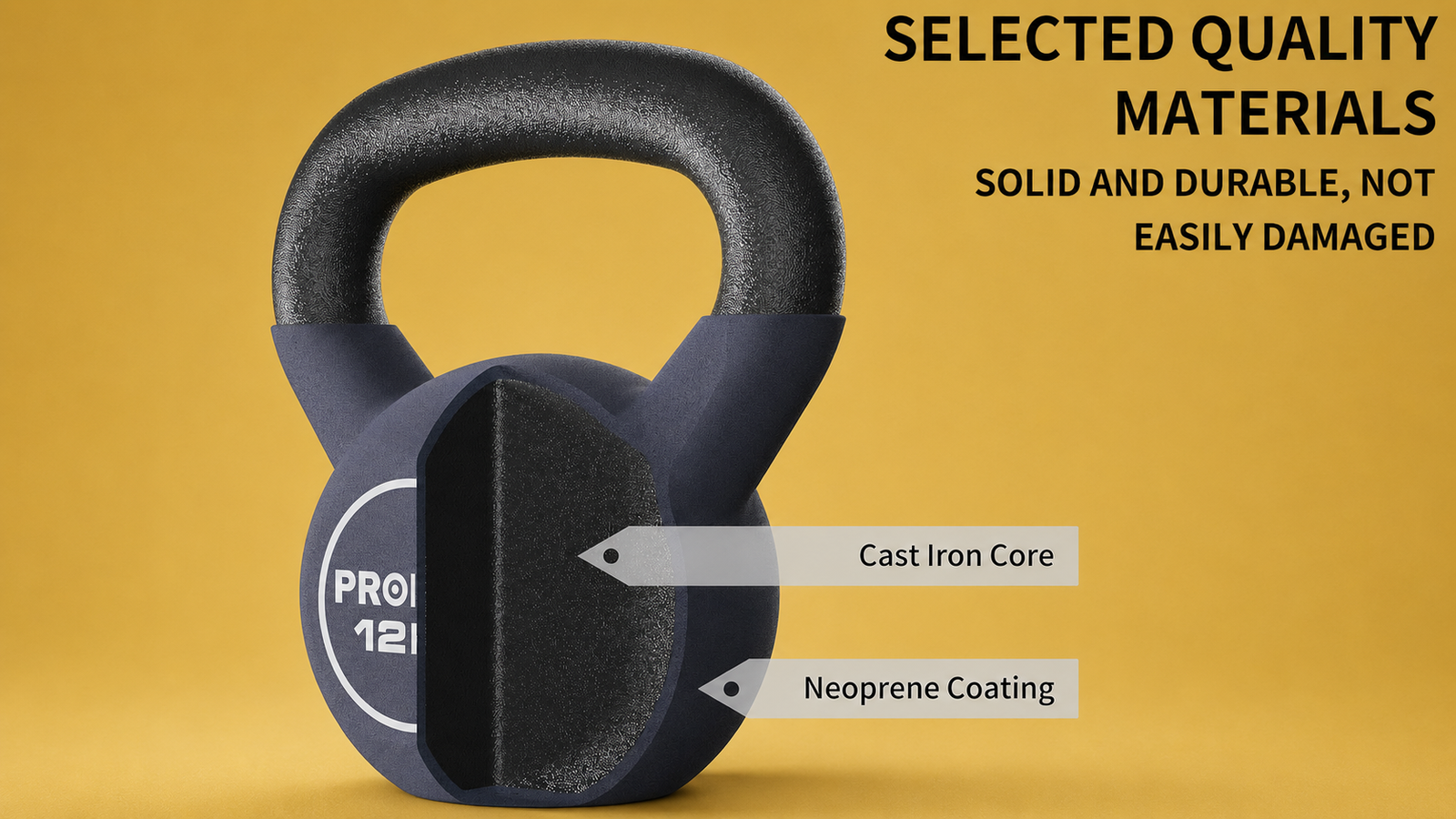
LIFT WITH IT
Cast iron kettlebell

CAST IRON KETTLEBELL

12kg · My First One · Home Default

The one that's been in the corner of my house for three years. Solid cast iron with a smooth handle wide enough for two hands on swings — it's held up well through regular use, though casting quality and handle finish vary between manufacturers, so check reviews for the exact model. Choose your weight using the movement guide above, not because 12kg is automatically right for you.
Best forGeneral home training
CheckHandle finish, casting quality
WeightChoose by movement, above
VIEW ON AMAZON UK →
RESEARCHED
Competition steel kettlebell

COMPETITION KETTLEBELL

Steel · Consistent Size · ~33–35mm Handle

Best suited to lifters who value consistent geometry across weights, especially for cleans, snatches and repeated rack work. The uniform external size and handle reduce how much your grip and rack position change as you go heavier — useful for technical training, though it costs more than a basic cast-iron bell, and general home users may not need the extra standardisation.
Best forTechnical lifts, building a range
Handle~33–35mm across weights
VerifyAgainst the manufacturer's own spec
VIEW ON AMAZON UK →
RESEARCHED
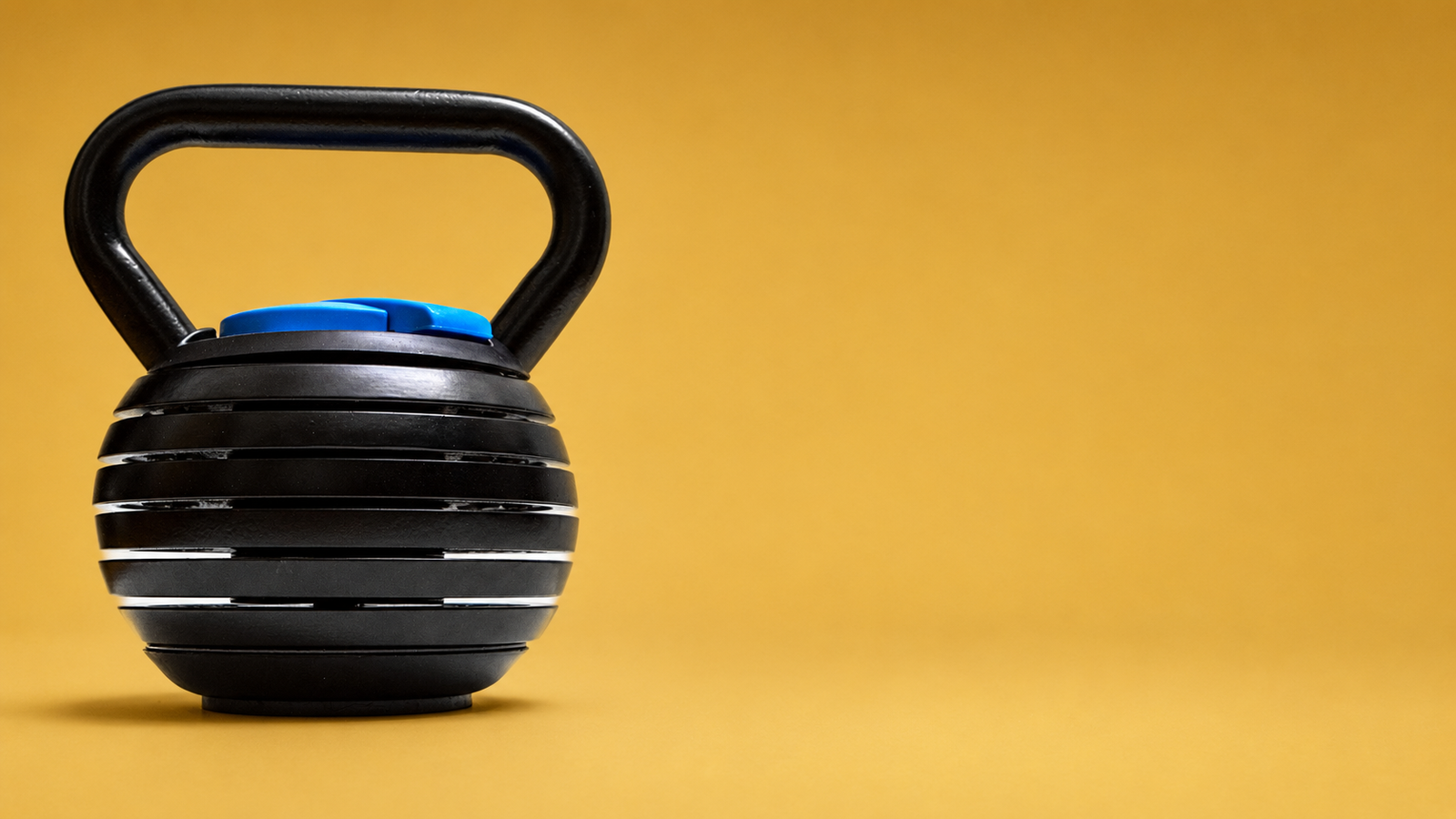
Adjustable kettlebell

ADJUSTABLE KETTLEBELL

Space Saver · Several Weights In One

Makes sense when your entire gym lives in a cupboard, and it's also a genuine way to progress without buying a full rack of separate bells. Exact weight range and increment are model-specific — check the listing rather than assuming, and follow that manufacturer's own drop and ballistic-use policy before swinging or cleaning it.
Best forSmall spaces, progression
CheckRange, increment, locking mechanism
Drop policyModel-specific — check first
VIEW ON AMAZON UK →

Also Check, Before You Order

Handle Window

Enough clearance for one-hand insertion, and enough width for a two-hand swing if you plan to do those.

Base

Should sit flat and stable — matters for storage, floor work and setting it down safely between sets.

Body Geometry

How it sits in rack position, whether it bangs your forearm, and on adjustables whether the shape interferes with cleans or get-ups.

What The Research Actually Says About Swings

Kettlebell swings are strongly hip-driven ballistic exercises. Studies measuring joint kinetics find substantial hip-extension demand and lower-body loading, and heavier bells increase some lower-body joint moments as mass goes up.

That doesn't mean your shoulders do nothing. The upper body still guides and controls the bell, and shoulder-height and overhead swing styles aren't mechanically identical — style and mass both change the demand on the hip and the pattern of the lift.

A 12-week swing-training study reported measurable strength and neuromuscular improvements in both men and women. That's evidence the movement works as training — not a claim that kettlebells build everything, or that any one study settles the whole picture.

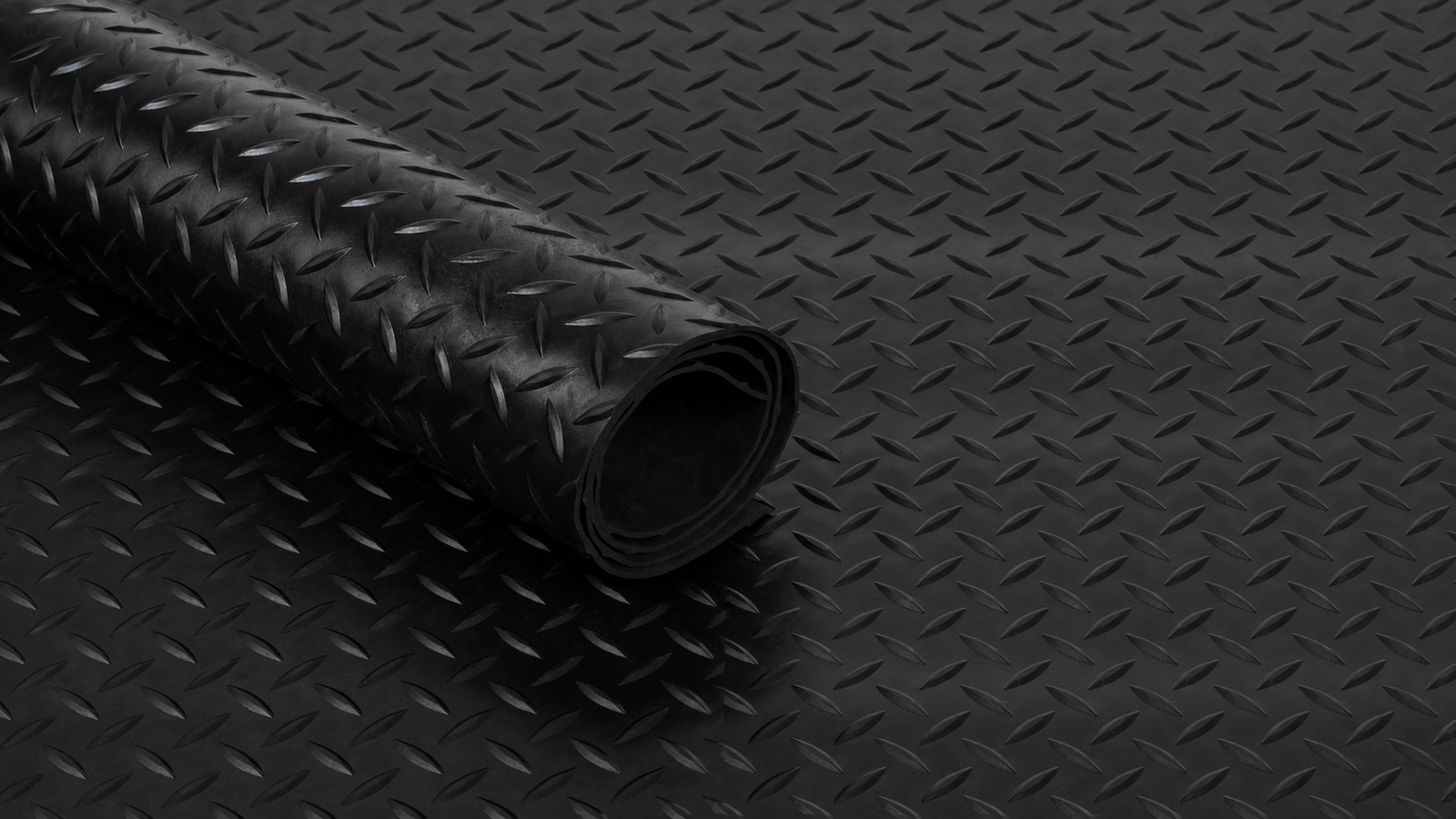
Rubber gym mat

Do You Actually Need A Mat?

PROTECTS THE FLOOR YOU ACTUALLY HAVE

If you already have rubber gym flooring or a suitable lifting platform, an extra mat may not add much. On wood, tile or laminate, a dense rubber layer generally reduces impact, marking and noise better than soft exercise foam, which can compress and destabilise the bell underneath it.

Worth saying plainly: a mat doesn't make uncontrolled dropping safe — it reduces the damage and the noise, not the risk.

View On Amazon UK →

Made Simple

WHAT I WOULD BUY FOR THREE TYPES OF USER.

A · First Kettlebell, Low Budget

ONE QUALITY CAST IRON BELL

  • Weight chosen by movement and control, not by a fixed number
  • No mat needed if your floor is already protected
  • Learn the hinge before adding the swing

B · Long-Term Two-Bell Setup

ONE LIGHTER, ONE HEAVIER

  • Lighter bell for presses and get-ups
  • Heavier bell for swings, squats and carries
  • Exact weights depend on your current strength

C · Tiny Flat, Multiple Loads

A VERIFIED ADJUSTABLE MODEL

  • Check the exact range, increment and locking mechanism
  • Confirm the ballistic/drop policy before swinging it
  • One footprint instead of a shelf of bells

HOW TO BUY THESE WITHOUT WASTING MONEY

01

BUY FOR THE MOVEMENT, NOT YOUR SEX

The weight that suits your swing may not suit your press, and neither has anything to do with gender. Choose using the movement guide above — current ability and the exercise itself decide the number, not a rule of thumb.

02

IF ONE LOAD CAN'T DO EVERYTHING, THAT'S NORMAL

Swings and presses genuinely want different weights for most people. Two bells covering different jobs is often more useful than one bell trying to do both — start with one if budget is tight, and add the second once you know what you need.

03

CHECK THE HANDLE BEFORE THE LOGO

A rough casting seam will affect your hands long before the weight becomes the limiting factor. Check handle finish, window clearance and diameter — not just the brand name on the listing.

04

PROTECT THE FLOOR YOU ACTUALLY HAVE

If you've already got suitable rubber flooring, you may not need anything else. On wood, tile or laminate, a dense mat reduces impact and noise — but it doesn't turn uncontrolled dropping into a safe habit.

QUICK ANSWERS

What weight kettlebell should a beginner buy?

There's no single beginner weight that fits every exercise. Most people can use more load for deadlifts, swings and carries than for presses or get-ups. Choose a bell you can control for the specific movement, and expect that two different loads may eventually be more useful than one.

Do I need one kettlebell or two?

One is enough to start and learn the basics. Two different loads — a heavier one for hinges, squats and carries, a lighter one for presses and get-ups — make the system noticeably more useful once you know roughly what you need.

Cast iron or competition kettlebell?

Cast iron is a sensible, affordable choice for most home training. Competition-style bells earn their place if you're building a range and want consistent size and handle feel across weights, particularly for cleans and snatches — check the actual spec rather than trusting the word "competition" alone.

Is an adjustable kettlebell worth it?

It can be, and not only when space is tight — it also lets you progress without buying a full range of separate bells. Check the exact weight range, increment, locking mechanism, and the manufacturer's own policy on ballistic use and drops before buying.

Are kettlebell swings good for strength and power?

Yes — they're a strongly hip-driven ballistic exercise, and studies report measurable strength and neuromuscular improvements from swing training. The upper body still guides and controls the bell throughout, and swing style changes the demand on the hip.

What if a swing hurts my shoulder?

Stop the painful variation and reassess your technique and load — this guide can't diagnose the cause. If pain persists, get it assessed by an appropriately qualified professional rather than pushing through it.

Two things decide whether a kettlebell earns its place in a home gym or ends up under the stairs. The weight has to fit the movement you're actually doing, and the handle has to be smooth enough that you want to pick it up.

Buy for the exercise, check the handle, protect the floor you have, and give the hip hinge a few weeks to stop feeling strange. It's one of the best returns on a single piece of equipment in this whole guide.

Sources & Research

Items marked LIFT WITH IT are ones I own and use. Those marked RESEARCHED are based on current manufacturer specifications, federation standards and independent testing/reviews, not personal use. Educational content, not medical advice.

Scroll to Top