HOME GYM · THE ONE THING TO BUY PROPERLY

THE BARBELL IS THE ONLY PIECE
I WOULD TELL YOU NOT TO CHEAP OUT ON.

The plates are plain cast iron. The bench was second-hand. The floor is rubber mats I bought in a sale and never quite lined up properly. The bar was the one thing I spent real money on.

A bar sits under your back when you squat and in your hands when you press, and a bad one lets you know — it flexes when it shouldn't, the sleeves seize so the plates stop spinning and your wrists take the twist, the knurling either shreds your palms or gives you nothing to hold. A good bar simply disappears, which is exactly what you want from it. A well-made bar is also one of the pieces I expect to keep for a very long time, while plates get added and sold and benches get replaced.

How To Read This Page

LIFT WITH ITRESEARCHED

Lift with it — bought with my own money, used in my own garage. Researched — not something I own, based on independent testing and specification.

As an Amazon Associate I earn from qualifying purchases. Same price for you. Full disclosure.

DECODING THE SPEC SHEET

THE SPECS THAT MATTER — AND THE ONES MARKETING OVERSELLS.

Barbell listings are written as if you already know what they mean, which is the single reason people buy badly. Here's what each spec actually tells you, and where the marketing gets ahead of the facts.

SpecWhat variesWhy it matters to you
Bar typeMultipurpose, power, or weightliftingDecides the diameter, knurl and rotation system below
Empty weightUsually 20kg; 15kg on the IWF women's formatYou need this to work out your total loaded weight
Shaft diameter~29mm power · ~28.5mm multipurpose · 28mm IWF 20kg · 25mm IWF 15kgAbout the lift and your grip, not your gender
Sleeve diameter~50mm Olympic-style is the common home-gym standardSmaller ~25–30mm non-Olympic systems exist and aren't compatible
Rotation systemBushings or bearingsBoth let the sleeve spin — which suits you depends on training, not which is "better"
Knurl / centre knurlModerate on multipurpose; firmer with centre knurl common on power barsCentre knurl helps bar security on your back — not everyone wants it
Rackable lengthHow much shaft actually sits in the J-hooksCheck it against your rack's inside width
Loadable sleeve lengthHow many plates the sleeve can physically holdCheck it against the total weight you plan to load
Finish / coatingBare steel, black oxide, chrome/zinc, Cerakote, stainlessTrade-off between grip feel and corrosion resistance
WarrantyManufacturer-specific, often lifetime on the bar itselfA reasonable proxy for build confidence you can't test yourself

Tensile Strength — One Data Point, Not The Whole Story

Tensile strength gets quoted like a single magic number, but it isn't the same thing as yield strength — the load at which a bar actually takes a permanent bend — and one PSI figure on its own doesn't tell you where that point is for a finished product. How a bar behaves under load depends on diameter, steel treatment, geometry, sleeve design, how it's loaded, whether it gets dropped, and manufacturing quality — not tensile strength in isolation.

Without a strong primary source for an exact safe threshold, the more useful approach is buying from a reputable manufacturer with clear published specs, a stated intended use, and a warranty that reflects their own confidence in the bar.

Bushings Or Bearings

Bushings (brass or bronze) spin more slowly. Bearings (needle) spin faster. Both let the sleeve rotate under load — the difference is in speed and feel, not whether rotation happens at all.

A good bushing bar is usually enough for squats, presses, rows and deadlifts. Dedicated Olympic weightlifters often prefer a purpose-built bar with faster rotation, since the bar needs to spin freely as you catch a clean or a snatch. Quality varies by implementation on both systems — a well-made bushing bar can outlast a poorly made bearing bar, and vice versa.

Before You Order: Check The Room, Not Just The Bar

Competition-spec bars run close to 2.2m for the 20kg format — longer than most people picture. Beyond the sleeve and rackable-length rows above, measure your rack's inside width and the wall or door clearance you need to walk the bar in, out, and load it fully. Retail products can differ from competition specs, so check the actual listing rather than assuming.

Start Here

WHICH BAR DO I ACTUALLY NEED?

Four honest categories. Most people reading this fall into the first one and will be happy there for a decade.

A · General Home Strength

MULTIPURPOSE 20KG BAR

  • Shaft around 28.5mm
  • Bushings are commonly appropriate
  • Centre knurl optional
  • Best for squat, bench, rows, deadlift, mixed training
Trade-Off

A deliberate compromise by design — it does everything reasonably rather than one thing perfectly.

B · Powerlifting-Style Training

POWER BAR

  • Shaft around 29mm
  • Stiffer feel, less whip
  • Centre knurl and a firmer, more aggressive knurl common
  • Best for squat, bench, deadlift
Trade-Off

Less suited to the Olympic lifts or high-rep mixed training — it's built for a narrower job.

C · Olympic Weightlifting

DEDICATED WEIGHTLIFTING BAR

  • 20kg format ~28mm · 15kg format ~25mm
  • Faster rotation system common
  • Best for snatch and clean & jerk
Trade-Off

Often unnecessary and expensive for general strength training if you're not training the Olympic lifts specifically.

D · Lighter / Narrower-Shaft Option

15KG / 25MM BAR

  • Useful when a lower empty-bar weight or narrower grip suits you better
  • Must still fit your rack and plates
  • Not a choice to make based on sex alone
Trade-Off

Fewer options on the shelf, and you need to double-check rack and sleeve compatibility before buying.

THE BARS

WHICH ONE ACTUALLY BELONGS IN A HOUSE.

Four honest categories, plus the boring thing nobody photographs. Most people reading this want the first one and will be happy with it for years.
LIFT WITH IT
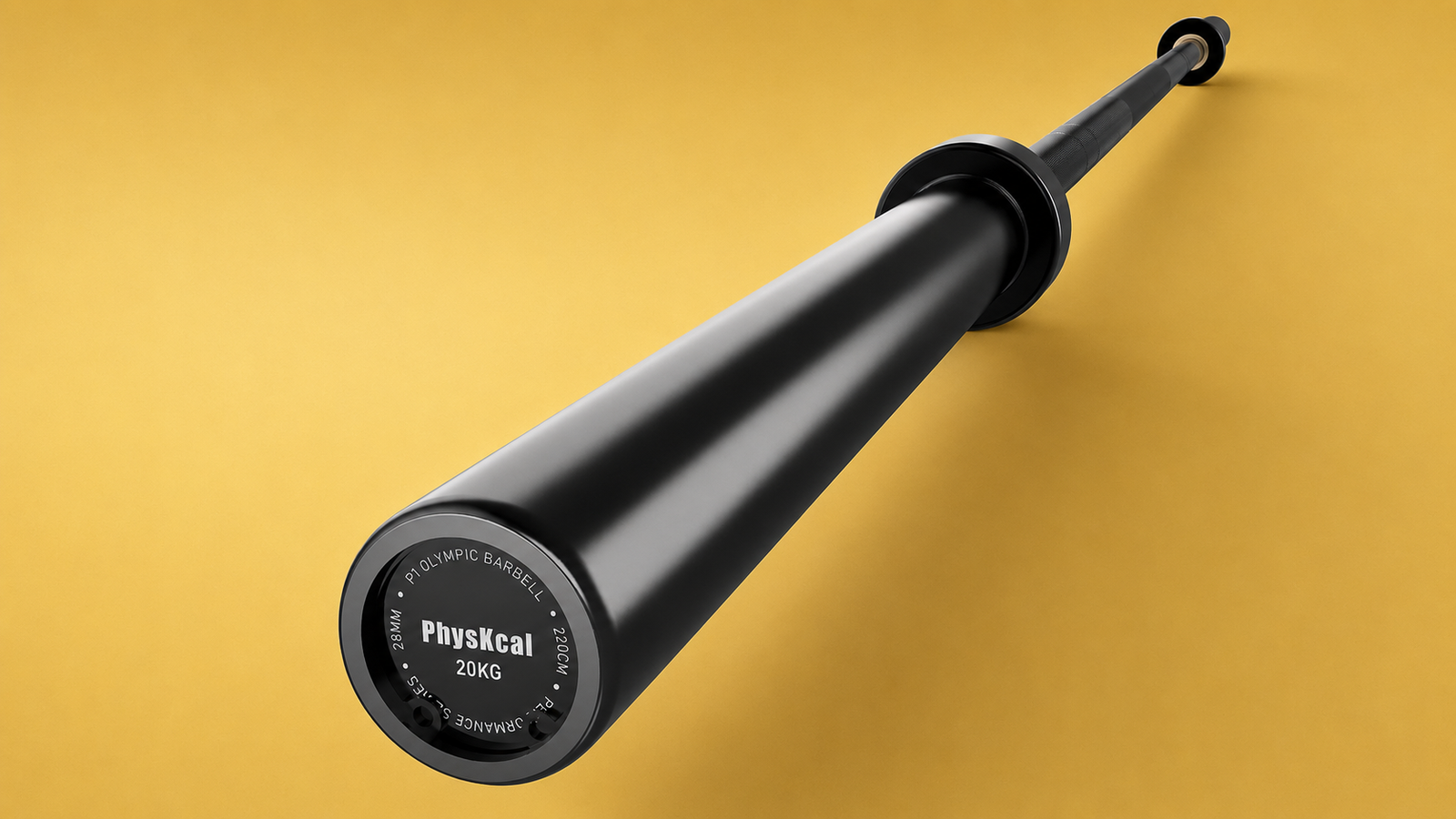
Multi purpose olympic barbell

MULTI-PURPOSE 20KG BAR

~28.5mm · Bushings · The Right Default

The bar that does everything reasonably and nothing badly. A moderate shaft diameter, bushings, moderate knurl, and a tensile strength you can check on the listing. Squats, presses, rows, deadlifts — it handles all of them.
Best forAlmost everyone
Weight20kg
SleevesBushings
VIEW ON AMAZON UK →
RESEARCHED
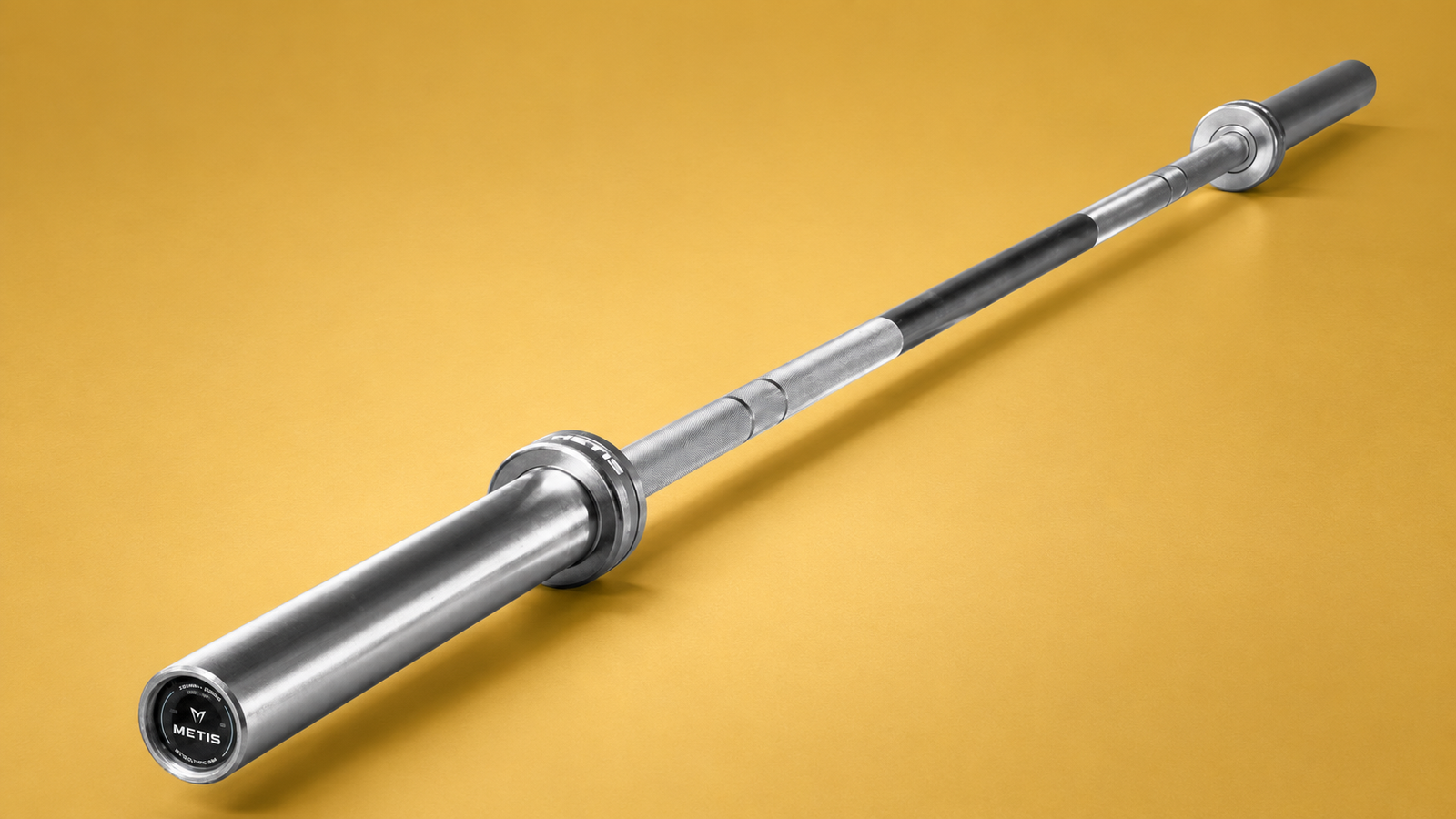
15kg 25mm weightlifting barbell

15KG / 25MM WEIGHTLIFTING BAR

25mm · ~2.01m · IWF Women's Format

Not a beginner's bar and not a lighter compromise — the IWF women's competition standard. Whether it's the right choice for you depends on grip comfort, empty-bar weight and rack compatibility, not on your sex. Some lifters simply find the narrower shaft more comfortable to grip.
Best forNarrower grip, lower empty-bar weight
Weight15kg
Shaft25mm
VIEW ON AMAZON UK →
RESEARCHED
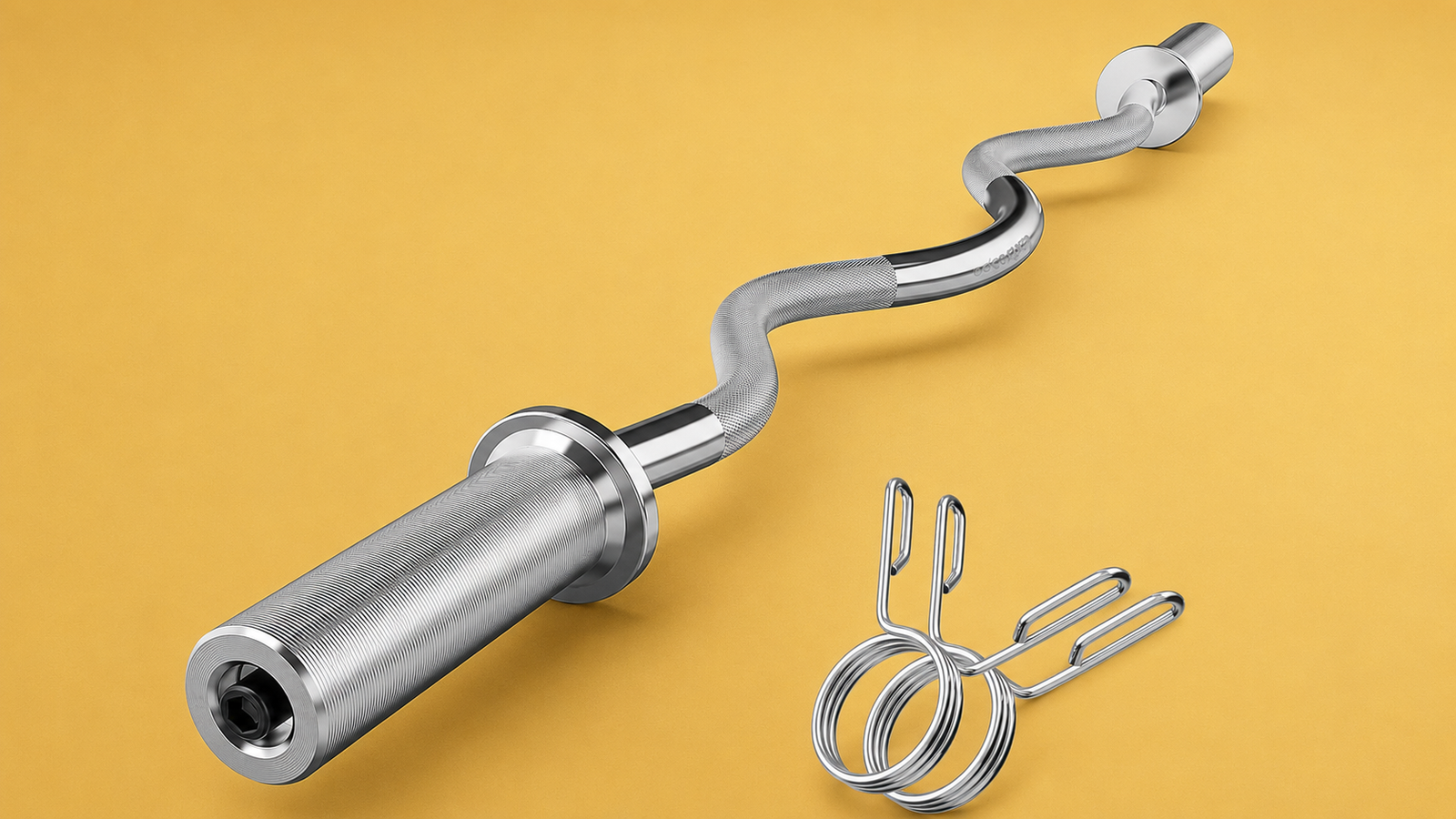
EZ curl bar

EZ CURL BAR

~10kg · Angled Grip · Accessory Work

A useful accessory bar for arm and isolation work. The angled grip can be more comfortable on the wrists during curls and skullcrushers than a straight bar, though how much it helps varies from person to person. Short enough to store anywhere.
Best forArms & accessories
WeightAround 10kg
StorageFits anywhere
VIEW ON AMAZON UK →
LIFT WITH IT
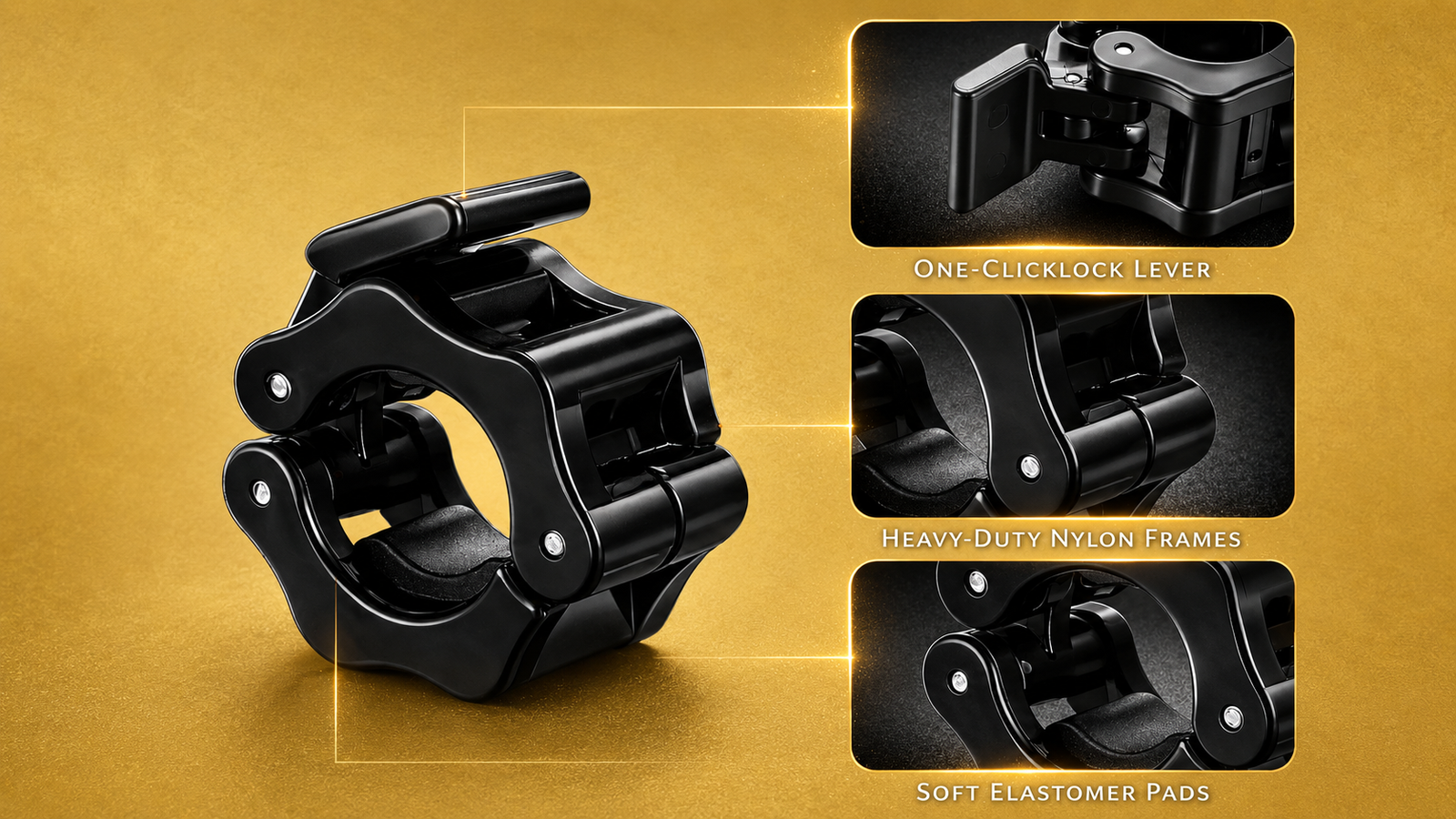
Barbell collars

SPRING OR LOCK COLLARS

Boring · Cheap · Genuinely Necessary

Nobody photographs their collars, and almost everybody needs them. Unsecured plates can slide the moment a rep goes slightly uneven. The cheap spring clips are fine; quick-lock ones are simply nicer to use forty times a session. They're not a substitute for safety arms or a spotter on the bench press.

Best forMost loaded lifts
CostNegligible
Not a replacement forSafety arms/spotter
VIEW ON AMAZON UK →

Bar Finish

WHAT COATING MAKES SENSE FOR A UK GARAGE?

No coating is universally "best" — each is a trade-off between raw grip feel and how well it copes with damp. For an unheated UK garage or shed, corrosion resistance is worth weighing seriously.

Bare Steel

Direct knurl feel with nothing between your hands and the metal. Needs the most upkeep and carries the highest rust risk in a damp space.

Black Oxide

Keeps most of that raw steel feel with a thin protective layer. Corrosion protection is limited — better than bare, not a full solution for a humid garage.

Chrome / Zinc

Noticeably better corrosion resistance. The coating changes the grip feel somewhat and can wear thin over years of heavy use.

Cerakote

Good protection and comes in colours. Depending on how thickly it's applied, it can soften the knurl slightly.

Stainless

Very good corrosion resistance with a feel close to bare steel. Typically the most expensive option on the shelf.

For an unheated UK garage, the practical trade-off is usually corrosion resistance versus cost and exact grip preference — there's no single right answer, only what suits your space and budget.

WEIGHT PLATES

THE PLATES THAT YOUR FLOOR CAN LIVE WITH.

A barbell is only half a home gym — the plates decide the cost, the noise, and how your floor holds up. Bumper for lifts from the floor, iron for cheap weight that stays put.
USE IT
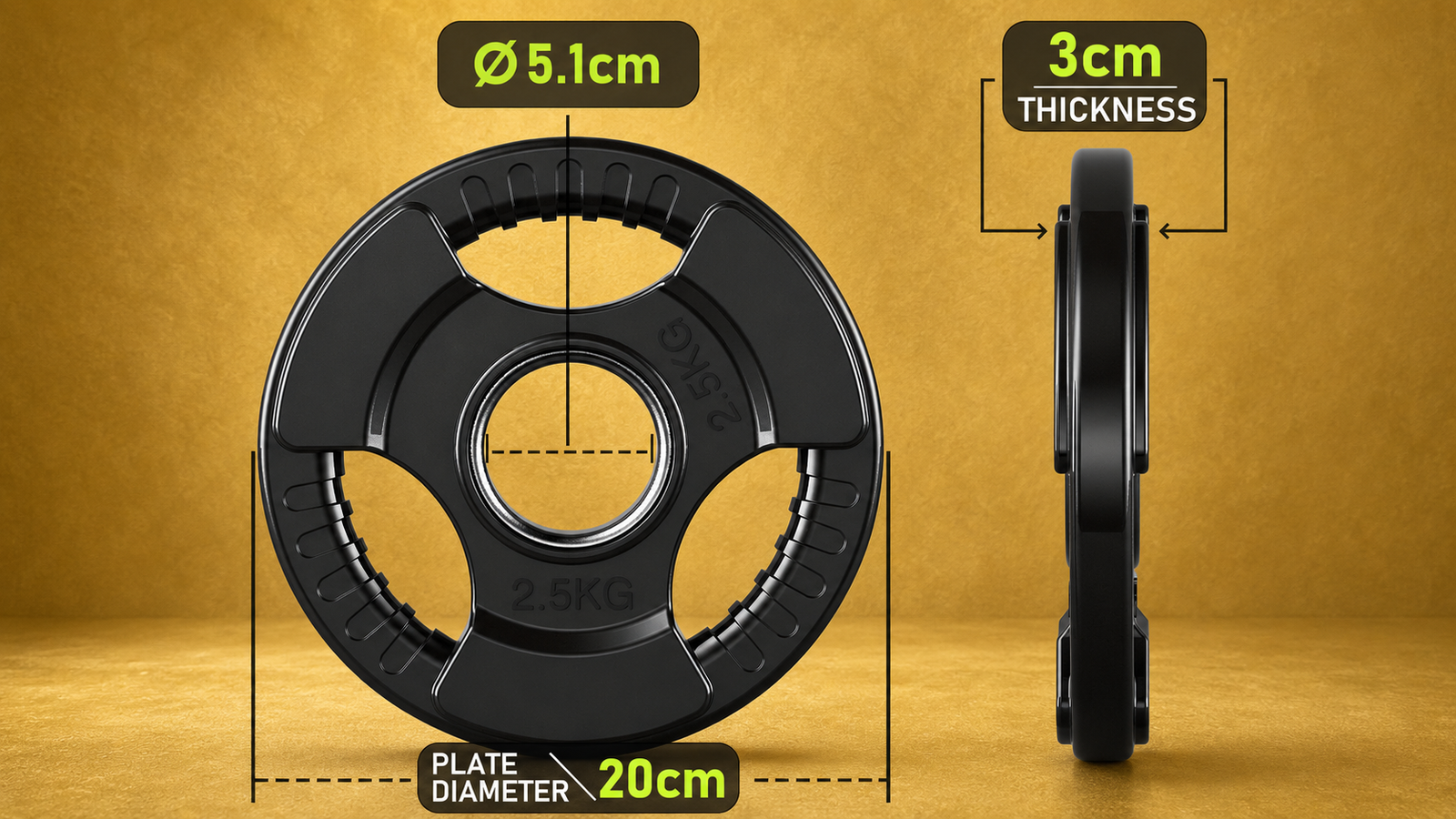
Black rubber bumper plates on an Olympic barbell

BUMPER PLATES

Rubber/Urethane · For Floor Lifts · Quieter

Usually rubber or urethane construction with a metal hub, designed to tolerate controlled drops better than conventional iron. Useful for deadlifts, cleans and other lifts from the floor — they reduce impact and noise, though proper flooring still matters.
Best forDeadlifts, cleans, floor lifts
BuildRubber/urethane + steel hub
FitsOlympic 50mm bar
VIEW ON AMAZON UK →
RESEARCHED
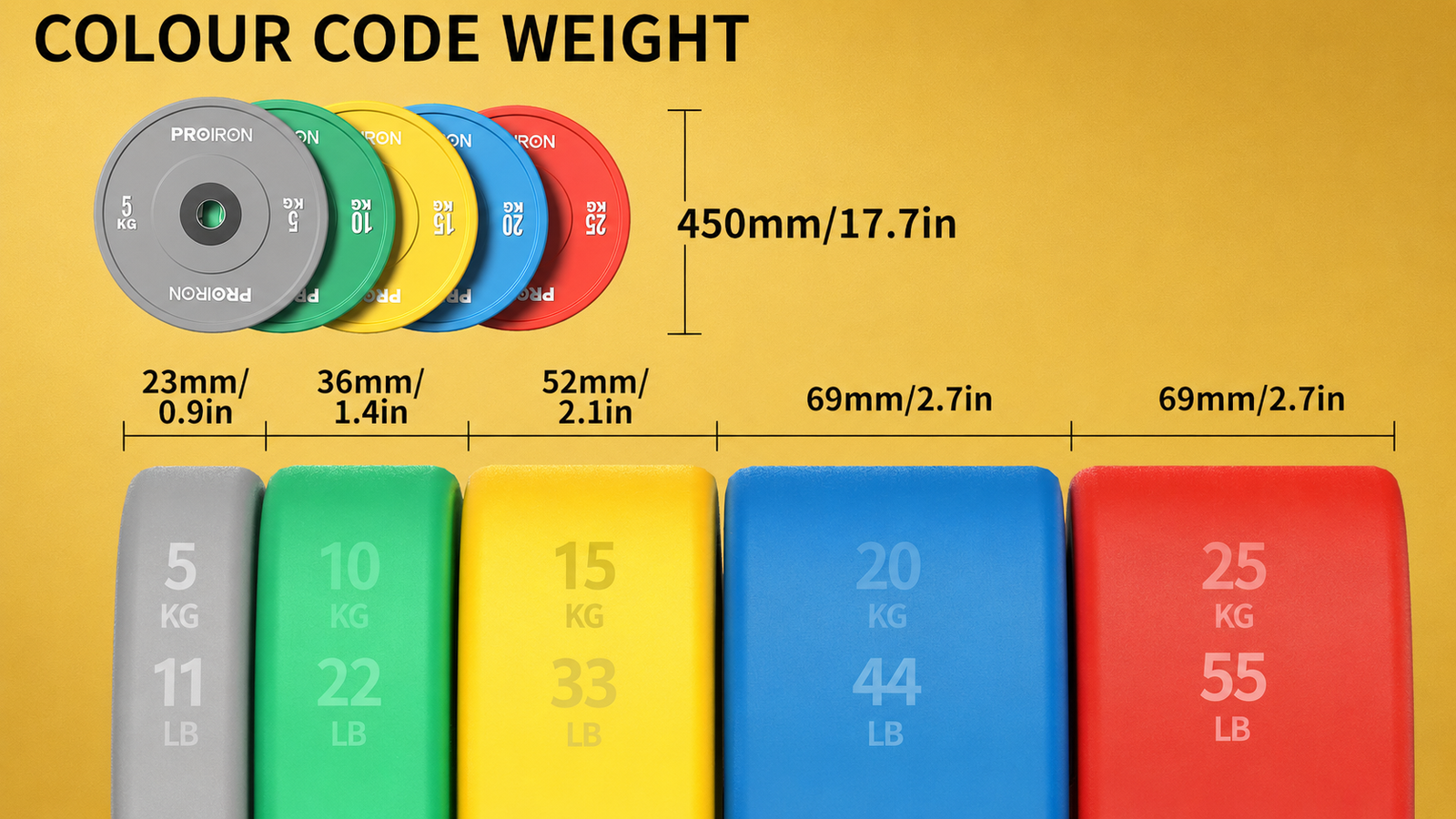
Colour-coded bumper plates by weight red blue yellow green

COLOUR-CODED BUMPERS

IWF-Style Colours · Read At A Glance

The same bumpers, coloured using the IWF-style scheme — red 25, blue 20, yellow 15, green 10 — so you can load the bar at a glance. Not every commercial plate follows this system, so check before assuming.
Best forLoading fast, clean look
Colours25 red · 20 blue · 15 yellow · 10 green
FitsOlympic 50mm bar
VIEW ON AMAZON UK →
RESEARCHED
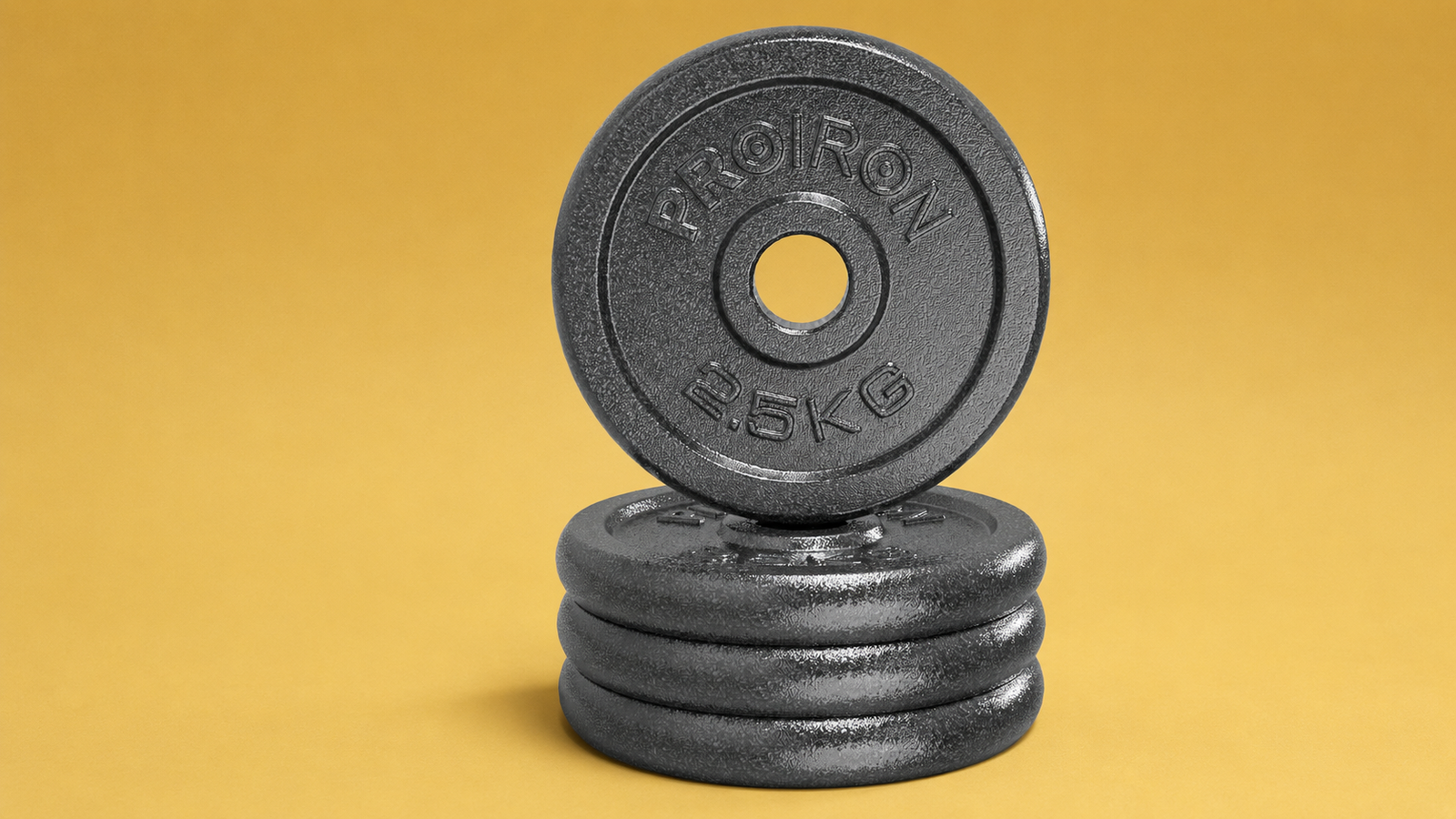
Cast iron weight plates stacked

CAST IRON PLATES

Cheapest Per Kg · Compact

Bare metal: cheapest per kilo and thin, so more fits on the bar. Iron can be used for deadlifts and floor lifts if you lower the bar under control onto suitable flooring — the real problem is uncontrolled or repeated dropping, not the lift itself.

Best forBudget, presses, controlled floor lifts
CostCheapest per kg
Check50mm vs smaller hole size
VIEW ON AMAZON UK →

Bumper Or Iron For A Home Gym?

Bumper plates are rubber or urethane with a metal hub, built to tolerate controlled drops better than iron — useful for deadlifts, cleans, Olympic lifts, lifts from the floor, and for cutting noise and impact. They don't make any floor drop-safe on their own; suitable flooring or a platform still matters. Competition-style large discs commonly run 450mm in diameter; consumer training bumpers are often similar but check the actual product.

Rubber-coated iron is a separate thing again — a cast iron plate with a rubber coating for a quieter, floor-friendlier feel. It is not a bumper plate and isn't built for repeated dropping from height.

Cast iron is cheaper and more compact, and can be used for floor lifts with a controlled, deliberate lowering onto appropriate flooring — the issue is repeated or uncontrolled dropping, not the lift itself.

On sleeve diameter: ~50mm Olympic-style systems are common in serious home gym setups, and smaller non-Olympic systems around ~25–30mm also exist. The two are not interchangeable, so match your plates to your bar before you buy either.

THE SETUP I WOULD BUY AGAIN TOMORROW

01

ONE GOOD BAR

Bushings, moderate knurl, a tensile strength stated on the listing. This is the purchase to make properly — it outlasts most other items in the room and it's the one you feel on every single rep.

02

STARTER PLATES

Cast iron, not vinyl. A pair of 20kg and a pair of 10kg is a useful base for many people, but it depends entirely on your starting strength and the exercises you're doing — some beginners will get more use out of 10kg and 5kg pairs before reaching for 20s. Buy for where you actually are, not where you expect to be.

03

SMALL & FRACTIONAL PLATES

The least exciting purchase and the one that actually keeps you progressing. A pair of 2.5kg plates adds 5kg total; a pair of 1.25kg adds 2.5kg total — and true fractional/micro plates can give you smaller jumps still. This is how you keep adding weight to a press for years instead of stalling for months and blaming your programme.

04

COLLARS, AND A RUBBER MAT

Collars because plates sliding mid-rep is genuinely dangerous. A mat because bare cast iron will dent a wooden floor the first time you set a bar down badly — though flooring reduces damage and noise, it doesn't make every drop safe on its own.

QUICK ANSWERS

What barbell should I buy for a home gym?

For most people, a multipurpose 20kg bar — moderate shaft diameter, bushings, moderate knurl. It handles squats, presses, rows and deadlifts without excelling narrowly at one thing, which is exactly what a general home gym needs.

28mm, 28.5mm or 29mm?

Roughly 29mm on a power bar, 28.5mm on a multipurpose bar, 28mm on an IWF 20kg weightlifting bar, and 25mm on an IWF 15kg weightlifting bar. The right one depends on the lift and your grip, not your gender.

Bushings or bearings?

Both let the sleeve spin — bushings more slowly, bearings faster. A good bushing bar is usually enough for squats, presses, rows and deadlifts. Dedicated Olympic weightlifters often prefer a purpose-built bar with faster rotation for catching a clean or snatch.

Bumper plates or iron?

Bumpers are useful when you train lifts from the floor, want less noise and impact, or perform Olympic lifts. Iron is cheaper and more compact. The choice depends on your flooring, sleeve space, budget and whether the bar may get dropped.

Do I need a 15kg bar?

You don't need a 15kg bar because of your sex. The 15kg/25mm format is the IWF women's competition standard, but it can also be useful when a lower empty-bar weight or narrower shaft suits you and your training better.

How much weight should I buy to start?

It depends on your starting strength and exercises — there's no single number that fits everyone. A pair of 20kg and a pair of 10kg is a common starting base, but some beginners get more use from smaller plates first. Add fractional plates early so you can keep progressing in small jumps.

Two years into lifting in a converted corner of my own house, the thing I'd tell anyone starting is this. You are not buying a gym. You are buying about four objects, and then you are buying years.

The bar is the one that carries all of it. Everything else can be second-hand, mismatched, bought slowly and apologetically over time — and mine is. Spend on the bar. Be tight with everything else.

Sources & Research

Independent reviewers (e.g. established garage-gym review sites) are referenced only for real-world feel, corrosion behaviour, packaging and noise — not as a source for technical thresholds. Where no reliable primary source exists for an exact safe limit (such as a universal tensile-strength cutoff), we don't state one. Items marked LIFT WITH IT are ones I own and use. Those marked RESEARCHED are based on specification and independent testing, not personal use. Educational content, not medical advice.

Scroll to Top