BELGRADE MARATHON
THIS IS THE PAGE I have waited to write.
Every city guide on this site is researched. This one is remembered. I studied in Belgrade, I lived in Belgrade, and the places below are not a listicle — they are where I would take you on your first evening if you landed tomorrow.
What you need to know first is the character of the thing. Belgrade is not pretty the way Kotor is pretty. It is alive — loud, warm, argumentative, up too late — and its deepest instinct is hospitality. A stranger here is a guest by default, and a guest is practically family. You will be fed more than you agreed to, kept later than you planned, and sent home with directions you didn't ask for. Accept all of it.
OLD CITY OR RIVERSIDE, and both are right.
The start–finish world lives at Ušće on the riverbank; the city's soul lives up the hill in Stari Grad. They are a half-hour walk or a five-minute taxi apart, so this is a choice of mood, not logistics.
STARI GRAD
The old city: Knez Mihailova's pedestrian spine, Kalemegdan at the end of it, Skadarlija's cobbles, and every kafana and cafe on this page within a walk. This is Belgrade as itself.
Best if you want the evenings — and in this city, you want the evenings. Budget the taxi or the downhill walk to the start.
NOVI BEOGRAD / UŠĆE
Across the Sava: the modernist blocks, the big river-facing hotels, and the Ušće parkland where the race lives. Less romantic, far more practical at 06:30 on race morning.
Best if you sleep badly before races and want to fall out of bed onto the start line — then move your celebrating across the river afterwards.
SEARCH ROOMS for race weekend.
Live availability across Booking.com, Expedia and the rest for 15–19 April 2027 — filter by Stari Grad or Novi Beograd using the map, whichever side of the river you've decided on.
As an Amazon Associate and Stay22 partner I may earn a commission on qualifying bookings, at no extra cost to you.
WHERE I'D ACTUALLY STAY.
This is the part of the guide I won't fake — and this time it is personal knowledge, not research. My honest picks, with the trade-offs:
MY BELGRADE SHORTLIST IS COMING SOON.
I am choosing between a handful of places I would actually send you to — not the ones that simply rank first on a booking site. I will add a small, honest shortlist here covering both sides of the river once the links are ready.
Until then, the practical rule from earlier on this page still holds: stay in Stari Grad if the evenings matter more to you than race morning, or Novi Beograd / Ušće if you want to roll out of bed onto the start line.
Book the room before the flight this time. Flights to Belgrade run daily and barely move in price; hotel beds in the centre on a 40th-anniversary championships weekend are the scarce resource. Free cancellation, as always — the race entry is already the thing you can't undo.
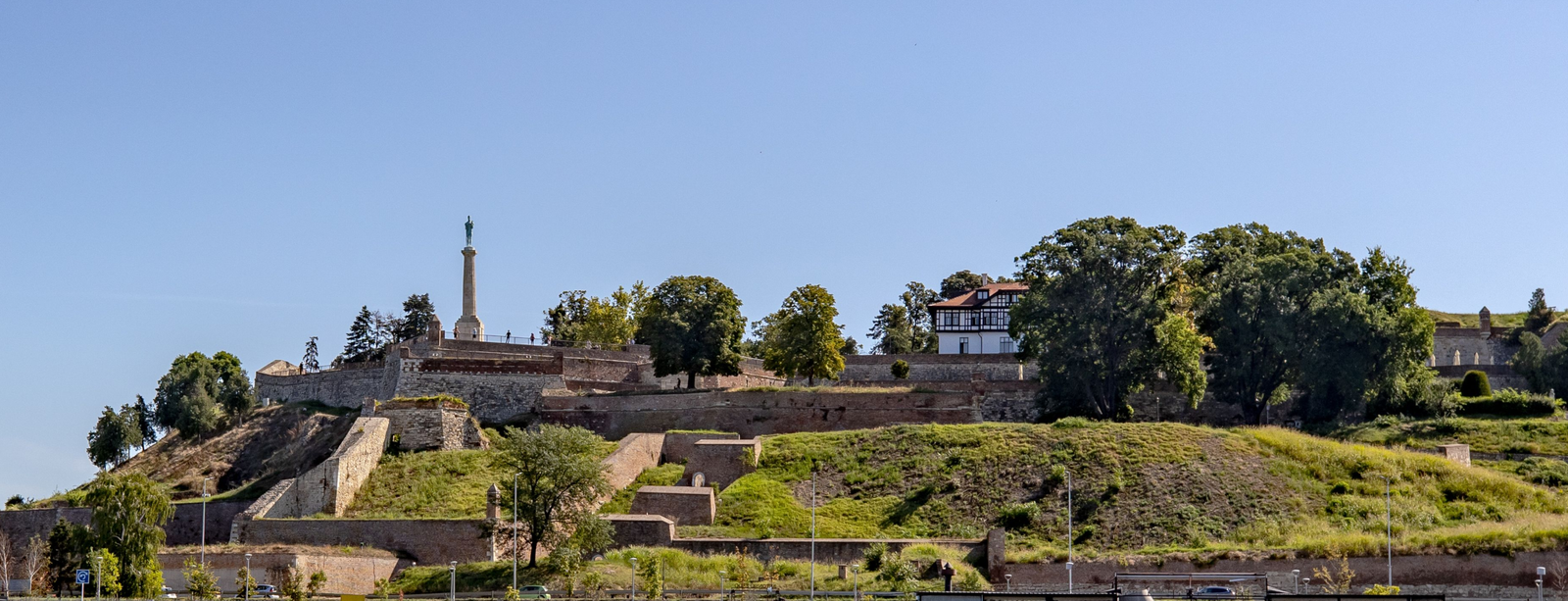
Photo: Belgrade Marathon
FOUR PLACES from someone who lived here.
Serbian food is generous, slow-cooked and built for people who have earned it — which, after a marathon, is precisely you. Four stops that cover the story: the oldest inn in the city, the street where the musicians live, the modern answer, and the cake with a hotel around it. All four are in Stari Grad, walkable from each other.
ZNAK PITANJA — “?”
The oldestThe oldest kafana in Belgrade, run continuously for two centuries, and its name is the best story on the street: a dispute over calling it “By the Cathedral” led the owner to hang a question mark outside as a placeholder. It never left. Low wooden tables, house wine, and the classics done as they have always been — this is where you order prebranac, sarma, and whatever soup exists that day.
TRI ŠEŠIRA, SKADARLIJA
The musicSkadarlija is Belgrade's old bohemian street — a cobbled slope where the poets and actors drank for a century and a half — and Tri šešira (“Three Hats”) is its oldest surviving kafana. This is where you get the thing I miss most about home: starogradska muzika, live, at your table — violins and voices working the room while the plates keep coming. If one evening in Belgrade is all you have, it is this one.
My note: let the musicians play you one song, then quietly ask for “Đelem, đelem” or anything by Toše — and tip them. It is how the street works, and they have earned it.
AMBAR
The modern answerBelgrade's kitchen, rebuilt for this century: small Balkan plates — the pršut, the kajmak, the slow-cooked meats — served sharp and modern in the old concrete warehouse row on the river, looking across the water you ran beside. The set “full Balkan experience” menu is the sensible order for a table that has just finished a marathon and wants everything.
HOTEL MOSKVA CAFÉ
Coffee & cakeThe grand café of the city's grandest address, under the green-and-gold Art Nouveau façade that anchors Terazije. You are here for one thing: the Moskva šnit — the house cake of cream, cherries and pineapple they have been making for over a century — and a slow coffee among marble and mirrors while the city walks past the windows.
THREE THINGS ABOUT A BELGRADE EVENING.
The kafana has rules
A kafana is not a restaurant with music — it is an institution with food. You stay, you talk, nobody brings the bill until you ask, and asking too early is the only rude thing you can do.
Rakija is a verb
The fruit brandy arrives as a welcome whether you ordered it or not. One with dinner is culture; the fourth, the night before a marathon, is a race report nobody wants to write. Živeli — and pace yourself like it's mile one.
Dinner starts late
Nine o'clock is normal, ten is not strange, and the musicians are only warming up at eleven. The Saturday-evening 10K finishes exactly on Belgrade time — the city planned your night for you.
MY SHORT LIST.
What I would show you with a spare day and a half — including where Belgrade actually trains, because this is a running city whether it advertises it or not.
KALEMEGDAN & THE CONFLUENCE
The fortress park above the meeting of the rivers. Go for golden hour at the Pobednik monument and watch the Sava hand itself to the Danube. Free, and better than anything you could pay for.
ADA CIGANLIJA
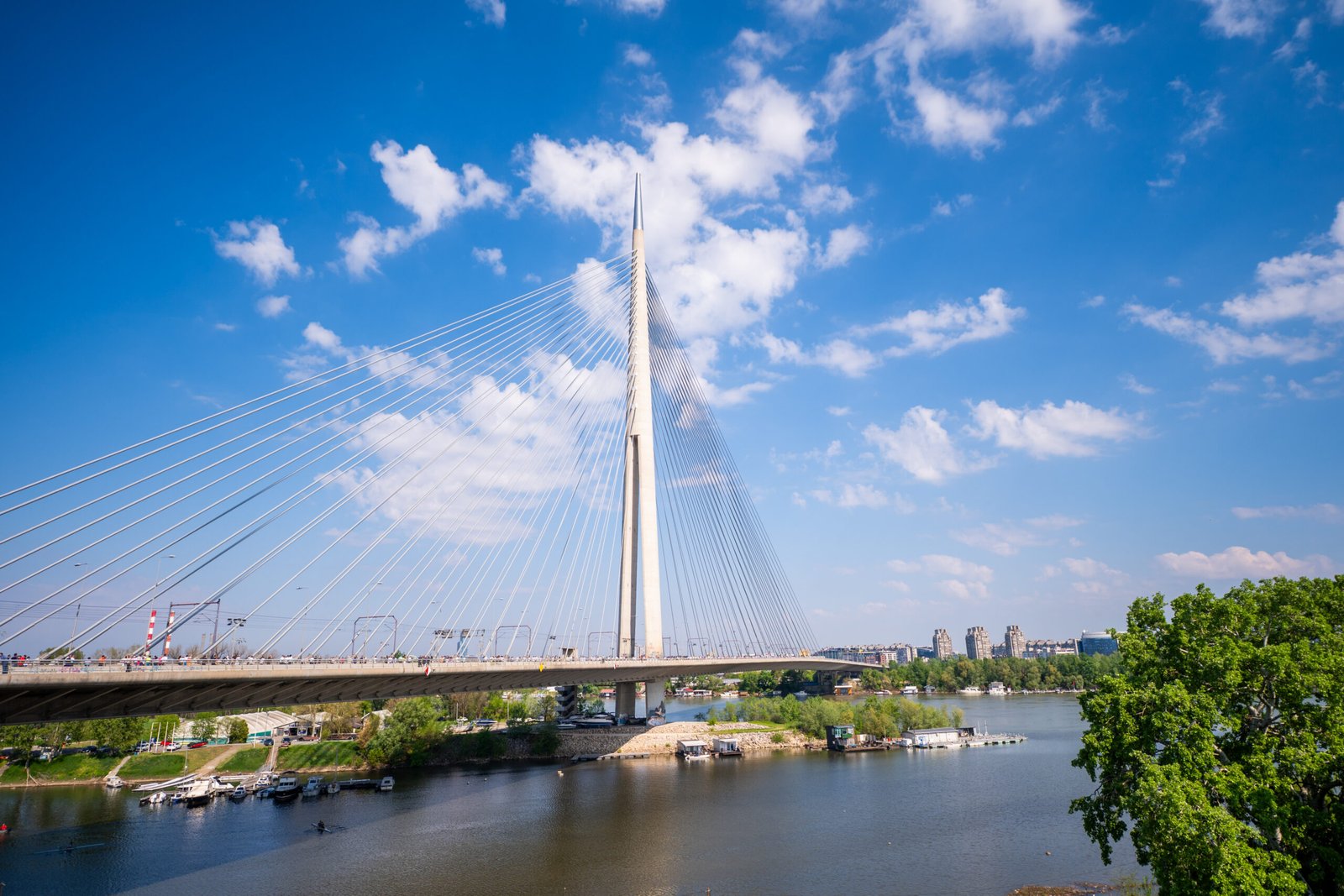
The river island Belgraders call their sea — and its 8km flat loop around the lake is where half the city trains. Shakeout run on Saturday morning, coffee at the water after. This is Belgrade's running culture in one place.
SKADARLIJA BY DAY
The bohemian street before the musicians wake — cobbles, painted façades, and the city's unhurried morning coffee culture doing its thing.
AVALA TOWER
The television tower on the wooded mountain south of the city — rebuilt after 1999, with the widest view in the region from the top. Half a day, and the legs will forgive a lookout tower.
THE EXPO CITY
Belgrade hosts a specialised EXPO in 2027, opening the month after the race — and you will see the site and the new infrastructure rising. The marathon weekend catches the city mid-transformation, dressed for guests.
THE RIVERBANKS
Walk the Sava promenade from Beton hala toward the fortress at dusk. In summer the floating clubs take over; in April you get the quieter version — lights on the water and the whole city out walking.
Race-weekend order of operations: Ada shakeout Saturday morning, watch or run the evening 10K, kafana after, marathon Sunday, Kalemegdan at golden hour with the medal on. Trust me on the last one.